Politics
Science vs politics: Kiwi’s long road to EU health-claim approval
In August 2025, Zespri, the world’s largest marketer of kiwifruit, announced that the European Commission had approved what it described as the first health…
TAMFIS NIG LTDRC 8067447CAC ACTIVEFinima, Bonny Island, Rivers State

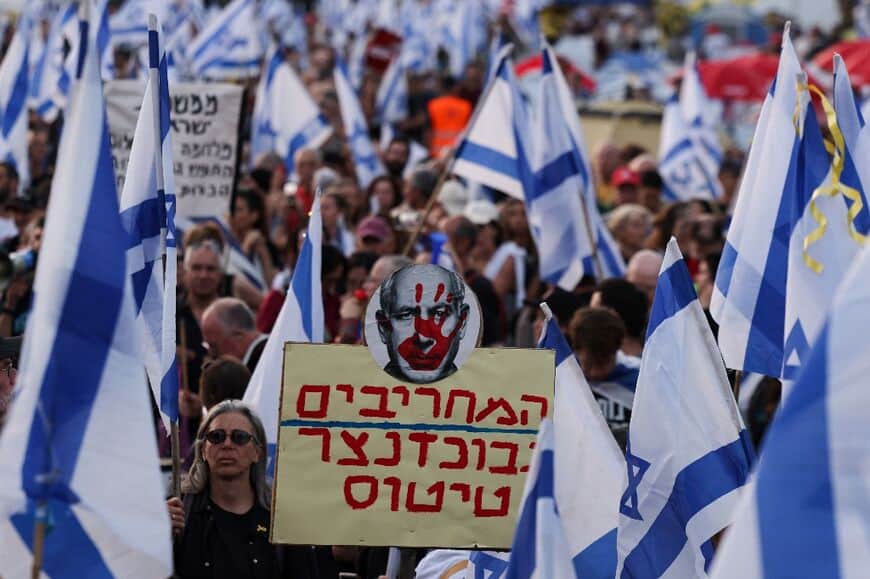
Benjamin Netanyahu, often dubbed the 'Houdini of Israeli politics' for his repeated comebacks, is confronting perhaps the most severe test of his political career. At 74, with his leadership under intense scrutiny due to the handling of the Gaza conflict and internal political strife, Netanyahu’s grip on power appears increasingly tenuous. This article explores the factors contributing to his current vulnerability, the public and political response, and the potential implications for Israel’s future leadership.
Netanyahu’s political career has been marked by remarkable resilience, surviving numerous challenges and scandals. However, recent developments suggest a significant erosion of public trust. Polls indicate that only about four percent of Israelis currently express confidence in his leadership, a historically low figure for the veteran politician.
Physically and politically, Netanyahu appears to be under considerable strain. Observers have noted his aged and frail appearance, with visible signs of stress during public addresses. His recent hernia operation and the presence of a pacemaker underscore concerns about his health, adding another layer of uncertainty to his capacity to govern during a national crisis.
The ongoing conflict in Gaza has intensified public dissatisfaction. Netanyahu’s handling of the situation, particularly following the October 7 attacks by Hamas, has been widely criticized. The deaths of Israeli civilians and the capture of hostages have fueled anger and despair, leading to nightly protests demanding his resignation.
The October 7 Hamas attack, which resulted in the deaths of over 1,160 Israelis and the capture of 134 hostages, has been a pivotal moment in Netanyahu’s tenure. Many blame him for intelligence failures that allowed the attack to occur, with critics accusing him of complacency and mismanagement.
Families of hostages have become vocal critics, publicly condemning Netanyahu and holding him responsible for what they perceive as a failure to protect Israeli citizens. At mass protests, some have used harsh language, reflecting deep frustration and grief.
Political analysts suggest that the scale and nature of the October 7 event have fundamentally altered the Israeli political landscape. Unlike previous crises from which Netanyahu rebounded, this one has shaken the nation’s confidence in his leadership and raised questions about his ability to guide Israel through ongoing security threats.
Netanyahu’s coalition government is facing unprecedented internal challenges. The ruling Likud party, once a source of unwavering support, is now fractured by ideological shifts and generational changes. The influence of Netanyahu and his family within the party has created tensions, with some members reluctant to challenge his authority due to fears of political retribution.
Defiance has emerged even among close allies, such as Defense Minister Yoav Gallant, who has publicly opposed Netanyahu’s stance on controversial issues like the exemption of ultra-Orthodox Jews from military service during wartime. This dissent highlights growing dissatisfaction within the government and the difficulty Netanyahu faces in maintaining unity.
Religious parties, which have traditionally been key supporters of Netanyahu, are increasingly under scrutiny for their role in the military exemption debate. Critics argue that excusing an entire community from service during a time of national emergency undermines Israel’s defense capabilities and fuels public resentment.
Since the outbreak of the Gaza conflict, nightly protests have become a common sight in Israeli cities. Demonstrators include a broad coalition of groups, from families of hostages to activists who previously opposed Netanyahu’s judicial reforms. This convergence signals a rare moment of unity in opposition to the prime minister’s leadership.
Protesters accuse Netanyahu of prioritizing his political survival over the welfare of the country. Claims that he is prolonging the conflict to maintain power, though unproven, resonate with many who feel betrayed by his governance.
Attempts by protesters to breach police barriers near Netanyahu’s residence underscore the intensity of public anger. The protests are not only a reflection of dissatisfaction with the Gaza war but also a manifestation of deeper frustrations with systemic political issues and perceived corruption.
Despite the mounting pressures, some political analysts believe Netanyahu will not be forced from office immediately. His entrenched control over the Likud party and the absence of a clear successor contribute to his continued hold on power.
However, the political landscape has undeniably shifted. Netanyahu’s promise to hold elections in 2026 is seen by many as unrealistic given the current crisis. Calls for early elections grow louder, though the timing remains uncertain and likely contingent on the resolution of the Gaza conflict and security threats from groups like Hezbollah in Lebanon.
Netanyahu’s decades-long strategy of ‘divide and rule’ faces new challenges as public and political opposition coalesce. Whether he can adapt to these changes or if his tenure will end soon remains a critical question for Israel’s future.
Benjamin Netanyahu’s political career, characterized by remarkable comebacks, now faces arguably its greatest challenge. The combination of a devastating security crisis, widespread public unrest, and internal political fractures has placed his leadership under intense scrutiny. While he continues to command significant influence within his party, the broader Israeli public’s confidence has eroded dramatically. The coming months will be crucial in determining whether Netanyahu can navigate these turbulent waters or if Israel will witness a significant shift in its political leadership. For now, the nation remains deeply divided, grappling with the consequences of conflict and the urgent need for effective governance.
Originally reported by al-monitor.com. Adapted for our readers with AI assistance.
Keep reading
Politics
In August 2025, Zespri, the world’s largest marketer of kiwifruit, announced that the European Commission had approved what it described as the first health…
News
By Engr. Tamunofiniarisa BrownReading Time: 6 Minutes The conflict between Russia and Ukraine is often framed in the media as a simple battle between…
Politics
Twenty-five years after the September 11 attacks, the family of Marine Travis Fuller reflects on his death in the Iraq War, grappling with the…
TAMFIS NIG LTD
Electrical and instrumentation engineering, bid preparation and consulting, IT and software.