
Politics
How Minnesota Figures Into the Presidential Politics of Insulin Prices
Politics tamfitronics Minnesota Gov. Tim Walz attends a rally in Asheville, North Carolina, on Sept. 17. Minnesota led the way on in...
TAMFIS NIG LTDRC 8067447CAC ACTIVEFinima, Bonny Island, Rivers State

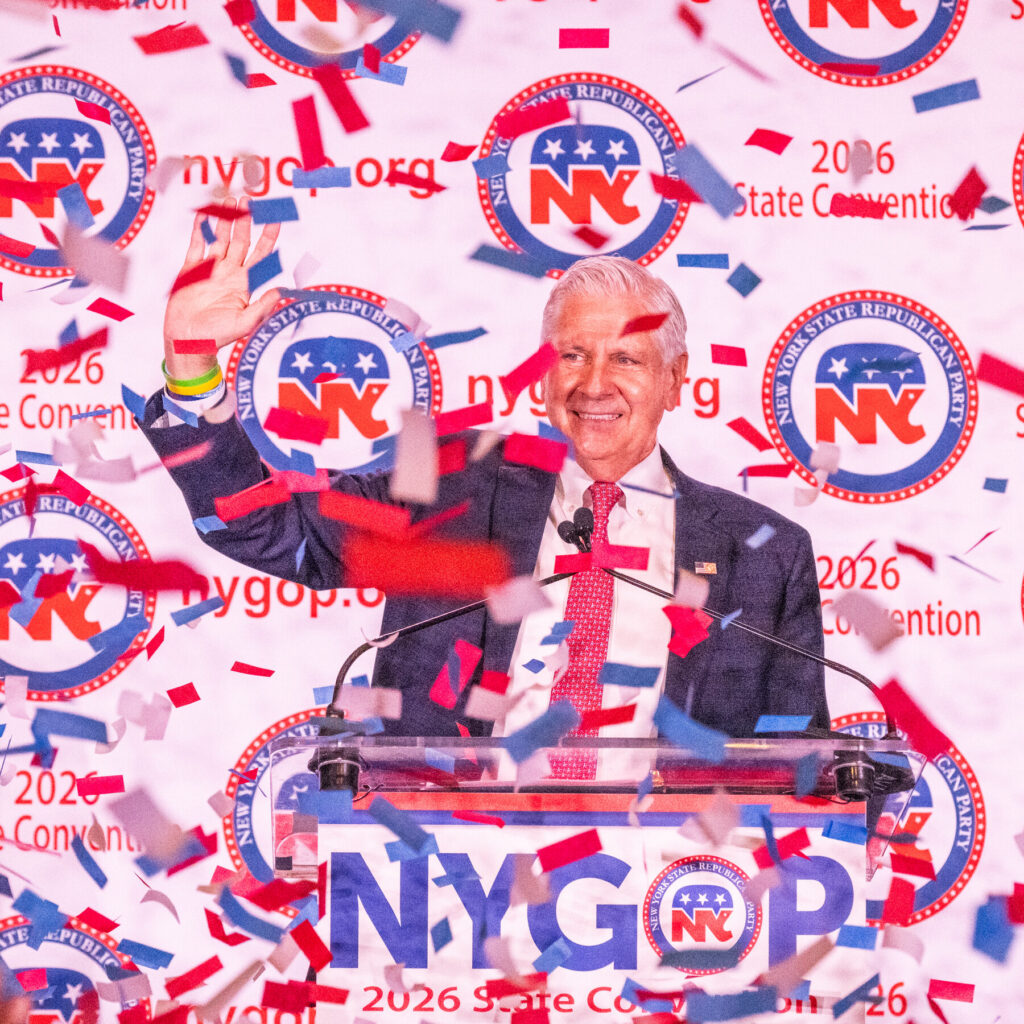
In a state long dominated by Democratic leadership, Bruce Blakeman’s bid to become New York’s governor stands out as a significant Republican challenge. As the state’s second Republican hopeful in half a century to seek the governorship, Blakeman’s campaign is marked by a strategic embrace of former President Donald Trump’s agenda—without overtly invoking Trump’s name. This delicate balancing act reflects the complex political dynamics of New York, where conservative voters exist but are often overshadowed by a liberal majority. Understanding Blakeman’s approach offers insight into how Republican candidates are adapting to run competitive campaigns in traditionally blue states.
New York has been a Democratic stronghold for decades, with Republicans rarely winning statewide offices. The last Republican governor was George Pataki, who served from 1995 to 2006. Bruce Blakeman’s campaign marks only the second serious Republican gubernatorial bid in 50 years, underscoring the uphill battle he faces.
Blakeman’s background as a Nassau County executive and his extensive experience in local politics provide him with a solid foundation to appeal to suburban voters, a critical demographic in New York’s political landscape. Suburban areas have increasingly become battlegrounds where elections can be won or lost, making Blakeman’s local ties a strategic asset.
His campaign strategy hinges on mobilizing conservative and moderate voters who feel underrepresented in the current political climate. By focusing on local issues and leveraging his governance experience, Blakeman aims to connect with voters who seek pragmatic leadership amid New York’s complex political environment.
One of the most notable aspects of Blakeman’s campaign is his alignment with the policies and rhetoric associated with former President Donald Trump, despite rarely mentioning Trump directly. This approach allows Blakeman to tap into the enthusiasm of Trump’s base while avoiding the polarizing effect Trump’s name can have in a liberal-leaning state.
Blakeman promotes issues central to Trump’s platform, such as strict immigration enforcement, robust support for law enforcement, and economic policies favoring deregulation and tax cuts. By emphasizing these themes, he signals his ideological alignment without alienating moderate voters who may be wary of Trump’s persona.
This strategy reflects a broader trend among Republican candidates in blue states who seek to benefit from Trump’s popularity among conservatives but recognize the need to distance themselves from the more controversial aspects of his tenure. By focusing on policy substance rather than personality, Blakeman attempts to navigate the complex sentiments of New York’s diverse electorate.
Blakeman’s campaign must navigate a delicate balance between energizing the conservative base and appealing to moderate and independent voters. New York’s electorate includes a significant number of suburban voters who have become increasingly important in recent elections, often determining the outcome in statewide races.
To attract these voters, Blakeman emphasizes pragmatic governance and local issues, such as improving public safety, addressing economic challenges, and reforming education. His messaging aims to transcend partisan divides by focusing on practical solutions rather than ideological battles, appealing to voters frustrated with gridlock and seeking effective leadership.
At the same time, his alignment with Trump’s agenda helps solidify support among Republicans who remain loyal to the former president’s vision, ensuring that Blakeman does not lose ground within his party. This dual approach is critical in a state where the Republican base is energized by Trump’s policies but where broader appeal is necessary for electoral success.
Blakeman’s connection to Trump’s agenda is both a potential asset and a liability. On one hand, it energizes a committed segment of Republican voters who are motivated by Trump’s policies and leadership style. This enthusiasm can translate into higher voter turnout and grassroots support, which are essential in a challenging electoral environment.
On the other hand, Trump’s polarizing figure may alienate moderate and independent voters who are crucial to winning statewide elections in New York. The state’s diverse population and progressive urban centers often react negatively to Trump’s rhetoric and policies, which could hinder Blakeman’s broader appeal.
Blakeman’s decision to avoid explicitly naming Trump suggests an awareness of these risks. By focusing on policy rather than personality, he attempts to harness the benefits of Trump’s influence while mitigating its drawbacks. This nuanced approach highlights the complexities Republican candidates face when operating in predominantly Democratic states.
Blakeman’s campaign highlights the evolving nature of Republican strategies in states dominated by Democrats. His approach may serve as a model for future candidates seeking to compete in similar environments by blending adherence to national party agendas with localized messaging tailored to the concerns of suburban and moderate voters.
If successful, Blakeman could signal a shift in New York’s political landscape, demonstrating that Republican candidates can gain traction by carefully calibrating their campaigns to balance ideological commitment with pragmatic appeals. Such a development could encourage more robust two-party competition in the state.
Conversely, if his bid fails, it may reinforce the challenges Republicans face in overcoming entrenched Democratic dominance, particularly in urban and progressive areas. Regardless of the outcome, Blakeman’s campaign underscores the ongoing tension within the Republican Party between embracing Trump’s legacy and adapting to diverse electorates.
This tension reflects a broader national debate about the future direction of the GOP, especially as it seeks to expand its appeal beyond its traditional base while maintaining core conservative principles.
Bruce Blakeman’s gubernatorial campaign in New York exemplifies the challenges and opportunities facing Republicans in states with strong Democratic majorities. By embracing Trump’s policy agenda while carefully sidestepping direct references to the former president, Blakeman attempts to unite conservative enthusiasm with pragmatic appeals to moderates. His campaign strategy highlights the nuanced balancing act required to compete effectively in today’s polarized political environment. Whether Blakeman’s approach will resonate with New York voters remains to be seen, but his bid undoubtedly contributes to the evolving narrative of Republican politics in traditionally blue states.
Originally reported by nytimes.com. Adapted for our readers with AI assistance.
Keep reading
Politics
Politics tamfitronics Minnesota Gov. Tim Walz attends a rally in Asheville, North Carolina, on Sept. 17. Minnesota led the way on in...
Politics
Nigerian human rights lawyer Deji Adeyanju has joined a Federal Government inquiry into the deaths of 37...
Politics
Democracy, Featured, Global, Global Governance, Headlines, International Justice, IPS UN: Insid...
TAMFIS NIG LTD
Electrical and instrumentation engineering, bid preparation and consulting, IT and software.