Politics
Yari’s 2027 Campaign Strategy: How to Evaluate Claims About Tinubu’s Record
Yari says the APC will emphasise Tinubu’s achievements in 2027. This analysis explains how voters can examine outcomes, baselines and campaign evidence.
TAMFIS NIG LTDRC 8067447CAC ACTIVEFinima, Bonny Island, Rivers State


The role of fact-checking in political debates has become a flashpoint in American politics, with Republican figures like Donald Trump and JD Vance criticising moderators for correcting false claims during televised encounters. However, recent polling data suggests a significant majority of voters across party lines support this journalistic practice. This article examines the evolving dynamics of political debates in the Trump era, the necessity of real-time fact-checking to combat dangerous misinformation, and what voter attitudes reveal about the public's appetite for truthful discourse in an age of polarising rhetoric.
Political debates have traditionally served as a platform where candidates challenge each other's claims, with the expectation that opposing sides would correct exaggerations and falsehoods. However, the entry of Donald Trump into presidential politics altered this dynamic significantly. His frequent use of verifiably false statements created a situation where simple rebuttals by opponents were insufficient to address the scale and frequency of misinformation.
In this new reality, debate moderators have taken on an expanded role as arbiters of factual accuracy. This shift is not merely procedural but stems from the potential real-world harm caused by unchallenged false claims. When moderators intervene to correct the record, they are fulfilling both journalistic standards and a broader social responsibility to prevent the spread of dangerous narratives that could incite violence or discrimination.
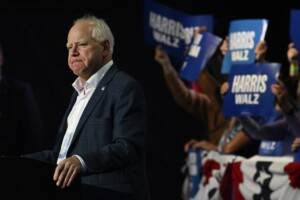
During the September 10 presidential debate between Donald Trump and Vice President Kamala Harris, ABC News moderator David Muir intervened to correct a claim about Haitian immigrants in Springfield, Ohio allegedly abducting and eating pets. Muir cited statements from Springfield's city manager indicating no credible evidence of such incidents occurring within the immigrant community.
Despite the absence of any verified reports from Springfield residents about missing or harmed pets, Trump persisted in repeating the claim during the debate. Investigations later revealed that a widely circulated video purporting to show someone eating a cat actually featured a woman from Canton, Ohio – located 175 miles from Springfield – who was subsequently charged with disorderly conduct related to intoxication. This episode exemplified how unverified claims can gain traction in political discourse and why moderator intervention becomes necessary to prevent the amplification of baseless allegations.
The pattern continued in the vice presidential debate, where Ohio Senator JD Vance criticised moderator Margaret Brennan of CBS News for fact-checking his remarks about Haitian immigrants overwhelming local services and driving up real estate costs. Brennan correctly pointed out that most Haitian migrants in question are in the United States legally under Temporary Protected Status (TPS), a humanitarian designation expanded by the Biden administration.
Vance's complaint that fact-checking violated debate rules highlights a growing tension between political campaigns seeking to control the narrative and journalistic obligations to ensure accuracy. When moderators attempted to provide context, Vance argued the issue was too complex for sound bites, leading to both candidates' microphones being cut – a procedural move permitted under debate guidelines. This exchange underscored the difficulty of addressing nuanced policy topics within the constrained format of televised debates while maintaining factual integrity.
Some critics, including commentator Douglas Murray in the New York Post, have characterised debate fact-checking as a form of censorship. This framing misrepresents the nature of live broadcast corrections, which occur only after a statement has been aired – the opposite of preventive suppression.
Murray's criticism also extended to moderators' handling of claims about Project 2025, a 900-page policy blueprint developed by the Heritage Foundation for a potential second Trump administration. The document, which involves numerous former Trump administration officials, proposes sweeping changes including abolishing the Department of Education, restricting reproductive rights, and restructuring federal agencies. Despite Trump's later disavowal of familiarity with the project after public backlash, fact-checkers noted that moderators had failed to challenge Vice President Harris's accurate description of the initiative during debates.
This instance revealed a selective application of the 'censorship' argument, where fact-checking is condemned when it challenges Republican claims but overlooked when Democratic statements go unchallenged despite being factually correct.
Contrary to the vocal opposition from certain political figures, empirical data shows strong public support for moderator intervention in debates. A June survey conducted by Boston University's College of Communication found that 68% of Americans believe moderators should point out factual inaccuracies in real time during political debates.
The survey did reveal a partisan divide, with 81% of Democrats supporting real-time fact-checking compared to 67% of Republicans. This 14-point gap reflects broader trends in media trust and political polarisation but does not negate the majority position among Republican voters themselves. Notably, two-thirds of Republican respondents still endorsed the practice, suggesting that opposition to fact-checking is driven more by political elites and activists than by the party's base.
These findings indicate that despite the amplification of criticism from certain quarters, the American public broadly values accuracy in political discourse and sees a role for neutral arbiters in maintaining it during high-stakes political encounters.
The debate over fact-checking in political forums reflects deeper tensions about truth, accountability, and the role of media in democratic discourse. While political figures may gain short-term advantage by dismissing corrections as biased or censorship, voter sentiment consistently favours accuracy and context in political communication. As elections continue to hinge on complex policy debates and character assessments, the public's appetite for truthful discourse remains a stabilizing force. For journalists and moderators, the challenge lies not in whether to fact-check, but in how to do so effectively and fairly within the constraints of live television – a task that ultimately serves the public interest by helping voters make informed decisions based on reality rather than fiction.
Originally reported by latimes.com. Adapted for our readers with AI assistance.
Keep reading
Politics
Yari says the APC will emphasise Tinubu’s achievements in 2027. This analysis explains how voters can examine outcomes, baselines and campaign evidence.
Lifestyle
Obi says his wife funds her own purchases. This analysis separates his explanation, unverified handbag prices and the evidence needed to assess public spending.
Politics
Politics tamfitronics Minnesota Gov. Tim Walz attends a rally in Asheville, North Carolina, on Sept. 17. Minnesota led the way on in...
TAMFIS NIG LTD
Electrical and instrumentation engineering, bid preparation and consulting, IT and software.