Police investigate donations by Tice company to Reform UK
Police investigate donations by Tice company to Reform UK
Editor’s note: The following is AI-generated commentary and context on this topic, not original reporting.
When a story like “Police investigate donations by Tice company to Reform UK” breaks, the initial facts are often only part of what makes it significant — the surrounding context matters just as much.
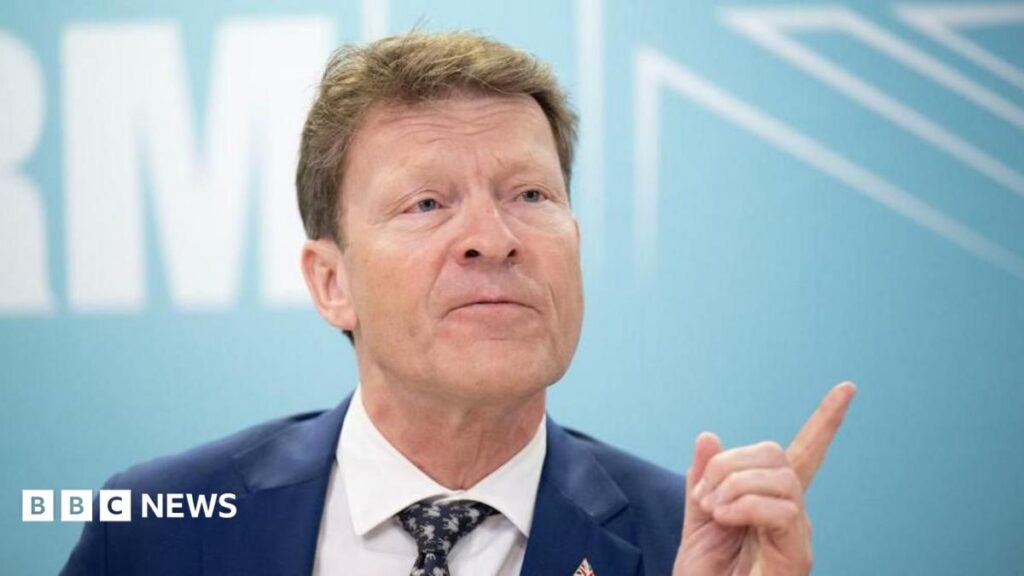
According to what has been reported: Image source, PA NewsByJack Fenwick, Political correspondent and Phil Kemp, Political correspondentPublished52 minutes agoPolice are investigating payments to Reform UK by a company controlled by the party’s deputy leader, Richard Tice, BBC News has learned.Britain Means Business gave the party two donations of £250,000 in the run-up to the 2024 general election, when Tice was party chairman.
The reporting also notes: Tice has said the money was given to his firm by Fiona Cottrell, a significant donor to Reform UK and mother of a convicted fraudster with close links to Nigel Farage.Tice said: “This… Police investigate donations by Tice company to Reform UK What happened Image source, PA NewsByJack Fenwick, Political correspondent and Phil Kemp, Political correspondentPublished52 minutes agoPolice are investigating payments to Reform UK by a company controlled by the party’s deputy leader, Richard Tice, BBC News has learned.Britain Means Business gave the party two donations of £250,000 in the run-up to the 2024 general election, when Tice was party chairman.
Further detail from the same source material: Tice has said the money was given to his firm by Fiona Cottrell, a significant donor to Reform UK and mother of a convicted fraudster with close links to Nigel Farage.Tice said: “This is the first I have heard of it – if true why are the Met Police briefing the BBC before contacting interested parties? Is the Met leadership now engaged in the widespread politically motivated smear campaign against Reform and its leaders?”Earlier this month, the Times newspaper, external revealed that two donations given directly by Fiona Cottrell to Reform UK in May 2024 were being investigated by the Metropolitan Police.That investigation relates to legislation governing elections, which bans concealing or disguising donations derived from an “impermissible” donor, or the use of “false” information about a donation including the amount or the identity of the donor.The BBC has asked Fiona Cottrell for comment.’Stringent vetting’Britain Means Business, which is solely owned and controlled by Tice, received £1m from Fiona Cottrell in June 2024.Disclosures… Source: Police investigate donations by Tice company to Reform UK via www.bbc.co.uk. This article was curated with AI assistance.
On Tamfitronics, coverage of stories such as “Police investigate donations by Tice company to Reform UK” aims to give readers useful context alongside the headline, rather than simply repeating a single short news alert.
Understanding the Wider Context
The practical implementation of any policy shift is often where the real story lies, since announcements can look very different once they move from statement of intent to funded, delivered reality.
Public opinion polling and focus group research increasingly shape how political announcements are timed and worded, even if the underlying substance has been in development for far longer.
Why It Matters
Policy announcements of this kind rarely emerge in isolation — they tend to reflect a wider set of pressures on government, from public finances to shifting voter priorities, and are usually the product of extended internal debate before being made public.
Reactions to political announcements typically split along familiar lines, with opposition parties, interest groups and commentators each framing the same decision through very different lenses depending on their priorities.
Different Perspectives
Government communications teams typically manage the rollout of announcements carefully, and the language used in official statements can be as revealing as the substance of the policy itself.
The relationship between central government and the electorate is often tested most visibly around moments like this, where promises made in opposition meet the practical constraints of governing.
Practical Implications
Funding questions tend to sit at the heart of most policy debates, since even well-intentioned proposals can stall or be watered down if the budget behind them does not match the ambition.
Devolved administrations, local authorities and civil society groups often have their own stake in how national policy is interpreted and delivered on the ground, adding further layers of negotiation.
What Happens Next
It’s worth noting that political positioning ahead of votes or elections often shapes both the timing and the framing of announcements, which is something seasoned observers factor into their reading of any story like this.
Public and parliamentary scrutiny of political decisions has intensified in recent years, with select committees, independent watchdogs and a fragmented media landscape all providing additional layers of accountability.
Key considerations
The practical implementation of any policy shift is often where the real story lies, since announcements can look very different once they move from statement of intent to funded, delivered reality.
Public opinion polling and focus group research increasingly shape how political announcements are timed and worded, even if the underlying substance has been in development for far longer.
Policy announcements of this kind rarely emerge in isolation — they tend to reflect a wider set of pressures on government, from public finances to shifting voter priorities, and are usually the product of extended internal debate before being made public.
Reactions to political announcements typically split along familiar lines, with opposition parties, interest groups and commentators each framing the same decision through very different lenses depending on their priorities.
Frequently Asked Questions
What happens if the policy stalls?
Proposals can be delayed, amended or dropped entirely as they move through scrutiny, negotiation and, where relevant, a parliamentary vote.
Why now?
The timing of political announcements is rarely accidental, often reflecting parliamentary schedules, upcoming votes or wider economic pressures.
Who is likely to be most affected?
The practical impact of most policy proposals varies significantly by region, income group or sector, which is often where the real debate lies.
A Note on How This Story Is Being Covered
It is generally good practice for readers to check the publication date and any updates attached to a story, since older details can sometimes continue to circulate well after they’ve been superseded.
As with most news stories, the details that seem most significant in the first hours are not always the ones that end up mattering most once the full picture is understood.
Comparing coverage across multiple outlets is one of the more reliable ways for readers to build a fuller picture of any developing story, since different publications often bring different sources and emphases.
Understanding who benefits from a particular framing of a story is a useful, if sometimes uncomfortable, exercise for readers trying to evaluate coverage critically.
Institutions and individuals named in news coverage are typically given the opportunity to respond, and any such response usually forms an important part of the fuller picture as a story develops.
Readers are generally well served by treating breaking news with a degree of patience, since early details are sometimes revised, corrected or expanded as a story develops.
Stories with a clear human element tend to generate more engagement than purely procedural ones, even when the procedural details are, in the end, more consequential.
Long-running stories often reward readers who check back periodically, since the significance of an early development sometimes only becomes clear once later chapters play out.
Readers who follow a particular beat closely often notice that today’s headline connects to threads that have been building for weeks or months, even when a story is presented as a standalone development.
The role of official spokespeople and press offices is to provide an authoritative account of events, though their statements are usually just one part of a fuller picture that includes independent verification.
This piece is intended to provide background and context; readers seeking the latest confirmed facts should consult ongoing coverage from established outlets.
Originally reported by bbc.co.uk. Adapted for our readers with AI assistance.
Thousands of young protesters in Delhi continue to demand education reforms and the resignation of Education Minister Dharmendra Pradhan after a police crackdown. The…
Facing a looming financial collapse, Thames Water’s main lenders have offered the UK government a ‘golden share’ and increased local authority involvement to avoid…
Facing record-breaking temperatures and severe drought, Thames Water has introduced a hosepipe ban impacting over 10 million customers across parts of southern England to…