Poland Investigates Missile Impact Deep Inside Its Territory Amid Ongoing Russia-Ukraine Conflict
In the early hours of July 30, 2026, an unidentified missile crashed into a field deep inside Polish territory near the village of Tarnawa Kolonia, approximately 100 kilometers from the Ukrainian border. Polish Prime Minister Donald Tusk indicated the missile was probably a Russian Kh-101 cruise missile, part of a broader Russian assault on Ukraine's Lviv region. This incident has heightened tensions in the region and underscored the risks of the ongoing conflict spilling over into NATO member states. Authorities are treating the event with utmost seriousness, conducting thorough investigations to ascertain the missile's provenance and implications.
Poland Investigates Missile Impact Deep Inside Its Territory Amid Ongoing Russia-Ukraine Conflict
Details of the Incident and Immediate Response
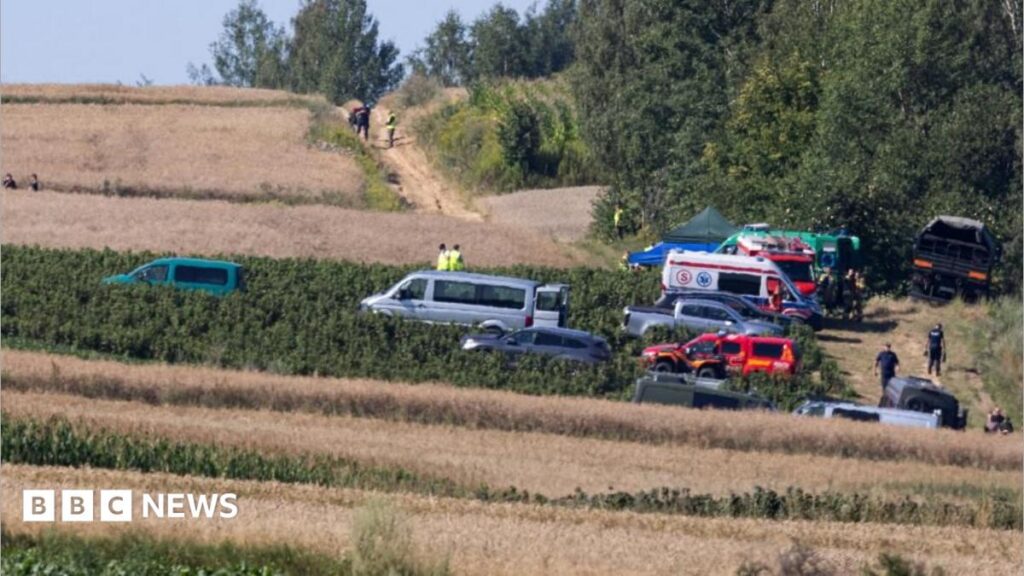
The missile struck a field near Tarnawa Kolonia, creating a crater approximately 10 meters wide. The impact occurred around 03:40 local time, during a period when Russia was launching attacks on the Ukrainian city of Lviv. Polish air defenses detected the object and dispatched an F-16 fighter jet to intercept it. However, the missile disappeared from radar shortly after, complicating interception efforts.
Following the missile’s disappearance from radar, a military helicopter was deployed to search the area. Residents near the crash site reported hearing a loud explosion around 04:00, and police located the impact site about an hour later. Despite the significant crater and shockwave, no casualties or injuries were reported, as the missile landed in an unpopulated area.
Air raid sirens sounded in Lublin and Krasnystaw, cities located further southeast, as part of heightened security measures during the Russian airstrikes on Ukraine. The Polish government emphasized that there was no immediate threat to civilians from this incident.
Polish Government and Military Assessment
Prime Minister Donald Tusk addressed the incident during a special meeting in Lublin, stating that all indications pointed to the missile being a Russian Kh-101 cruise missile. However, he stressed the importance of confirming the missile’s exact type and origin before drawing definitive conclusions.
Tusk revealed that he had been in contact with European leaders to coordinate the response and gather intelligence. He also noted that Polish forces were prepared to shoot down the missile had it continued its flight path into populated areas.
Defence Minister Wladyslaw Kosiniak-Kamysz reported that about 20 unidentified objects were detected near Polish airspace overnight. Pyrotechnical analysis of the debris is underway to determine the missile’s characteristics and confirm its source.
The Polish military’s swift detection and response highlight the country’s vigilance amid the ongoing conflict. This incident marks another instance where the war in Ukraine has directly affected Polish territory, raising concerns about regional security and NATO’s role.
Context: Previous Incidents and Regional Security Implications
Since Russia’s full-scale invasion of Ukraine began in February 2022, several Russian drones and missiles have entered Polish airspace or landed on Polish soil. Notably, in November 2022, two Polish farmers were killed by a missile that landed just over the border. However, that missile was believed to be Ukrainian air defense responding to a Russian attack, underscoring the complexities and dangers of the conflict’s spillover effects.
Ukraine’s acting Foreign Minister Andriy Sybiha confirmed that the missile that landed in Poland was a Russian Kh-101 cruise missile that crossed NATO airspace during a massive Russian strike on Ukraine. This admission highlights the risks of the conflict escalating beyond Ukraine’s borders and potentially involving NATO countries directly.
Poland’s geographic proximity to Ukraine and its membership in NATO place it at the frontline of the conflict’s broader security dynamics. The incident has prompted discussions among European leaders about the need for vigilance and coordinated defense measures to prevent further incursions or accidental escalations.
The Polish Prime Minister’s recent meeting with Ukrainian President Volodymyr Zelensky in Lublin, following Zelensky’s talks with US President Donald Trump, reflects ongoing diplomatic efforts to manage the conflict and its regional consequences.
International and Regional Reactions
European leaders have been closely monitoring the incident, with Poland sharing information to ensure a unified response. The event underscores the importance of NATO’s collective defense commitments and the alliance’s readiness to address threats near its borders.
The incident has also drawn attention to the challenges of distinguishing between offensive and defensive missile systems in a highly contested airspace. The November 2022 tragedy involving Ukrainian air defense missiles illustrates the potential for tragic miscalculations.
Poland’s measured response, emphasizing investigation and verification, aims to avoid premature escalation while ensuring national security. The government’s transparency and prompt communication have been key in maintaining public calm and international support.
The broader conflict continues to affect civilian populations in Ukraine, with recent Russian airstrikes killing eight people, including three children. These ongoing hostilities contribute to heightened regional tensions and underscore the urgency of diplomatic efforts.
What this means
The missile impact in eastern Poland serves as a stark reminder of the ongoing volatility in Eastern Europe and the potential for the Russia-Ukraine conflict to affect neighboring NATO countries. While no casualties occurred in this incident, it underscores the importance of robust air defense systems, vigilant monitoring, and international cooperation to prevent escalation. Poland’s response reflects a careful balance between ensuring national security and avoiding unnecessary provocation. As investigations continue, the event highlights the broader challenges facing the region and the critical need for sustained diplomatic and military coordination to maintain stability.
Thousands of young protesters in Delhi continue to demand education reforms and the resignation of Education Minister Dharmendra Pradhan after a police crackdown. The…
Facing a looming financial collapse, Thames Water’s main lenders have offered the UK government a ‘golden share’ and increased local authority involvement to avoid…
Facing record-breaking temperatures and severe drought, Thames Water has introduced a hosepipe ban impacting over 10 million customers across parts of southern England to…