
News
KFF Health News’ ‘What the Health?’: LIVE From KFF: Health Care and the 2024 Election
Health News tamfitronics [Editor’snote:[Editor’snote: This transcript was generated using both transcription ...
TAMFIS NIG LTDRC 8067447CAC ACTIVEFinima, Bonny Island, Rivers State

Editor’s note: The following is AI-generated commentary and context on this topic, not original reporting.
“People call me the sex MP but we need to be educating” has drawn attention for what it reveals about the wider context surrounding it, beyond the immediate facts of the story itself.
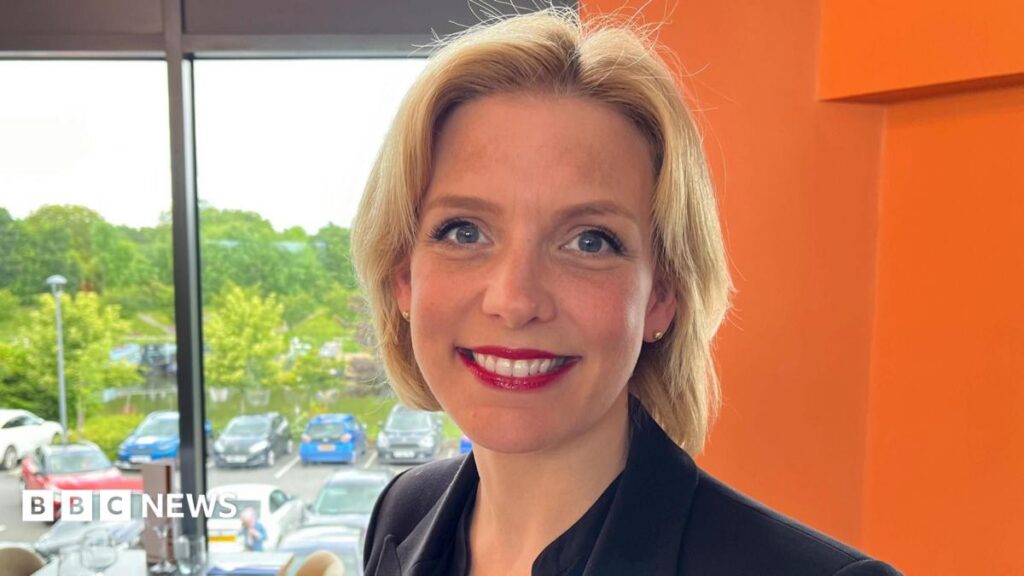
According to what has been reported: Image caption, MP Samantha Niblett has launched officially launched her campaign, calling for lifelong sex educationByGeorgia Roberts, Derby political reporter and Asha Patel, East MidlandsPublished1 minute agoWhen Samantha Niblett launched the Yes Sex Please, We’re British! campaign earlier this year, it did not take long for the jokes and criticism to start flying – and for her to be given a new nickname.”Now in times gone by, being referred to as a ‘sex MP’ would’ve been something quite sleazy and seedy.
The reporting also notes: But thankfully, and hopefully, I’m helping to change that,”… People call me the sex MP but we need to be educating What happened Image caption, MP Samantha Niblett has launched officially launched her campaign, calling for lifelong sex educationByGeorgia Roberts, Derby political reporter and Asha Patel, East MidlandsPublished1 minute agoWhen Samantha Niblett launched the Yes Sex Please, We’re British! campaign earlier this year, it did not take long for the jokes and criticism to start flying – and for her to be given a new nickname.”Now in times gone by, being referred to as a ‘sex MP’ would’ve been something quite sleazy and seedy.
Further detail from the same source material: But thankfully, and hopefully, I’m helping to change that,” the Labour MP for South Derbyshire says.The campaign was begun to push education around consent, respect and healthy relationships, with the aim of preventing abuse and violence.The MP wants to remove the stigma around sex, and says the backlash and ridicule she has received in response to her campaign – including from sections of her own party – is “half the reason” for running it.A launch event for the campaign, dubbed “summer of sex”, was held in London this week and later in autumn, Niblett will display a number of sex toys and sex education aids in Parliament. Image source, SuppliedImage caption, Niblett (right), launched her campaign alongside sex educator Cindy Gallop (middle) and Lucy Litwick, the CEO of Coco De Mer in LondonThe Crime Survey for England and Wales… Source: People call me the sex MP but we need to be educating via www.bbc.co.uk. This article was curated with AI assistance.
On Tamfitronics, coverage of stories such as “People call me the sex MP but we need to be educating” aims to give readers useful context alongside the headline, rather than simply repeating a single short news alert.
It’s worth situating stories like this within the wider trends they represent, since individual anecdotes often illustrate patterns that are also showing up in broader survey data and research.
As with many human-interest stories, the details are specific but the underlying themes — economic pressure, changing norms, personal resilience — are ones that show up again and again across different contexts.
Media coverage of social trends often lags slightly behind the lived experience of the people involved, meaning stories like this can feel both timely and overdue at once.
Commentary on topics like this tends to draw out generational and regional differences in attitude, which is part of what makes these stories a useful lens on wider social change.
Social and cultural shifts like this rarely happen overnight; they tend to reflect gradual changes in attitudes, economics or technology that become visible only when a particular story brings them into focus.
Community organisations and support networks often play a quiet but important role in stories like this, providing context and resources that don’t always make it into the headline coverage.
Personal stories like this often carry more resonance with readers than statistics alone, which is part of why individual accounts are so often used to illustrate wider social research.
Stories about everyday life and social trends often resonate precisely because they touch on experiences many readers recognise from their own lives, even when the specific details differ.
Most social trends have precedents, even when the specific form they take today looks distinctly modern.
Views on social trends like this often vary noticeably by age group, region and personal circumstance.
It touches on experiences and pressures that many people recognise from their own lives, even where the specifics differ.
Readers who want to go deeper on a story like this are often well served by seeking out longer-form analysis once the initial wave of breaking coverage has settled.
Headlines are, by design, compressed — a single line rarely captures the full nuance of a story, which is one reason background and analysis pieces exist alongside straight news reporting.
It’s a useful habit to ask what is actually confirmed versus what is being inferred or assumed when reading coverage of a fast-developing story.
The gap between what is technically confirmed and what feels intuitively true is one that responsible readers try to keep in mind, particularly for stories still actively developing.
Understanding who benefits from a particular framing of a story is a useful, if sometimes uncomfortable, exercise for readers trying to evaluate coverage critically.
Comparing coverage across multiple outlets is one of the more reliable ways for readers to build a fuller picture of any developing story, since different publications often bring different sources and emphases.
The archival record of how a story was first reported, and how that account changed over time, is itself often a useful case study in how information spreads and gets refined.
Institutions and individuals named in news coverage are typically given the opportunity to respond, and any such response usually forms an important part of the fuller picture as a story develops.
Stories with a clear human element tend to generate more engagement than purely procedural ones, even when the procedural details are, in the end, more consequential.
As with most news stories, the details that seem most significant in the first hours are not always the ones that end up mattering most once the full picture is understood.
For the most current and verified information, readers should refer to established news outlets continuing to cover this story.
Originally reported by bbc.co.uk. Adapted for our readers with AI assistance.
Keep reading
News
Health News tamfitronics [Editor’snote:[Editor’snote: This transcript was generated using both transcription ...
News
Amanda Knox, the American woman acquitted of murdering British student Meredith Kercher in Italy, has re...
News
Three-time Olympic champion Adam Peaty, the greatest breaststroker in history, struggles to find his top form at the 2023 Commonwealth Games, settling for bronze…
TAMFIS NIG LTD
Electrical and instrumentation engineering, bid preparation and consulting, IT and software.