
News
RUSSIA versus NATO and BRICS vs. NATO Military SWOT
Recall that Poland’s Minister Sikorski’s core claim is partially supported by the numbers, but the framing “quite quickly” and “without the U.S.” does not…
TAMFIS NIG LTDRC 8067447CAC ACTIVEFinima, Bonny Island, Rivers State

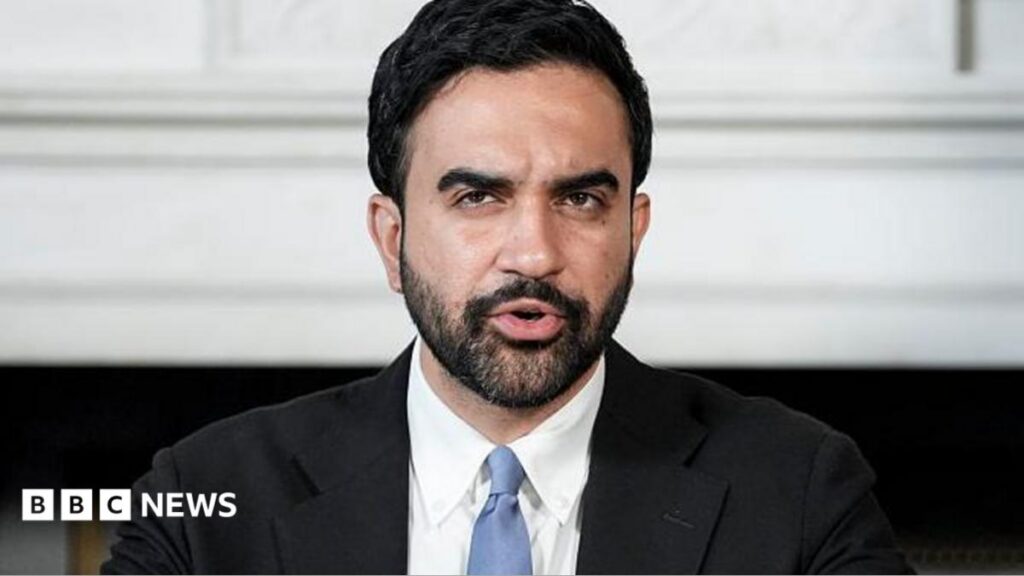
In a recent turn of events, New York City Mayor Zohran Mamdani has stepped back from his earlier promise to arrest Israeli Prime Minister Benjamin Netanyahu should he visit the city. The mayor’s initial pledge was grounded in the International Criminal Court’s (ICC) 2024 arrest warrant for Netanyahu over alleged war crimes in Gaza. However, Mamdani has now acknowledged the limitations of his office’s legal powers and urged federal authorities to take action instead. This episode underscores the complexities of enforcing international legal decisions within the US jurisdiction and reflects shifting political sentiments surrounding the Israeli-Palestinian conflict.
During his campaign and early days in office, Mayor Zohran Mamdani was vocal in his criticism of Israeli Prime Minister Benjamin Netanyahu, labeling him a war criminal and characterizing the conflict in Gaza as genocide. These statements resonated with a segment of New York’s diverse population and aligned with a broader global discourse on accountability for alleged war crimes.
Mamdani’s pledge to arrest Netanyahu if he set foot in New York City was based on the ICC’s 2024 arrest warrant issued against the Israeli leader. The ICC, established under the Rome Statute, is empowered to prosecute individuals accused of genocide, crimes against humanity, and war crimes in member states. The warrant also targeted a Hamas commander, highlighting the court’s focus on multiple actors in the Gaza conflict.
The mayor’s commitment to enforce the warrant was unprecedented for a local official in the United States, reflecting both a symbolic stance and a challenge to established norms of diplomatic immunity and federal jurisdiction.
Following his initial statements, Mamdani’s office conducted a thorough legal review to assess the feasibility of arresting Netanyahu under local jurisdiction. The conclusion was clear: New York City lacks the independent legal authority to enforce an ICC arrest warrant against a foreign head of state.
The United States is not a party to the ICC, which significantly complicates enforcement efforts. While the ICC’s jurisdiction applies to member states, the US government has consistently maintained a stance of non-cooperation with the court, citing concerns over sovereignty and the potential for politically motivated prosecutions.
Mamdani has since called on the federal government to take up the responsibility of executing the ICC warrant. This call places the issue squarely within the realm of national foreign policy and federal law enforcement, areas where local officials have limited influence.
Former President Donald Trump’s response underscores this federal prerogative. Trump stated unequivocally that Netanyahu would not face arrest while in the US, emphasizing the strategic alliance between the two countries and Israel’s role in combating regional threats like Iran.
Mamdani’s initial pledge and subsequent retraction have sparked a range of political responses. Israeli officials, including Danny Danon, Israel’s ambassador to the United Nations, criticized the mayor’s comments, accusing him of promoting Hamas propaganda rather than focusing on serving New Yorkers.
Within the US political landscape, the issue touches on evolving attitudes toward Israel. Recent polling data indicates a shift among Democratic voters, with a growing percentage expressing the view that the US is overly supportive of Israel. This shift may influence future policy debates and political rhetoric surrounding the Israeli-Palestinian conflict.
The mayor’s stance also reflects the challenges local leaders face when engaging with international legal and diplomatic matters. While symbolic gestures can resonate with constituents, the practical enforcement of international law requires coordination with federal and international institutions.
Moreover, the episode highlights the tension between international justice mechanisms like the ICC and national sovereignty. The US’s non-membership in the ICC and its commitment to protecting allied leaders from prosecution within its borders present ongoing obstacles to the court’s global mandate.
The ICC was established to prosecute individuals accused of the most serious crimes under international law, including genocide, war crimes, and crimes against humanity. Its jurisdiction is limited to crimes committed on the territory of member states or by their nationals.
Israel is not a member of the ICC, but the court has asserted jurisdiction over alleged crimes committed in Palestinian territories, which are considered by the ICC to be under its mandate. This jurisdictional claim is contested by Israel and some other countries.
The ICC’s arrest warrant for Netanyahu represents a significant development in international law, signaling an attempt to hold high-ranking officials accountable for alleged actions during conflict.
However, enforcement depends heavily on member states’ cooperation. Since the US is not a member and maintains strong diplomatic ties with Israel, the likelihood of US authorities arresting Netanyahu is virtually nonexistent.
This reality places the ICC’s efforts in a challenging position, relying on international consensus and cooperation that are often difficult to achieve in politically sensitive cases.
Mayor Mamdani’s initial pledge brought attention to the question of what powers local officials have in enforcing international law. Generally, local law enforcement agencies operate under the jurisdiction and authority granted by state and federal laws, which do not extend to executing international arrest warrants against foreign leaders.
The mayor’s subsequent clarification aligns with legal norms that place such responsibilities with federal agencies like the Department of Justice and the State Department.
Local officials can influence public opinion and advocate for policy changes, but the enforcement of international legal decisions requires coordination at the national level.
This case illustrates the limits of local authority and the importance of understanding jurisdictional boundaries in complex geopolitical issues.
The episode involving Mayor Zohran Mamdani’s pledge and subsequent retraction to arrest Prime Minister Benjamin Netanyahu underscores the intricate interplay between local authority, international law, and national foreign policy. While the mayor’s initial stance brought attention to serious allegations against Netanyahu and the role of the ICC, legal realities and political considerations have constrained local enforcement capabilities. Moving forward, the responsibility for addressing ICC warrants and related international legal matters rests primarily with federal authorities, reflecting the complex balance between upholding international justice and navigating diplomatic alliances. This case also highlights evolving public sentiments and political dynamics that may influence future discourse on accountability and international relations.
Originally reported by bbc.co.uk. Adapted for our readers with AI assistance.
Keep reading
News
Recall that Poland’s Minister Sikorski’s core claim is partially supported by the numbers, but the framing “quite quickly” and “without the U.S.” does not…
News
Thousands of young protesters in Delhi continue to demand education reforms and the resignation of Education Minister Dharmendra Pradhan after a police crackdown. The…
News
Facing a looming financial collapse, Thames Water’s main lenders have offered the UK government a ‘golden share’ and increased local authority involvement to avoid…
TAMFIS NIG LTD
Electrical and instrumentation engineering, bid preparation and consulting, IT and software.