
Business
Nigeria’s Economic Performance: Domestic Debt Rise and Agriculture Trade Shift in Q2 2026
Nigeria's economic landscape in the second quarter of 2026 presents a mixed picture of fiscal press...
TAMFIS NIG LTDRC 8067447CAC ACTIVEFinima, Bonny Island, Rivers State

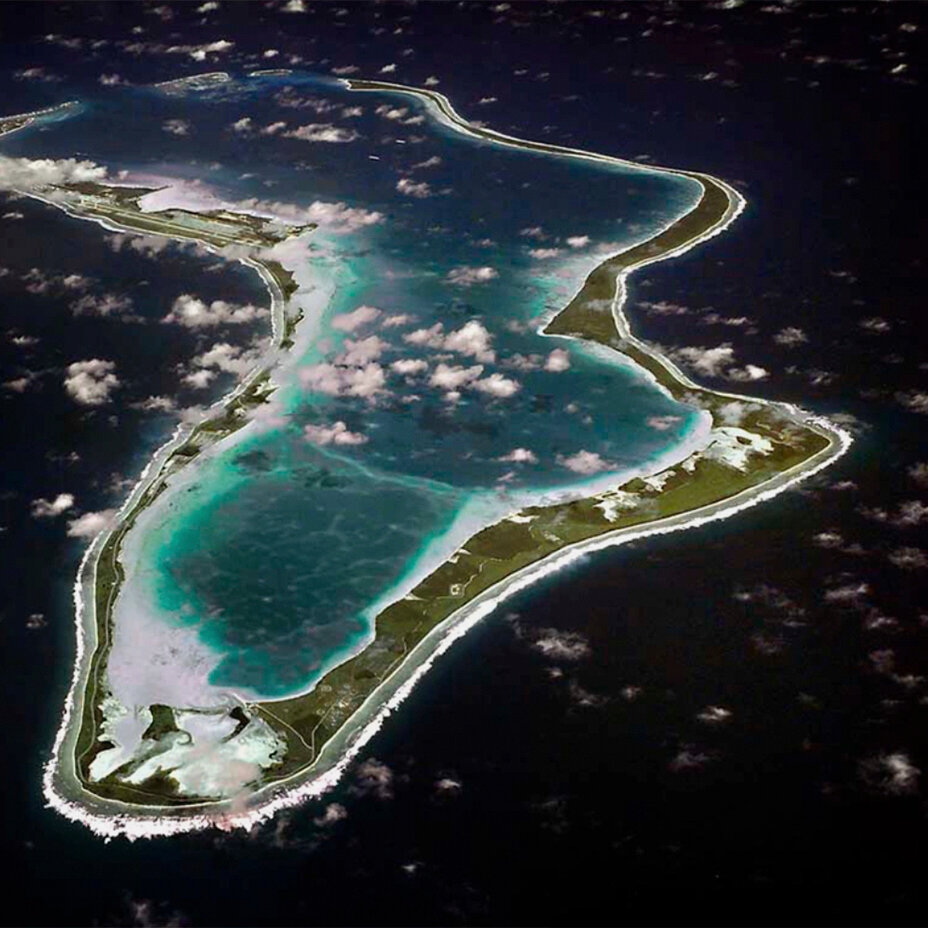
Diego Garcia, a tiny island situated 2,200 miles from the Gulf of Oman, assumed the role of the U.S. Navy's primary logistics hub after Iranian forces damaged the American base in Bahrain. This dramatic shift represents one of the most significant operational adjustments in recent naval history, forcing the fleet to reconfigure its entire supply chain across an ocean-spanning distance.
Diego Garcia, a tiny island situated 2,200 miles from the Gulf of Oman, assumed the role of the U.S. Navy's primary logistics hub after Iranian forces damaged the American base in Bahrain. This dramatic shift represents one of the most significant operational adjustments in recent naval history, forcing the fleet to reconfigure its entire supply chain across an ocean-spanning distance. The relocation was not merely a change of address but a fundamental restructuring of how the Navy sustains combat operations in one of the world's most volatile maritime theaters.
The island of Diego Garcia, part of the British Indian Ocean Territory, lies deep in the central Indian Ocean. Its distance of 2,200 miles from the Gulf of Oman translates to roughly 1,900 nautical miles—a multi-day steam for even the fastest underway replenishment ships. This geographic reality imposes severe constraints on logistics tempo, fuel consumption, and the Navy's ability to surge supplies to carrier strike groups operating in the Arabian Sea and Persian Gulf. The island's isolation, once valued for its security and lack of local population, became a liability when it was pressed into service as the primary sustainment node for forward-deployed forces.
The trigger for this strategic relocation was an Iranian attack that damaged the U.S. base in Bahrain. Bahrain has long hosted Naval Support Activity Bahrain, home to U.S. Naval Forces Central Command and the Fifth Fleet. The base's location on the Persian Gulf's western shore placed it within easy reach of the Strait of Hormuz and the Arabian Sea operating areas. Its destruction or degradation by Iranian action—whether by missile strike, drone attack, or asymmetric warfare—eliminated the Navy's most forward and efficient logistics node, forcing an immediate and improvised shift to the only available alternative with sufficient infrastructure: Diego Garcia.
The USS Lincoln and its carrier strike group, operating in the region at the time, bore the brunt of this logistics disruption. Carrier strike groups require prodigious quantities of jet fuel, ordnance, provisions, and spare parts to maintain high-tempo flight operations. With the Bahrain hub compromised, the Lincoln's strike group faced extended replenishment cycles, increased transit times for supply ships, and greater vulnerability during underway replenishment evolutions far from friendly shores. The 2,200-mile supply line from Diego Garcia meant that each replenishment cycle consumed days that would previously have required hours, reducing the strike group's time on station and its ability to respond rapidly to emerging threats.
The shift to Diego Garcia created a cascade of second-order effects throughout the naval logistics enterprise. Military Sealift Command vessels shuttling between the island and the Gulf faced increased wear, higher fuel costs, and greater exposure to potential interdiction. The Navy's limited fleet of fast combat support ships and dry cargo/ammunition ships had to cover vastly greater distances, effectively reducing the number of available hulls for other theaters. This force multiplication problem—where one logistics ship doing the work of two or three due to distance—strained an already stretched sealift capacity and raised questions about the sustainability of prolonged high-intensity operations from such a remote base.
Reliance on a single remote island 2,200 miles from the fight introduced a strategic vulnerability that adversaries could exploit. Diego Garcia's isolation, while providing security from ground-based threats, also means it lacks the redundant infrastructure, local workforce, and multimodal transport links of a major port like Bahrain. The Navy was forced to adapt by pre-positioning stocks, increasing the number of underway replenishment ships assigned to the theater, and developing more austere expeditionary logistics capabilities. These adaptations, born of necessity, may yield long-term improvements in distributed maritime operations—but they came at the cost of immediate operational degradation.
The loss of the Bahrain logistics hub and the fallback to Diego Garcia signals a broader shift in the regional military balance. It demonstrates that Iran possesses the capability to disrupt or destroy key U.S. infrastructure in the Persian Gulf, forcing a retreat to a sanctuary base halfway across the Indian Ocean. This has implications for deterrence, alliance confidence, and the credibility of American security guarantees to Gulf partners. The Navy's ability to sustain combat operations from such a distance is a testament to its logistical prowess, but it also reveals the fragility of forward presence when key nodes are held at risk.
The Navy's forced relocation to Diego Garcia after the Iranian attack on Bahrain represents a profound operational pivot with lasting consequences. What began as an emergency measure—pressing a tiny, remote island into service as the primary sustainment hub for the Fifth Fleet's combat operations—has exposed both the resilience and the limits of American naval logistics. The 2,200-mile supply line from the central Indian Ocean to the Persian Gulf is a testament to the Navy's global reach, but it is also a strategic liability that adversaries will study and seek to exploit. As the service adapts through pre-positioning, distributed logistics, and expeditionary capabilities, the lessons of this displacement will shape naval strategy for years to come. The USS Lincoln's experience operating at the end of this attenuated supply chain offers a cautionary case study in the costs of losing forward bases—and the imperative of protecting the logistics architecture that makes forward presence possible.
Originally reported by nytimes.com. Adapted for our readers with AI assistance.
Keep reading
Business
Nigeria's economic landscape in the second quarter of 2026 presents a mixed picture of fiscal press...
Business
Liverpool manager Andoni Iraola is confronting a significant selection headache as two key forwards, Cod...
News
Health News tamfitronics [Editor’snote:[Editor’snote: This transcript was generated using both transcription ...
TAMFIS NIG LTD
Electrical and instrumentation engineering, bid preparation and consulting, IT and software.