
Business
Nigeria’s Economic Performance: Domestic Debt Rise and Agriculture Trade Shift in Q2 2026
Nigeria's economic landscape in the second quarter of 2026 presents a mixed picture of fiscal press...
TAMFIS NIG LTDRC 8067447CAC ACTIVEFinima, Bonny Island, Rivers State

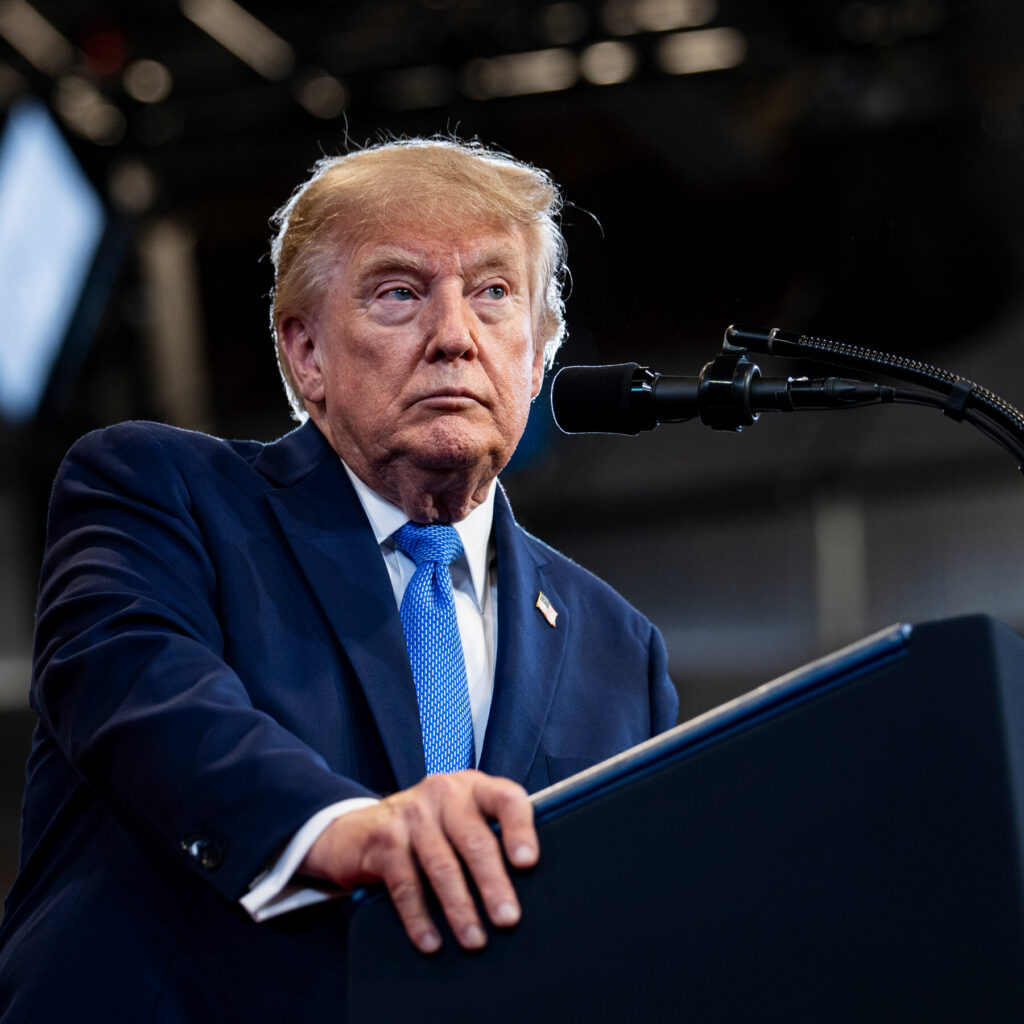
A series of recent losses has eroded the president’s winning record, raising new questions about his hold over the party’s voters. The short sentence carries a larger meaning: in primary contests where a president’s preference once seemed close to dispositive, recent defeats have begun to dull that aura. This development does not, by itself, prove that his influence has vanished. It does suggest that Republican primary voters are not treating his endorsement as automatically decisive, and that observers are starting to measure his sway more carefully.
The central report is straightforward: a string of recent defeats has chipped away at the president’s winning record in Republican primaries. The sentence captures a shift in momentum. Where endorsements or preferred candidates once translated more reliably into victory, the latest results have not followed that pattern. Because the observation comes from a single source note, its precise scope—the number of races, the states involved, and the names of the candidates—has not been provided. What is clear is that the trend is now being framed as a potential weakening of influence rather than as a collection of isolated outcomes.
In primary politics, a leader’s win-loss record is more than a scorecard. It is a proxy for leverage. When a president or former president backs a candidate and that candidate wins, it reinforces the idea that the leader can shape the party’s direction, mobilize donors, and move voters. Each victory adds to a record that deters future opposition and signals to elected officials that crossing the leader carries risk. Conversely, when backed candidates lose, the record erodes. Even a few losses in high-profile races can shift perceptions, because primary voters are often the most engaged and ideological partisans in a party. If the most loyal Republican voters are not uniformly siding with the president’s choices, the unspoken bargain of endorsement politics begins to look less automatic.
The phrase points to a form of political capital that is harder to measure than polling numbers or fundraising totals. Hold over voters is the ability to make a preference feel like a party imperative. It shows up in turnout, in how eagerly candidates seek an endorsement, and in how reliably primary electorates follow cues from the party’s most prominent figure. A strong hold means that an endorsement closes ranks. A weakening hold means that local factors, candidate quality, ideological differences, or voter fatigue can override the cue. The source note does not say the hold has collapsed, only that the recent losses have raised new questions about it. That wording is important: it signals uncertainty and invites closer scrutiny rather than declaring a permanent decline.
Because only the core fact is supplied, the exact questions remain general, but they are not hard to identify from the text. Observers are likely asking whether the president’s endorsement still carries decisive weight in contested primaries, whether Republican voters are beginning to treat his preferences as one factor among many, and whether candidates can build winning coalitions without his explicit backing. There is also the broader question of whether a party defined in large part by its association with one leader can begin to develop alternative centers of influence. These questions are consequential for campaign strategy, for the behavior of officeholders, and for the tone of the next round of Republican contests. Yet they are questions, not answers. The source note offers a diagnosis of doubt, not a verdict.
A careful reading keeps the statement in proportion. The note refers to “a series of recent losses,” not a sweeping rejection. It describes an erosion of a winning record, not a total reversal. And it frames the consequences as “new questions,” not as proof that the president has lost the party. That language matters for anyone interpreting the trend. In journalism and political analysis, overstating a handful of primary results can be as misleading as ignoring them. The appropriate takeaway is that the president’s formerly dominant position in Republican primary politics is now being tested in a visible way. The losses are real enough to notice, but the larger story depends on what happens in the races still to come.
For candidates, the practical implication is that an endorsement may no longer guarantee a path to victory. They may still want the endorsement for media attention and base mobilization, but they are likely to weigh it alongside local reputation, fundraising, endorsements from governors or senators, and their own campaign infrastructure. For the party, the implication is more subtle. A single leader’s grip that is slightly loosened can create space for other voices, but it can also produce uncertainty if no clear successor or rival faction exists. Primary fights may become more competitive and less predictable, which can be healthy for voter choice but stressful for party coordination.
The supplied source note is concise, but it carries a clear message: the president’s record as a kingmaker in Republican primaries is no longer unblemished. A series of recent defeats has worn away at the winning percentage that once helped define his control over the party, and that erosion is prompting fresh questions about whether Republican voters are still taking their cues from him. The observation does not prove a permanent decline, nor does it name the candidates or races involved. It simply marks a moment when the president’s influence looks less certain than it once did. For readers, the value of the note lies in its warning against assuming that any single leader’s endorsement is decisive. As more primaries are held, the pattern will either deepen or reverse, and only then will the true state of the president’s hold over the Republican electorate become clearer.
Originally reported by nytimes.com. Adapted for our readers with AI assistance.
Keep reading
Business
Nigeria's economic landscape in the second quarter of 2026 presents a mixed picture of fiscal press...
Business
Liverpool manager Andoni Iraola is confronting a significant selection headache as two key forwards, Cod...
News
Health News tamfitronics [Editor’snote:[Editor’snote: This transcript was generated using both transcription ...
TAMFIS NIG LTD
Electrical and instrumentation engineering, bid preparation and consulting, IT and software.