Editor’s note: The following is AI-generated commentary and context on this topic, not original reporting.
The news around “Man in critical condition after sea rescue” touches on themes that extend well beyond this single story, and it is worth taking a moment to consider the broader picture.
According to what has been reported: Image source, Getty ImagesByRachael McMenemyPublished33 minutes agoA man is in a critical condition in hospital after three people got into difficulty in the water near an Essex pier.Emergency services were called to an incident at Clacton-on-Sea shortly after 16:30 BST on Saturday.A man aged in his 50s is in a critical but stable condition, Essex Police said. Two other people, a man aged in his 20s and a teenage girl, remain in hospital but are “recovering well”, the force added.
The reporting also notes: All three people knew each other. Image source, Owen Ward/BBCImage… Man in critical condition after sea rescue What happened Image source, Getty ImagesByRachael McMenemyPublished33 minutes agoA man is in a critical condition in hospital after three people got into difficulty in the water near an Essex pier.Emergency services were called to an incident at Clacton-on-Sea shortly after 16:30 BST on Saturday.A man aged in his 50s is in a critical but stable condition, Essex Police said.
Further detail from the same source material: Two other people, a man aged in his 20s and a teenage girl, remain in hospital but are “recovering well”, the force added. All three people knew each other.
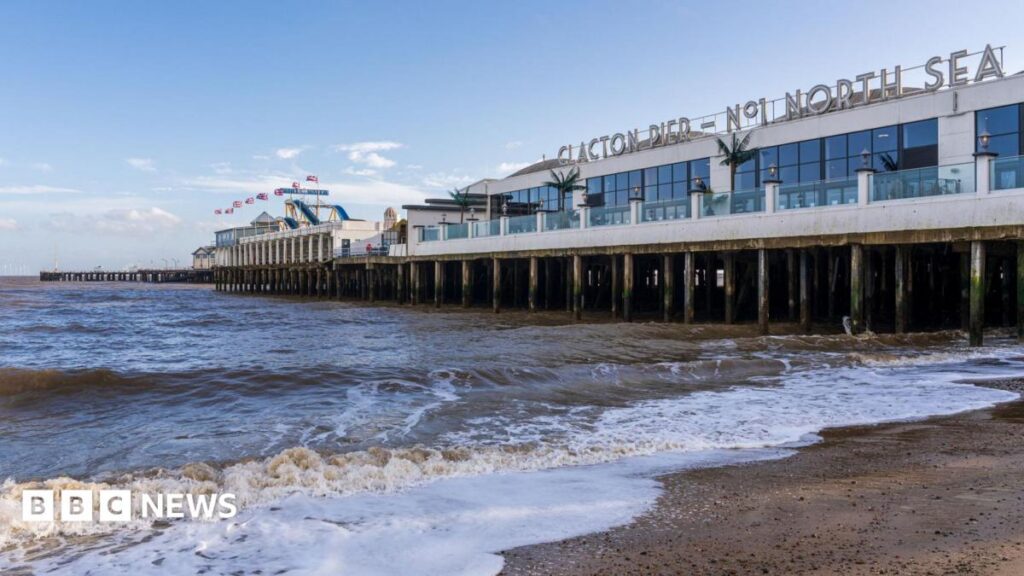
The account continues: Image source, Owen Ward/BBCImage caption, Emergency services were at the scene, close to Clacton Pier, police saidIt follows a separate incident in West Mersea, near Colchester, on Wednesday in which a mother and her teenage daughter died. Shally Rahman, 41, and Samiha Rahman, 15, tried to help a seven-year-old relative out of the water. He remains in hospital in a critical condition.Ch Insp Stuart Austin, Clacton district commander, said: “I’m acutely aware there will be a sense of shock and worry given recent incidents elsewhere in north Essex in the last week.”First and foremost, our thoughts are with those affected by the incident on the seafront yesterday. “I’m also aware the area was busy, and the incident would have been seen by a lot of people.”Emergency services were quickly on the scene, and all… Source: Man in critical condition after sea rescue via www.bbc.co.uk. This article was curated with AI assistance.
On Tamfitronics, coverage of stories such as “Man in critical condition after sea rescue” aims to give readers useful context alongside the headline, rather than simply repeating a single short news alert.
Understanding the Wider Context
Every story sits within a wider web of related developments, and understanding those connections often does more to explain significance than the isolated headline alone.
It’s worth noting how much modern news cycles compress the time between an event happening and public reaction to it, which can make measured analysis harder to come by in the moment.
Why It Matters
Context, more than any single fact, is usually what determines whether a story is remembered as significant a year or two down the line.
Stories like this are a reminder of how much context shapes the way we interpret a single event or announcement, and why it’s worth reading beyond the headline before drawing firm conclusions.
Different Perspectives
It’s easy to lose sight of nuance in a fast-moving news cycle, which is why it is often worth returning to a story once the initial wave of coverage has settled.
As more information becomes available, the picture painted by early reporting often becomes more nuanced, which is a useful thing to keep in mind with any fast-moving story.
Practical Implications
Readers looking to understand stories like this in more depth are generally well served by comparing coverage across several sources as more details emerge.
The broader significance of developments like this is usually best understood by placing them alongside related events and trends, rather than viewing them in isolation.
Key considerations
Every story sits within a wider web of related developments, and understanding those connections often does more to explain significance than the isolated headline alone.
It’s worth noting how much modern news cycles compress the time between an event happening and public reaction to it, which can make measured analysis harder to come by in the moment.
Context, more than any single fact, is usually what determines whether a story is remembered as significant a year or two down the line.
Stories like this are a reminder of how much context shapes the way we interpret a single event or announcement, and why it’s worth reading beyond the headline before drawing firm conclusions.
Frequently Asked Questions
What should readers keep in mind?
As with most developing stories, the full picture usually becomes clearer over time as more information emerges.
What’s the best way to stay informed?
Following a range of established sources, and being willing to update one’s understanding as more facts emerge, tends to serve readers best.
Why is this story getting attention?
It touches on themes with relevance well beyond the immediate headline, which is often what drives wider interest.
A Note on How This Story Is Being Covered
News coverage today moves through several distinct phases: an initial, often incomplete report; a period of follow-up reporting as more sources are consulted; and, eventually, a more settled account once the immediate uncertainty has cleared.
Stories with a clear human element tend to generate more engagement than purely procedural ones, even when the procedural details are, in the end, more consequential.
Understanding who benefits from a particular framing of a story is a useful, if sometimes uncomfortable, exercise for readers trying to evaluate coverage critically.
It is generally good practice for readers to check the publication date and any updates attached to a story, since older details can sometimes continue to circulate well after they’ve been superseded.
Context from previous, related stories often helps explain why a particular development is considered significant enough to be reported in the first place.
It is not unusual for a story’s significance to be reassessed weeks or months later, once its consequences have had time to play out more fully.
Archive coverage of similar past events can be a useful way for readers to calibrate their expectations about how a story like this is likely to develop over the coming days and weeks.
Readers who follow a particular beat closely often notice that today’s headline connects to threads that have been building for weeks or months, even when a story is presented as a standalone development.
Corrections and updates are a normal, healthy part of news reporting, reflecting an ongoing effort to refine an account as better information becomes available rather than a failure of the original report.
The role of official spokespeople and press offices is to provide an authoritative account of events, though their statements are usually just one part of a fuller picture that includes independent verification.
For the most current and verified information, readers should refer to established news outlets continuing to cover this story.
Originally reported by bbc.co.uk. Adapted for our readers with AI assistance.
Thousands of young protesters in Delhi continue to demand education reforms and the resignation of Education Minister Dharmendra Pradhan after a police crackdown. The…
Facing a looming financial collapse, Thames Water’s main lenders have offered the UK government a ‘golden share’ and increased local authority involvement to avoid…
Facing record-breaking temperatures and severe drought, Thames Water has introduced a hosepipe ban impacting over 10 million customers across parts of southern England to…