‘It’s possible to combine Haredi lifestyle with combat’ -Orthodox IDF soldiers recount Gaza fighting amid draft law controversy
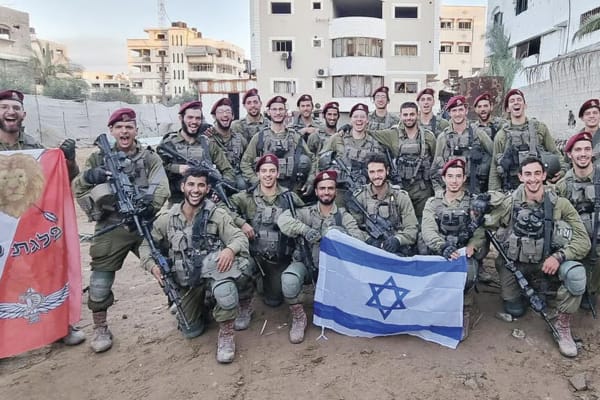
As Israel wrestles with a landmark High Court ruling that ends blanket military exemptions for ultra-Orthodox men, a small but growing number of Haredi soldiers are serving in front-line combat units. Their experiences in Gaza since October 7 rebut the argument that religious observance and military service are mutually exclusive. The Hetz company, part of the 202nd Battalion of the Paratroopers Brigade, has operated continuously across the Gaza Strip, from Shajaiyah and Zeitoun to Khan Younis. Their story illuminates the practical realities of integrating Haredi recruits into the IDF — and the human cost of the war that accelerated that integration.
A Company Forged in Continuous Combat
The Hetz company has been on near-constant operational footing since the war began. Lieutenant Avichai Ben Ami described a tempo that has seen the unit cover every major sector of Gaza. In one three-week operation targeting Jabaliya, soldiers encountered heavily booby-trapped buildings and a well-organized enemy force. By the operation's end, the threat infrastructure in the area had been largely dismantled.
This intensity has forged a unit combining conventional paratrooper training with the cultural requirements of its Haredi soldiers. The company includes yeshiva graduates, some of whom faced family estrangement for enlisting, alongside lone soldiers from the United States and France. Their shared experience created cohesion transcending the usual religious-secular divide in Israeli society.
Three Extraordinary Days in Jabaliya
Over two days in Jabaliya, the company faced a sequence of events few military units experience. First, a team led by Captain Roy Beit Yaakov discovered a tunnel shaft beneath a suspicious rug in a residential building. The ten-metre-deep shaft contained the bodies of three Israeli hostages: Orion Hernandez Radoux, 30; Hanan Yablonka, 42; and Michel Nisenbaum, 59. The discovery brought closure to families but placed soldiers at the centre of one of the war's most harrowing missions.
The following morning, company commander Major Gal Shabbat was shot in the head during a mission. He died three days later. His deputy, Captain Shlomo Cohen, assumed command immediately, evacuating the wounded officer and continuing the assault without pause. Cohen's transition from deputy to commander under fire exemplified the unit's operational resilience.
Hours later, a catastrophic friendly-fire incident occurred when tanks from the 82nd Armoured Battalion struck a building housing Hetz soldiers. Two shells killed five and wounded seven, including Lieutenant Roy Beit Yaakov — the same officer who had led the hostage-recovery team the previous day. Despite the devastation, commanders gathered their teams, processed the loss, and resolved to continue fighting. The next day, the company received a new attack mission and executed it.
Maintaining Religious Observance in a War Zone
What distinguishes Hetz is not only its combat record but how it accommodates Haredi religious practice under fire. Before each entry into Gaza, the unit distributes Torah study booklets and radios for religious lessons. Sabbath observance is maintained even in enemy territory, with prayer services held wherever the tactical situation permits. Captain Cohen noted that supportive rabbis back the arrangement, and soldiers have carried study materials into the strip, finding time for learning between missions.
Lieutenant Ben Ami emphasized that the unit's secular commander, Major Gal Shabbat, actively facilitated religious observance — sometimes more rigorously than the religious soldiers themselves. "The true sanctification of God is to fight and complete the operational missions," Ben Ami said. "It's absolutely possible to combine the Haredi lifestyle with combat service." This model — combat effectiveness paired with full religious accommodation — is precisely what the IDF will need to replicate at scale if Haredi conscription expands.
The Political Context: Draft Law and High Court Pressure
The soldiers' reflections come against a backdrop of intense political and legal pressure. The High Court of Justice recently ruled that the government's longstanding exemption of Haredi men from military service is unconstitutional, effectively requiring the state to draft them or justify a new framework. The decision has ignited fierce debate within Haredi communities, where many view full-time yeshiva study as a spiritual bulwark for the nation.
Hetz soldiers are acutely aware of the controversy. Captain Cohen described the company's recruits as "yeshiva students or those who finished yeshiva because it didn't work out for them" — a population that has already crossed the cultural threshold into military service. Their presence demonstrates that the pool of Haredi men willing to serve, while still small, is real and growing. The war has accelerated a shift in Haredi public opinion, with more young men considering enlistment as a legitimate path.
The IDF now faces the logistical and cultural challenge of scaling the Hetz model. Integrating thousands of Haredi recruits will require not only physical infrastructure — separate housing, kosher kitchens, prayer facilities — but also a command culture that respects religious commitments without compromising operational standards. The Hetz company proves this balance is achievable; the question is whether the institution can replicate it across multiple brigades.
Mental Health and Unit Resilience
After the Jabaliya sequence, the Paratroopers Brigade deployed mental health officers to support Hetz soldiers. Captain Cohen acknowledged the trauma but insisted the unit's fighting spirit remained intact. "I told the battalion commander that we have a strong company that will keep moving forward and that he could rely on us," he said. This resilience — the ability to absorb catastrophic losses and continue operating — is a hallmark of elite units, but it also raises questions about long-term psychological support for soldiers who endure such concentrated trauma.
The IDF's investment in immediate mental health intervention reflects lessons learned from previous conflicts. For Haredi soldiers, who may lack the same familial support networks as their secular peers (some having been estranged), institutional psychological care is especially critical. The Hetz experience underscores that combat integration must address spiritual, cultural, and psychological dimensions simultaneously.
What this means
The Hetz company offers a proof of concept that Israel's military and religious establishments have long debated but rarely seen in action: devout Haredi men can serve in elite combat units without abandoning their way of life. The soldiers' testimony — delivered from the ruins of Gaza, not the safety of a yeshiva — carries weight that no policy paper can match. As the High Court's deadline looms and the IDF prepares for mass Haredi integration, the lessons of Hetz are clear. Success requires more than quotas; it demands commanders who understand religious culture, rabbis who endorse military service, and systems that protect both the soldier's soul and the unit's fighting edge. The war in Gaza has already rewritten the relationship between Haredi society and the state. The draft law controversy will determine whether that rewriting becomes a permanent chapter in Israel's history — or a footnote in a conflict that changed everything but resolved nothing.
Originally reported by allisrael.com. Adapted for our readers with AI assistance.
Obi says his wife funds her own purchases. This analysis separates his explanation, unverified handbag prices and the evidence needed to assess public spending.
Omotola’s podcast remarks raise practical questions about income, reputation and values. Here is how professionals can assess offers without inventing claims about missed earnings.