
News
RUSSIA versus NATO and BRICS vs. NATO Military SWOT
Recall that Poland’s Minister Sikorski’s core claim is partially supported by the numbers, but the framing “quite quickly” and “without the U.S.” does not…
TAMFIS NIG LTDRC 8067447CAC ACTIVEFinima, Bonny Island, Rivers State

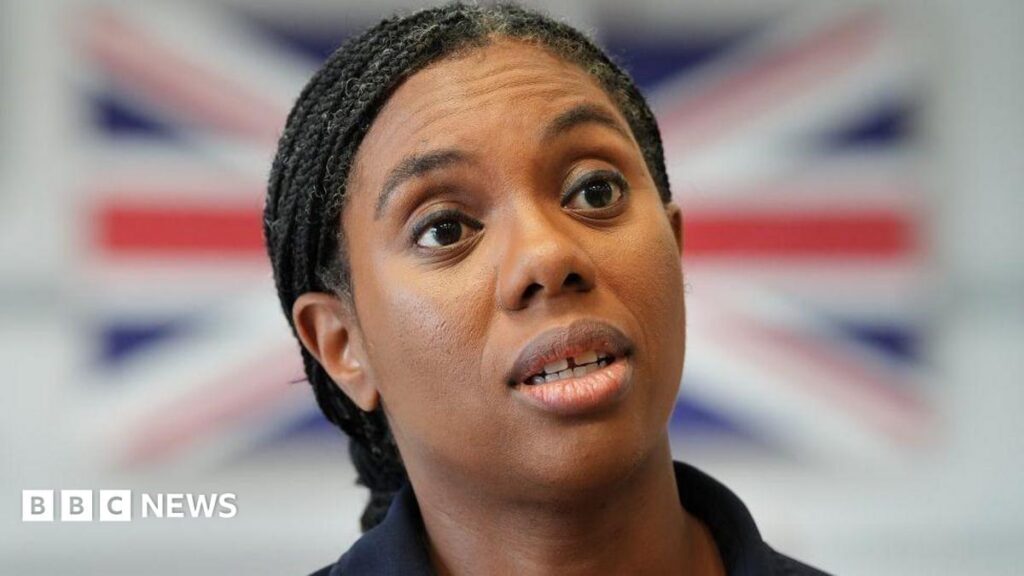
Andy Burnham is set to become the United Kingdom’s next prime minister, succeeding Sir Keir Starmer. His recent speech promised transformative political change, emphasizing collaboration and decentralization of power. However, Conservative leader Kemi Badenoch has voiced sharp concerns about Burnham’s leadership style and the substance of his plans. This article explores Badenoch’s critiques, Burnham’s commitments, and the broader implications for UK politics as Burnham prepares to take office.
In a speech delivered at the Trade Union Congress headquarters in London, Andy Burnham outlined his vision for a transformative period in UK politics. He pledged to deliver what he described as “the most significant change moment in our politics for 40 years.” His commitments included working collaboratively with other political parties while maintaining a distinct Labour identity and transferring greater power from Westminster to local authorities. These promises signal an intent to reshape governance structures and political culture.
Burnham’s leadership emerged decisively after securing the support of 379 Labour MPs and all 11 affiliated trade unions. His return to Parliament was recent, having won a by-election just a month ago. Despite this strong internal backing, Burnham has been cautious about revealing details regarding his cabinet appointments, leaving some uncertainty about his immediate governance strategy.
Kemi Badenoch, leader of the Conservative Party, offered a pointed assessment of Burnham’s leadership during an interview on BBC’s Sunday program with Laura Kuenssberg. While acknowledging Burnham as a “nice guy” and a “people pleaser,” Badenoch questioned his capacity to make difficult decisions necessary for the country’s wellbeing.
Badenoch criticized Burnham’s recent speech for being overly focused on internal Labour Party dynamics rather than addressing the broader national agenda. She described his plans as “airy-fairy,” implying a lack of concrete policy details or practical solutions. According to Badenoch, Burnham appears disconnected from the country’s pressing priorities, which could lead to a challenging adjustment period once he assumes office.
Emphasizing her own approach, Badenoch stated that she is willing to “score as many points as possible” in political debates if it serves the country’s interests. She contrasted this with Burnham’s apparent reluctance to engage in tough political battles, suggesting that effective leadership requires confronting difficult issues head-on rather than seeking popularity.
The exchange between Badenoch and Burnham highlights a broader tension in UK politics between leadership styles focused on consensus-building and those emphasizing decisive action. Burnham’s self-presentation as a collaborative leader aiming to work across party lines contrasts with Badenoch’s call for firmness and clarity in decision-making.
Badenoch’s warning that Burnham may face a “rude awakening” upon taking office underscores concerns about the practical challenges of governance. Leading a country requires balancing political ideals with the realities of policy implementation and parliamentary dynamics, especially when managing dissent within one’s own party.
Burnham’s emphasis on decentralizing power to local authorities aligns with ongoing debates about regional autonomy and governance efficiency. However, without detailed plans, such proposals risk being perceived as vague or symbolic rather than substantive reforms.
Burnham’s ascent to prime ministership marks a significant moment for the Labour Party, signaling a potential shift in policy direction and political tone. His promises of significant change resonate with voters seeking alternatives to the status quo, particularly in addressing regional disparities and political polarization.
However, the skepticism voiced by Badenoch and others points to the challenges Burnham will face in translating rhetoric into action. Political opponents are already framing his leadership as lacking in clarity and resolve, which could affect public confidence and parliamentary support.
The upcoming period will be critical in observing how Burnham navigates these challenges, including his approach to cabinet appointments and policy rollouts. His ability to articulate clear priorities and demonstrate effective governance will be pivotal in shaping his tenure and the Labour Party’s future.
Editor’s note: The following is AI-generated commentary and context on this topic, not original reporting.
Opposition figures typically intensify their scrutiny of an incoming leader in the period immediately following a change of premiership, using the transition as an opportunity to define the new leader’s perceived weaknesses before their own record of governance is established. Such critiques often focus on perceived inconsistencies between an incoming leader’s campaign rhetoric and their initial policy signals, a common line of political attack regardless of party.
Political commentators generally view early opposition commentary as part of the standard rhythm of parliamentary politics rather than a definitive verdict on a new government’s prospects, noting that public opinion in the opening months of any premiership tends to be volatile and heavily influenced by events rather than rhetoric alone. How a new leader responds to early criticism, whether by engaging directly or focusing on their own agenda, is often seen as an early indicator of their broader political strategy.
As Andy Burnham prepares to assume the role of prime minister, the scrutiny from political rivals like Kemi Badenoch highlights the challenges inherent in leadership transitions. While Burnham’s vision for significant political change has energized many within the Labour Party and beyond, questions remain about his readiness to confront the complex realities of governance. The coming weeks and months will test his capacity to balance collaboration with decisive action, articulate clear policy priorities, and respond effectively to the nation’s needs. Observers and citizens alike will be watching closely to see whether Burnham can fulfill his promises or if his leadership will encounter the difficulties anticipated by his critics.
Originally reported by bbc.co.uk. Adapted for our readers with AI assistance.
Keep reading
News
Recall that Poland’s Minister Sikorski’s core claim is partially supported by the numbers, but the framing “quite quickly” and “without the U.S.” does not…
News
Thousands of young protesters in Delhi continue to demand education reforms and the resignation of Education Minister Dharmendra Pradhan after a police crackdown. The…
News
Facing a looming financial collapse, Thames Water’s main lenders have offered the UK government a ‘golden share’ and increased local authority involvement to avoid…
TAMFIS NIG LTD
Electrical and instrumentation engineering, bid preparation and consulting, IT and software.