
Business
Nigeria’s Economic Performance: Domestic Debt Rise and Agriculture Trade Shift in Q2 2026
Nigeria's economic landscape in the second quarter of 2026 presents a mixed picture of fiscal press...
TAMFIS NIG LTDRC 8067447CAC ACTIVEFinima, Bonny Island, Rivers State

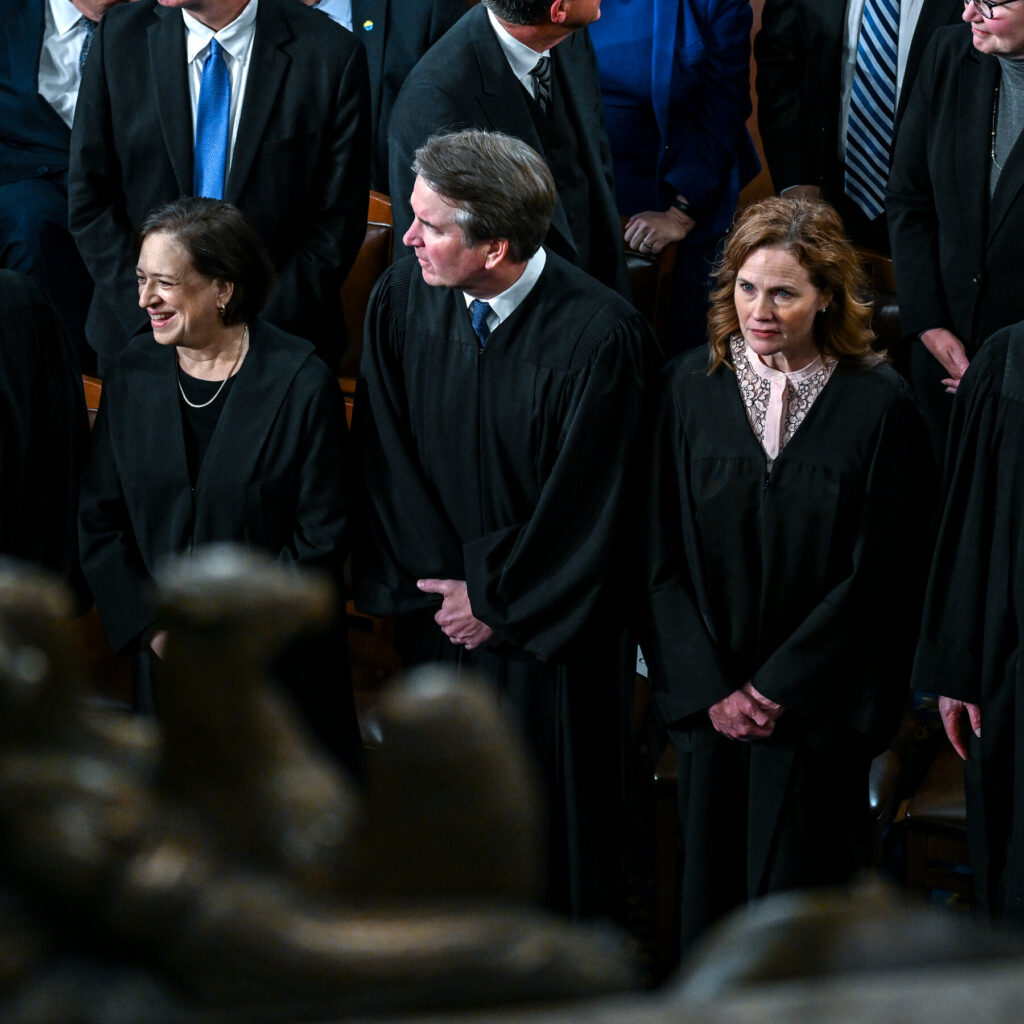
The Supreme Court is once again at the center of a fast-moving fight over presidential power. As emergency applications from the Trump administration pile up, the justices are being asked to decide — often overnight, with little briefing and no oral argument — whether to let controversial policies take effect while legal challenges continue. The justices are still struggling with whether and when to explain themselves to the public when the court issues temporary, but consequential orders. The result is a growing debate over the court’s so-called shadow docket, the procedural lane where these orders are issued, and whether the public is getting enough reason to trust them.
The court’s emergency, or shadow, docket is designed for rare moments when a party claims it will suffer serious, irreparable harm before a case can be heard in the ordinary way. Historically, that meant situations like a death-row inmate facing execution. The process usually involves limited briefing, no oral arguments and orders that are sometimes only a sentence long.
During the second Trump administration, the emergency docket has become a routine forum for major policy disputes. In its first 20 weeks, the administration filed 19 emergency applications at the Supreme Court, according to an analysis by Georgetown law professor Stephen Vladeck cited by the Brennan Center. By comparison, the Biden administration made 19 such applications over four full years, while the Obama and George W. Bush administrations combined made only eight over 16 years.
As of mid-August 2026, there had been 40 emergency applications to the court in cases related to the second Trump administration, with three pending and three withdrawn, according to Ballotpedia’s tracker. The Brennan Center’s tracker counted 29 shadow-docket decisions concerning administration actions since January 20, 2025. Of those, 22 ruled for the administration at least partially, seven ruled against it, and seven were issued with no written explanation at all.
These interim rulings are not final decisions on the merits, but they have immediate real-world effects. The Brennan Center notes that shadow-docket orders have allowed mass firings of civil servants, the termination of scientific research grants, immigration enforcement tactics such as racial profiling in investigative stops, restrictions on transgender service members, and the withholding or cancellation of foreign aid and education funds that Congress had appropriated.
Because many of these orders come with little or no reasoning, lower courts are left with limited guidance on how to handle similar cases. Critics argue this pattern expands presidential power quickly and quietly, while defenders say the administration is simply responding to a wave of nationwide injunctions from lower courts.
The most recent example came on August 24, 2026, when the Supreme Court stayed a district court injunction that had blocked President Trump’s executive order overhauling mail-in voting. In an unsigned per curiam opinion, the court said the states challenging the order had not shown an injury concrete and imminent enough to make their claims justiciable before the election. Justice Sonia Sotomayor and Justice Elena Kagan noted their dissent, and Justice Ketanji Brown Jackson filed a separate dissent criticizing the majority for using the emergency docket to weigh in prematurely.
Other recent cases show the same tension. In Trump v. Cook, the court declined to let the president remove Federal Reserve Board member Lisa Cook and ordered full briefing and oral argument. In Trump v. Slaughter and Trump v. Boyle, however, the court allowed the removal of members of independent agencies without full merits review, sometimes with no explanation. The court also allowed the administration to end Temporary Protected Status designations for Haitian, Syrian and Venezuelan nationals in Noem v. Doe and related cases, and to restrict passport gender markers in Trump v. Orr.
The internal disagreement is unusually visible. Justice Kagan wrote in one dissent that the emergency docket “should never be used, as it has been this year, to permit what our own precedent bars. Still more, it should not be used, as it also has been, to transfer government authority from Congress to the President, and thus to reshape the Nation’s separation of powers.”
Justice Jackson has repeatedly accused the majority of using the emergency docket to “cavalierly pick the winners and losers” in cases still pending below. In the voting case, she said the majority had inappropriately turned the discretionary emergency docket into a forum for mandatory review of the administration’s arguments. Justice Samuel Alito has raised the opposite concern, objecting when the court reaches out to express tentative views on important issues with scant briefing and no oral argument.
The core issue flagged by the draft source is the justices’ struggle over when to explain themselves. Shadow-docket orders often arrive as bare votes: the court grants or denies relief without saying why, or with only a paragraph of reasoning. When a ruling affects voting rules, immigration status, federal employment or military service, the absence of a public explanation can make the decision look less like law and more like raw power.
The court has experimented with different approaches. Some orders are unsigned and silent. Others include short per curiam opinions. A few cases, such as Trump v. Cook and Noem v. Doe, are set for full briefing and oral argument before the court acts. The inconsistency itself is part of the puzzle: parties and the public cannot always predict when the court will stop to explain and when it will simply issue a one-line order.
The Supreme Court’s emergency orders are not going away. As long as the Trump administration keeps treating policy rollouts as emergencies requiring immediate judicial relief, the justices will keep being asked to intervene before cases are fully developed. What remains unsettled is whether the court will use those moments to explain its reasoning or simply issue silent, consequential commands. The justices are still struggling with whether and when to explain themselves to the public when the court issues temporary, but consequential orders. How they resolve that struggle will shape not only the administration’s agenda, but also public confidence in the court itself.
Originally reported by nytimes.com. Adapted for our readers with AI assistance.
Keep reading
Business
Nigeria's economic landscape in the second quarter of 2026 presents a mixed picture of fiscal press...
Business
Liverpool manager Andoni Iraola is confronting a significant selection headache as two key forwards, Cod...
News
Health News tamfitronics [Editor’snote:[Editor’snote: This transcript was generated using both transcription ...
TAMFIS NIG LTD
Electrical and instrumentation engineering, bid preparation and consulting, IT and software.