Business News
NDLEA Intensifies Operations Against Narcotic Trade and Illegal Trafficking
The National Drug Law Enforcement Agency has arrested multiple suspects and seized significant drug consignments in recent operations across Nigeria.
TAMFIS NIG LTDRC 8067447CAC ACTIVEFinima, Bonny Island, Rivers State

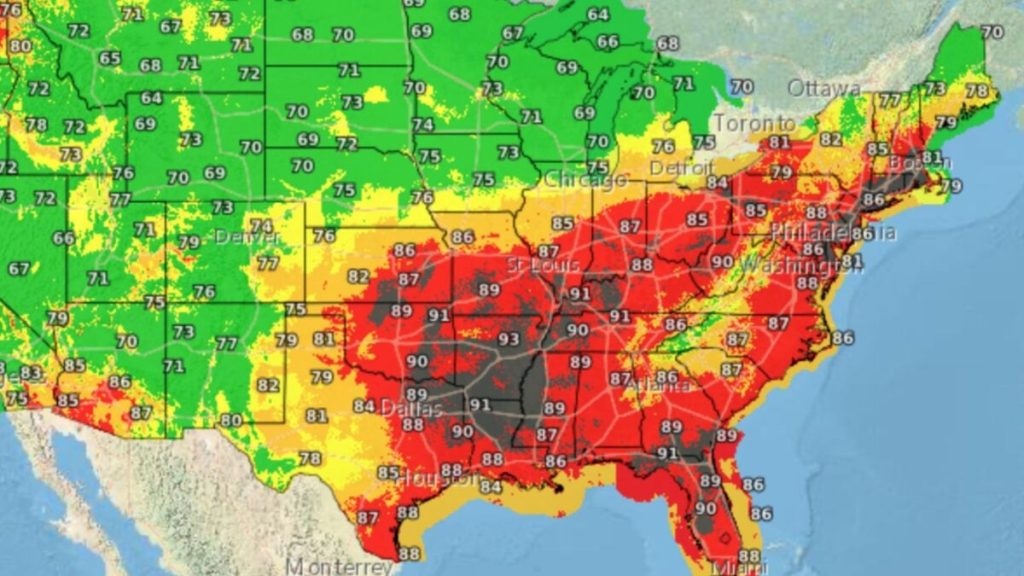
This summer, the eastern United States has been gripped by an oppressive heat dome, causing temperatures to soar to unprecedented levels. But beyond the raw heat, an insidious factor—extreme humidity—is making conditions far more dangerous. The combination of heat and moisture is measured by the wet-bulb temperature, a critical indicator of how the human body copes with heat stress. As these wet-bulb readings climb to near-lethal levels, concerns grow about the immediate health risks and the long-term implications of climate change on human survivability. This article explores the science behind wet-bulb temperatures, their current impact on the eastern U.S., and what the future holds.
Wet-bulb temperature is a measure that combines air temperature and humidity to assess heat stress on the human body. It represents the lowest temperature that can be achieved by evaporative cooling, similar to how sweat cools the skin. Unlike dry air temperature, wet-bulb temperature accounts for moisture in the air, making it a more accurate reflection of heat's physiological impact.
Traditionally, wet-bulb temperature is measured using a thermometer wrapped in a wet cloth, which cools as water evaporates. When humidity is high, evaporation slows, and the wet-bulb temperature approaches the actual air temperature. This means the body’s primary cooling mechanism—sweating—becomes less effective, raising the risk of heat-related illnesses.
Scientists consider a wet-bulb temperature of approximately 35°C (95°F) as the upper limit of human survivability in sustained conditions. Beyond this threshold, the body cannot dissipate heat efficiently, leading to dangerous overheating. However, recent research suggests this critical limit may be lower, indicating that humans are more vulnerable to heat stress than previously thought.
In recent weeks, an intense heat dome has settled over the eastern United States, trapping hot air and moisture beneath a high-pressure system. This phenomenon has caused temperatures to skyrocket, with many regions experiencing sustained heat well above seasonal averages.
Compounding the problem, extreme humidity levels have elevated wet-bulb temperatures to dangerous levels. The National Weather Service issued heat warnings covering nearly 170 million people, highlighting the severity of conditions. These warnings emphasize that the combination of heat and humidity can be deadly, especially for vulnerable populations like the elderly, children, and outdoor workers.
The heat dome's persistence has led to prolonged exposure to hazardous conditions, increasing the risk of heat exhaustion, heat stroke, and other heat-related health issues. Emergency services and health officials have urged the public to take precautions, including staying hydrated, seeking shade, and avoiding strenuous activities during peak heat hours.
The human body maintains its temperature by sweating, which cools the skin as moisture evaporates. High humidity, however, inhibits this evaporation process, causing the body’s cooling system to falter. When wet-bulb temperatures approach or exceed 30.6°C (87°F), the body struggles to regulate its core temperature effectively.
Prolonged exposure to such conditions can lead to heat-related illnesses ranging from mild heat cramps to life-threatening heat stroke. In extreme cases, the body may overheat beyond recovery, resulting in organ failure or death. These risks are exacerbated for individuals with preexisting health conditions, the elderly, and those without access to cooling resources.
Moreover, the combined stress of heat and humidity impacts cognitive function, physical performance, and overall well-being. Workers in outdoor environments or athletes are particularly vulnerable, as their bodies generate additional heat that must be dissipated to avoid dangerous overheating.
While wet-bulb temperature measures the combined effects of heat and humidity, the Wet-Bulb Globe Temperature (WBGT) provides a more complete assessment of heat stress by incorporating factors like wind speed, solar radiation, and cloud cover. This metric is especially useful for evaluating outdoor conditions where sunlight and airflow significantly influence heat exposure.
During the recent heat wave, WBGT values in the eastern U.S. reached the high 80s to low 90s Fahrenheit (upper 20s to mid-30s Celsius), indicating extreme heat stress. According to the National Weather Service, WBGT readings above 90°F (32°C) can induce heat stress within just 15 minutes of physical exertion in direct sunlight.
Understanding WBGT is vital for public health planning, especially for scheduling outdoor work or athletic events, and for issuing timely warnings. It helps authorities and individuals gauge safe exposure limits and implement measures to mitigate heat-related risks.
Human-induced climate change is a key driver behind rising wet-bulb temperatures globally. As greenhouse gas emissions trap more heat in the atmosphere, air temperatures increase, allowing the atmosphere to hold more moisture. This combination fuels more frequent and intense episodes of high heat and humidity.
Climate models predict that by mid-century, several regions—including parts of the U.S. Midwest and Southeast—will routinely experience wet-bulb temperatures surpassing critical thresholds. This trend signals a future where deadly heat events become more common and prolonged, challenging existing infrastructure and public health systems.
The increasing frequency of extreme wet-bulb temperature events underscores the urgency of climate mitigation efforts. Reducing emissions and implementing adaptive strategies are essential to protect vulnerable populations and maintain livable conditions in affected regions.
The eastern United States, particularly the Southeast and parts of the Midwest, are highly susceptible to dangerous wet-bulb temperature spikes. These regions often experience hot, humid summers, making them prime candidates for extreme heat stress events exacerbated by climate change.
Urban areas with dense populations and limited green spaces face additional challenges due to the urban heat island effect, which can elevate temperatures several degrees above surrounding rural areas. This effect intensifies heat exposure for residents, especially those without access to air conditioning.
Rural communities also face risks, often with fewer resources for heat relief or emergency response. Agricultural workers and outdoor laborers in these regions are particularly vulnerable, highlighting the need for targeted interventions and heat safety protocols.
Addressing the threat of rising wet-bulb temperatures requires a combination of mitigation and adaptation strategies. Mitigation focuses on reducing greenhouse gas emissions through cleaner energy, improved transportation, and sustainable practices to limit future warming and humidity increases.
Adaptation involves preparing communities to cope with extreme heat through infrastructure improvements such as cooling centers, enhanced building designs, and urban greening to reduce heat islands. Public health campaigns and early warning systems play a critical role in educating and protecting vulnerable populations.
On an individual level, staying hydrated, avoiding strenuous activity during peak heat, and recognizing signs of heat-related illnesses can save lives. Employers and policymakers must also implement regulations to protect outdoor workers and ensure safe working conditions during heat waves.
The recent heat events in the eastern U.S. demonstrate the deadly potential of rising wet-bulb temperatures. This phenomenon is not merely a weather inconvenience but a profound public health threat that demands immediate attention from governments, scientists, and communities.
As climate change continues to elevate temperatures and humidity levels, the window for safe human activity outdoors will narrow, affecting labor productivity, health outcomes, and overall quality of life. Without decisive action, these conditions could become a permanent feature of summer months in vulnerable regions.
Recognizing wet-bulb temperature as a critical metric for heat stress is a step toward better preparedness and response. Continued research, public awareness, and policy initiatives are essential to mitigate the impacts and safeguard human health in an increasingly hot and humid world.
The deadly combination of soaring heat and humidity, measured by wet-bulb temperature, poses an escalating threat to the eastern United States. As climate change intensifies, these hazardous conditions are becoming more frequent and severe, challenging the resilience of communities and public health systems. Understanding wet-bulb temperatures and their implications is essential for developing effective strategies to mitigate risks and adapt to a warming world. Protecting vulnerable populations and investing in sustainable solutions will be critical to ensuring safety and survival in the face of this growing climate crisis.
Originally reported by gizmodo.com. Adapted for our readers.
Keep reading
Business News
The National Drug Law Enforcement Agency has arrested multiple suspects and seized significant drug consignments in recent operations across Nigeria.
Health News
Health News tamfitronics Letters to the Editor
Health News
The Affordable Care Act (ACA), signed into law 14 years ago, has profoundly reshaped the United States h...
TAMFIS NIG LTD
Electrical and instrumentation engineering, bid preparation and consulting, IT and software.