Grandmother, 82, wins law change so she can enjoy Happy Hour at care home
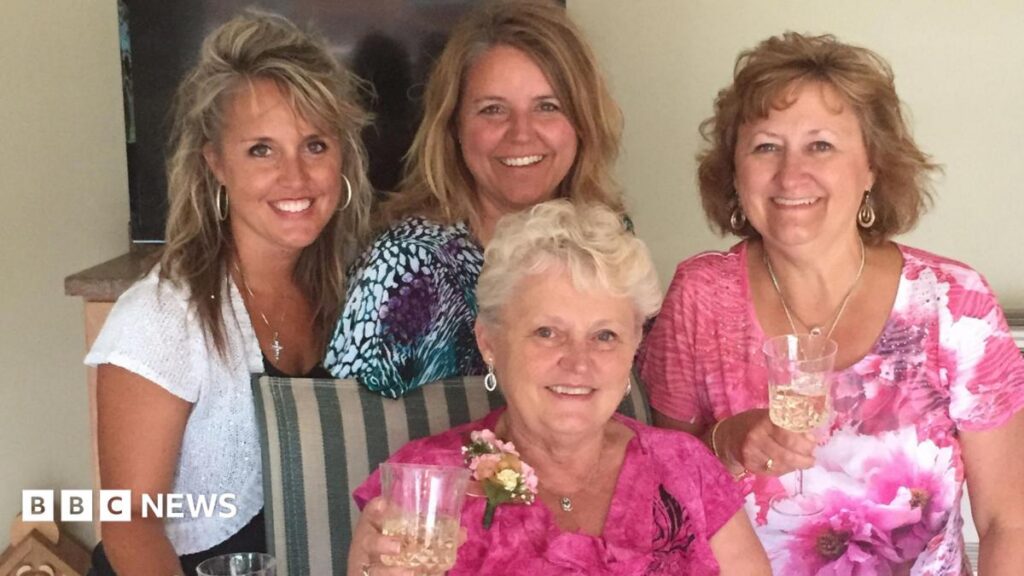
Image source, LeBrun FamilyImage caption, Anita LeBrun (centre) says she is very proud of the role she has played in getting the state law changedBySheila FlynnSenior US reporterPublished1 hour agoGrandmother-of-five Anita LeBrun has always loved a good glass of pinot grigio and her family's tradition of kicking off 5pm Happy Hours at their lakehouse.The 82-year-old couldn't believe it, then, when she found out last year that her Minnesota assisted living facility was prohibited from serving drinks to residents because it didn't have a licence.Already something of a social butterfly at…
Grandmother, 82, wins law change so she can enjoy Happy Hour at care home
What happened
Image source, LeBrun FamilyImage caption, Anita LeBrun (centre) says she is very proud of the role she has played in getting the state law changedBySheila FlynnSenior US reporterPublished1 hour agoGrandmother-of-five Anita LeBrun has always loved a good glass of pinot grigio and her family's tradition of kicking off 5pm Happy Hours at their lakehouse.The 82-year-old couldn't believe it, then, when she found out last year that her Minnesota assisted living facility was prohibited from serving drinks to residents because it didn't have a licence.Already something of a social butterfly at Amira Choice Champlin, LeBrun agreed to become the face and voice of a mission to change the law. After testifying twice before the state legislature, she shared a toast with Governor Tim Walz this week for a ceremonial signing of what's been nicknamed the "Grandparents' Happy Hour" bill at the very facility she calls home.The legislation, which took effect this month, allows nursing homes and assisted living facilities in Minnesota to serve alcohol to residents and their guests for special events without a licence, as long as the state is notified beforehand."I'm very proud, because everybody's so excited about it," says LeBrun, adding that her fellow residents found the restrictions "ridiculous". Image source, Amira Choice and Ebenezer Senior LivingImage caption, Anita LeBrun toasted to the law change alongside Minnesota Governor…
Advocacy and Policy Change in Senior Living Communities
Regulatory frameworks governing alcohol service in assisted living and senior care facilities vary considerably between states and jurisdictions, often reflecting a tension between resident autonomy and the licensing and liability concerns facilities must navigate. Advocacy efforts led by residents themselves, rather than facility management or industry groups, are frequently cited as particularly effective in prompting legislative change, since lawmakers often respond strongly to personal testimony from constituents affected by a specific rule.
Quality-of-life considerations in senior care have received increasing policy attention in recent years, with advocates arguing that maintaining social traditions and personal autonomy, including something as simple as a shared drink at a set time of day, can have meaningful benefits for residents’ overall wellbeing and sense of community within a care facility.
The Broader Push for Resident-Centred Care
Care facilities increasingly emphasise resident-centred models of care that prioritise individual preferences and long-standing personal traditions wherever safely possible, a shift from more institutional models that historically placed greater emphasis on standardised routines across an entire facility. Family members and advocacy organisations have played an increasingly visible role in pushing for legislative changes that expand what facilities are permitted to offer residents, often working directly with state lawmakers to identify and address outdated or overly restrictive regulations.
Stories of individual residents successfully advocating for policy change are frequently highlighted by senior advocacy organisations as evidence of the continued importance of resident voice in shaping the regulatory environment for long-term care facilities nationwide.
Comparative Approaches to Alcohol Policy in Care Settings
Regulations governing alcohol service in senior care facilities differ considerably not only between US states but also internationally, with some jurisdictions treating assisted living communities more like independent residences and others applying stricter institutional licensing requirements more typical of commercial hospitality venues. Advocates for regulatory reform in this area frequently argue that rules designed decades ago for a different model of senior care no longer reflect the more independent, community-oriented approach many modern assisted living facilities aim to provide.
Legislative changes affecting senior care facilities often require sustained advocacy over an extended period, given the number of stakeholders involved, including facility operators, state licensing boards, elder-care advocacy groups and, increasingly, residents and family members themselves. Successful campaigns of this kind are frequently cited afterward as a template for similar advocacy efforts in other states facing comparable regulatory restrictions.
A Model for Future Advocacy Efforts
Elder-care advocacy organisations frequently highlight successful individual-led campaigns like this as evidence that direct engagement with state lawmakers, grounded in personal experience, can produce tangible regulatory change even against established institutional resistance. Similar campaigns in other states are likely to draw on the specific advocacy strategies used in this case as they push for comparable changes to their own local regulations governing senior living communities.
State legislators involved in passing changes of this kind frequently credit the personal, human element of a resident-led campaign with cutting through what might otherwise have been a slower, more technical regulatory review process.
Other assisted living residents across the state have reportedly reached out to share their own similar frustrations with outdated facility rules since the story became public, suggesting the case may prompt a wider wave of resident-led advocacy beyond the original campaign itself.
Facility operators themselves have in some cases welcomed the rule change, noting that modernised alcohol licensing can also make their communities more attractive to prospective residents evaluating different care options.
Elder-law attorneys have also pointed to the case as a useful example when advising other advocacy groups on how to navigate the specific legislative and regulatory processes involved in changing state-level licensing rules for senior care facilities.
Advocacy groups expect similar campaigns to emerge in neighbouring states in the coming months, using this case as a practical roadmap for engaging directly with state legislators on comparable senior-living regulations.
Residents who campaigned alongside the family described the change as proof that persistent, personal advocacy can still move state-level policy even in a regulatory area that rarely attracts broad public attention.
Originally reported by bbc.co.uk. Adapted for our readers with AI assistance.
Thousands of young protesters in Delhi continue to demand education reforms and the resignation of Education Minister Dharmendra Pradhan after a police crackdown. The…
Facing a looming financial collapse, Thames Water’s main lenders have offered the UK government a ‘golden share’ and increased local authority involvement to avoid…
Facing record-breaking temperatures and severe drought, Thames Water has introduced a hosepipe ban impacting over 10 million customers across parts of southern England to…