George Russell’s Straight-Line Speed Struggle Highlights Mercedes’ Spa Woes and F1’s Power Unit Challenges
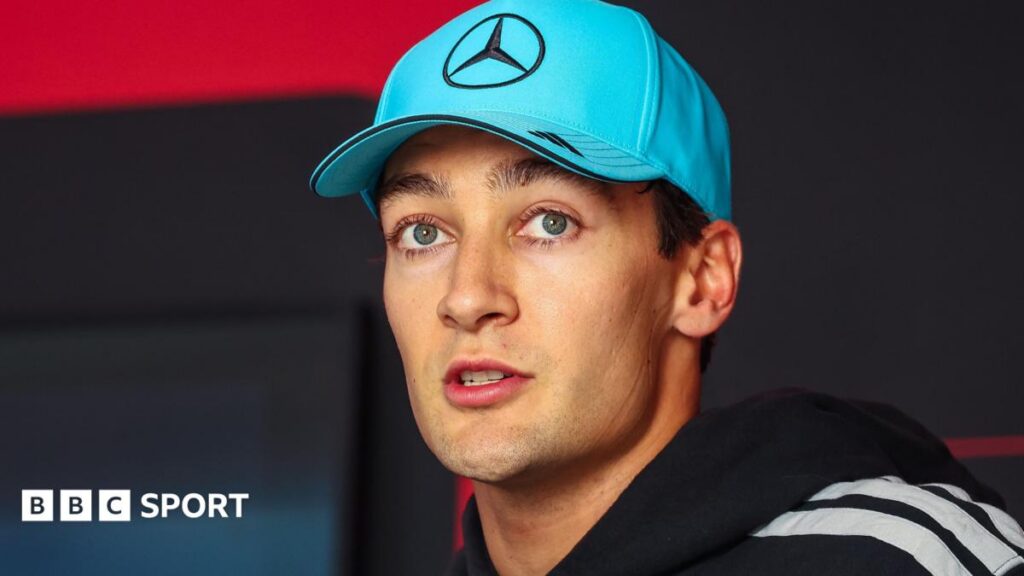
At the Belgian Grand Prix, George Russell’s battle against teammate Kimi Antonelli has been overshadowed by a mysterious and frustrating loss of straight-line speed. Despite strong cornering performance, Russell finds himself significantly slower on the straights, a problem that Mercedes has yet to fully diagnose. This issue not only affects the championship fight within the team but also reflects wider challenges introduced by Formula 1’s recent power unit regulations, which have altered the character of iconic circuits like Spa-Francorchamps.
George Russell’s Straight-Line Speed Struggle Highlights Mercedes’ Spa Woes and F1’s Power Unit Challenges
Russell’s Straight-Line Speed Deficit: A Barrier to Championship Ambitions
George Russell qualified fourth for the Belgian Grand Prix, over half a second behind his teammate Kimi Antonelli, who secured his sixth pole position in ten races. Russell described a “serious issue” with his Mercedes’ straight-line performance that has made competing with Antonelli “impossible.”
The British driver explained that more than 75% of his qualifying lap deficit stemmed from the power unit’s performance on the straights rather than cornering speed. While his cornering times were competitive, the straight-line speed loss ranged from 0.2 to 0.6 seconds per lap, leaving him feeling “powerless” despite pushing hard.
Mercedes’ trackside engineering director Andrew Shovlin confirmed that Russell suffered from poor deployment into the final chicane, costing him valuable time and grid positions. The team is prioritizing investigations to identify the cause, as the loss cannot be fully explained by driving style or setup.
Technical Challenges at Spa-Francorchamps Under New F1 Engine Regulations
Spa-Francorchamps, known for its high-speed corners like Eau Rouge and Pouhon, has traditionally been a circuit that tests both driver skill and car performance. However, the introduction of new power units this season has diminished some of the track’s defining challenges.
The current hybrid engines rely heavily on electrical energy management. The layout of Spa means that batteries are depleted on the long run from the start-finish straight to Les Combes, with the middle sector used primarily for recharging. Consequently, cars rely mostly on the internal combustion engine, producing roughly 450-500bhp, during this middle sector.
This energy management strategy has slowed corner entry speeds, particularly at Pouhon, which drivers previously took flat-out. Antonelli noted that after the apex of Pouhon, there is no power deployment, making the corner less demanding than in previous years. Drivers and team principals alike have described this as a significant change to the character of the circuit.
Driver and Team Perspectives on the Impact of Power Unit Regulations
Max Verstappen, who qualified second, remarked that the entire Spa circuit feels different under the new regulations, with much of the track driven on reduced power levels. He compared the available power in the middle sector to that of lower-tier racing cars but with F1 downforce, making the driving experience less exciting.
Carlos Sainz expressed similar concerns, acknowledging that qualifying laps are less enjoyable and that the sport needs to evolve to address these issues. He emphasized the importance of incremental improvements planned for the coming years to restore some of the lost excitement and challenge.
On the other hand, McLaren’s team principal Andrea Stella highlighted that while these regulations have altered circuit characteristics, they have also increased overtaking opportunities due to the strategic deployment of electrical energy. He acknowledged the need for further adjustments to balance the trade-offs between energy management and preserving the essence of challenging corners.
Implications for the Belgian Grand Prix and the F1 Season
The current situation leaves Russell at a significant disadvantage in the championship battle with Antonelli, who appears to be in a league of his own. Antonelli’s main concern for the race is maintaining his lead at the start, especially given the long run to Les Combes which favors slipstreaming and overtaking attempts.
Verstappen anticipates a tough fight to defend his position, acknowledging the pace gap to Antonelli. Meanwhile, the ongoing technical issues for Mercedes and the broader challenges posed by the power unit regulations suggest that race dynamics at Spa and other circuits will continue to evolve in unexpected ways.
The situation underscores the complexity of Formula 1’s current hybrid era, where managing electrical energy and internal combustion power adds layers of strategy and technical difficulty that directly impact driver performance and race outcomes.
The Technical Challenge of Power Unit Performance
Straight-line speed deficits in Formula 1 are typically traced to a combination of power unit output, aerodynamic drag trade-offs and cooling requirements, with engineering teams constantly balancing outright horsepower against the downforce needed for cornering performance elsewhere on a circuit. High-speed circuits with long straights tend to expose any power deficit particularly clearly, since aerodynamic efficiency alone cannot fully compensate for a shortfall in raw engine output over sustained full-throttle sections.
Development strategies to address such deficits generally involve a combination of software optimisation within the current regulations and longer-term hardware upgrades planned around the sport’s homologation rules, which restrict in-season engine development. Teams and drivers alike typically stress that a single weekend’s performance gap needs to be considered within the context of the full season, since circuit characteristics vary considerably and can favour different competitive strengths from race to race.
What this means
George Russell’s frustration with his Mercedes’ straight-line speed issues at Spa-Francorchamps highlights a broader challenge facing Formula 1 in its current hybrid era. While the new power unit regulations aim to balance performance and sustainability, they have inadvertently altered the nature of iconic circuits and introduced complex technical hurdles for teams and drivers. As Mercedes works to resolve Russell’s specific issues, the sport as a whole is grappling with how to evolve regulations to restore the thrilling, high-speed racing that fans expect while embracing the technological advancements that define modern Formula 1. The Belgian Grand Prix will not only test driver skill and team strategy but also serve as a barometer for how well F1 can adapt to these ongoing challenges.
Originally reported by bbc.co.uk. Adapted for our readers with AI assistance.
Thousands of young protesters in Delhi continue to demand education reforms and the resignation of Education Minister Dharmendra Pradhan after a police crackdown. The…
Facing a looming financial collapse, Thames Water’s main lenders have offered the UK government a ‘golden share’ and increased local authority involvement to avoid…
Facing record-breaking temperatures and severe drought, Thames Water has introduced a hosepipe ban impacting over 10 million customers across parts of southern England to…