
News
RUSSIA versus NATO and BRICS vs. NATO Military SWOT
Recall that Poland’s Minister Sikorski’s core claim is partially supported by the numbers, but the framing “quite quickly” and “without the U.S.” does not…
TAMFIS NIG LTDRC 8067447CAC ACTIVEFinima, Bonny Island, Rivers State

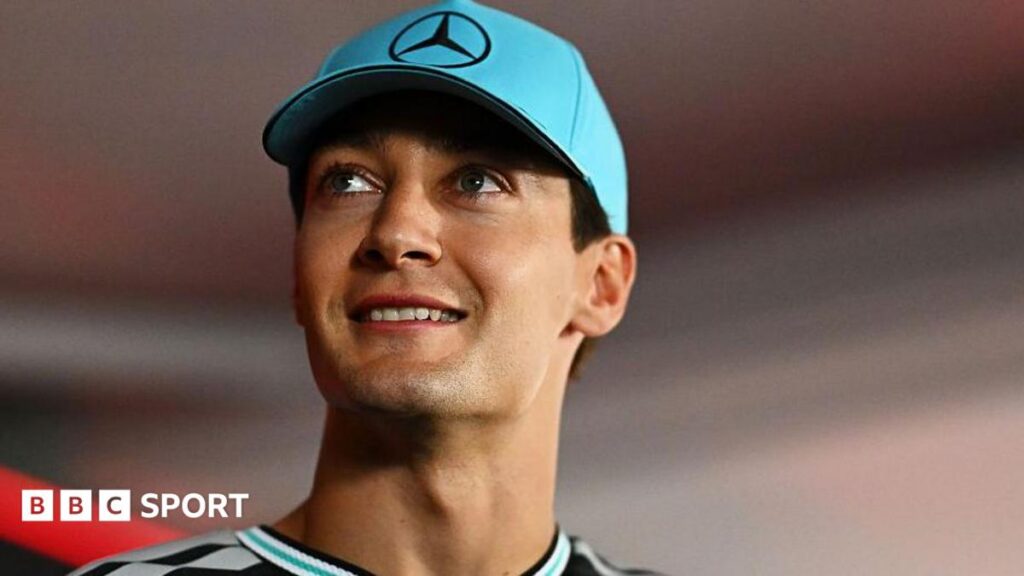
George Russell, Mercedes’ promising Formula 1 driver, finds himself in a challenging position this season. Despite a series of setbacks, including technical complications and on-track incidents, Russell remains steadfast in his determination. As he prepares for the Hungarian Grand Prix, Russell’s resilience is being put to the test, highlighting both the complexities of modern F1 power units and the mental toughness required to compete at the highest level.
George Russell enters the Hungarian Grand Prix trailing his Mercedes teammate Kimi Antonelli by 50 points in the drivers’ championship. This gap widened after a first-lap collision with Lewis Hamilton at the Belgian Grand Prix forced Russell to retire early. Antonelli’s victory at Belgium, his sixth in ten races this season, further extended his lead.
Despite these challenges, Russell expresses pride in his mental resilience. He describes this period as the most demanding of his career, emphasizing his unwavering belief in both himself and the Mercedes team even when circumstances seem unfavorable. This mindset has allowed him to bounce back from previous difficulties, securing strong results in races like those in Spain, Austria, and Britain, where he narrowed his deficit from 66 points to 25.
Russell’s struggles in Belgium were compounded by engine-related issues, specifically involving the electrical deployment system of Mercedes’ power unit. The team identified a deeply embedded calibration and coding fault that limited Russell’s electrical power deployment during crucial parts of the lap. This issue cost him approximately half of the half-second gap to Antonelli in qualifying.
During the race, both drivers experienced reduced electrical power when accelerating out of the first corner. However, Antonelli’s situation was mitigated when he lifted off at Eau Rouge under pressure from Max Verstappen, which reset his system and restored power deployment on the following straight. Russell, conversely, took Eau Rouge flat out, leaving him vulnerable to Hamilton’s attack, which culminated in their collision at the subsequent chicane.
Mercedes’ recognition of this technical problem underscores the increasing complexity of modern Formula 1 power units. The intricate calibration and software coding require precise understanding and monitoring, and the issue’s subtlety made it difficult to detect until the team knew exactly what to look for.
The power unit problem affected more than just race outcomes; it also influenced Russell’s approach to driving. In the lead-up to Belgium, he had been adapting his driving style to optimize performance with the power unit, achieving pole positions and a race win in Austria. However, the electrical deployment issues forced him to focus on managing the power unit’s limitations rather than purely driving fast.
Russell admits that this distraction may have hindered his overall performance, as he spent considerable time adjusting his technique to compensate for the power unit’s quirks. After Spa, the team confirmed that the problem was not due to his driving style, providing some clarity and allowing Russell to refocus on driving improvements.
Looking ahead, the Hungarian circuit presents a different challenge compared to Spa and Silverstone. Known for its slower corners, it might favor teams like Ferrari, which have demonstrated strong cornering capabilities. However, Mercedes’ drivers, including Lewis Hamilton, remain confident in their car’s competitiveness across various circuits.
The intra-team battle between Russell and Antonelli highlights the competitive environment within Mercedes. Antonelli’s consistent performance has set a high bar, while Russell’s resilience and adaptability keep him in contention despite setbacks.
Other teams are also making strategic moves. McLaren, for example, is introducing a significant upgrade at the Hungarian Grand Prix aimed at closing the gap to the front runners. Driver Lando Norris remains cautiously optimistic, acknowledging that previous upgrades have not always met expectations.
As the season progresses, the interplay between driver skill, technical reliability, and strategic development will be crucial. Russell’s experience this year exemplifies the multifaceted challenges drivers face, from managing cutting-edge technology to maintaining mental toughness under pressure.
George Russell’s 2024 Formula 1 season illustrates the intricate balance between driver skill, technical reliability, and mental resilience. While Mercedes continues to grapple with the complexities of their power unit, Russell’s determination and adaptability keep him in the hunt. As the championship unfolds, the Hungarian Grand Prix offers a fresh opportunity for Russell and his team to regroup and push forward. Success in Formula 1 demands not only speed but also the capacity to overcome adversity—a challenge Russell is embracing with commendable resolve.
Editor’s note: The following is AI-generated commentary and context on this topic, not original reporting.
Technical setbacks in Formula 1 rarely stem from a single cause, and drivers navigating a season plagued by power unit issues or reliability problems must manage both the physical challenge of adapting to inconsistent car performance and the mental toll of repeated setbacks beyond their control. Engineering teams typically work through extensive diagnostic processes to isolate the source of recurring problems, which can involve everything from software calibration to component fatigue.
For a driver at a team with the resources and expectations of a front-running constructor, prolonged underperformance inevitably invites public scrutiny and questions about team direction, driver pairings, and technical leadership. How a driver responds publicly during such stretches, whether with visible frustration or measured resilience, often shapes both media narratives and internal team dynamics heading into the remainder of the season.
Originally reported by bbc.co.uk. Adapted for our readers with AI assistance.
Keep reading
News
Recall that Poland’s Minister Sikorski’s core claim is partially supported by the numbers, but the framing “quite quickly” and “without the U.S.” does not…
News
Thousands of young protesters in Delhi continue to demand education reforms and the resignation of Education Minister Dharmendra Pradhan after a police crackdown. The…
News
Facing a looming financial collapse, Thames Water’s main lenders have offered the UK government a ‘golden share’ and increased local authority involvement to avoid…
TAMFIS NIG LTD
Electrical and instrumentation engineering, bid preparation and consulting, IT and software.