Five Officers Injured as Police Boat Collides with Westminster Bridge in Central London
On the afternoon of July 24, 2026, a police boat from the Metropolitan Police Marine Policing Unit collided with Westminster Bridge in central London, injuring five officers onboard. The incident occurred around 15:40 BST and involved a vessel carrying armed officers navigating the River Thames. Emergency responders, including the London Fire Brigade and paramedics, quickly attended the scene to assist the injured officers and secure the area. This article provides a detailed account of the event, eyewitness observations, emergency response efforts, and the ongoing investigation into the circumstances surrounding the crash.
Five Officers Injured as Police Boat Collides with Westminster Bridge in Central London
Details of the Incident and Immediate Response
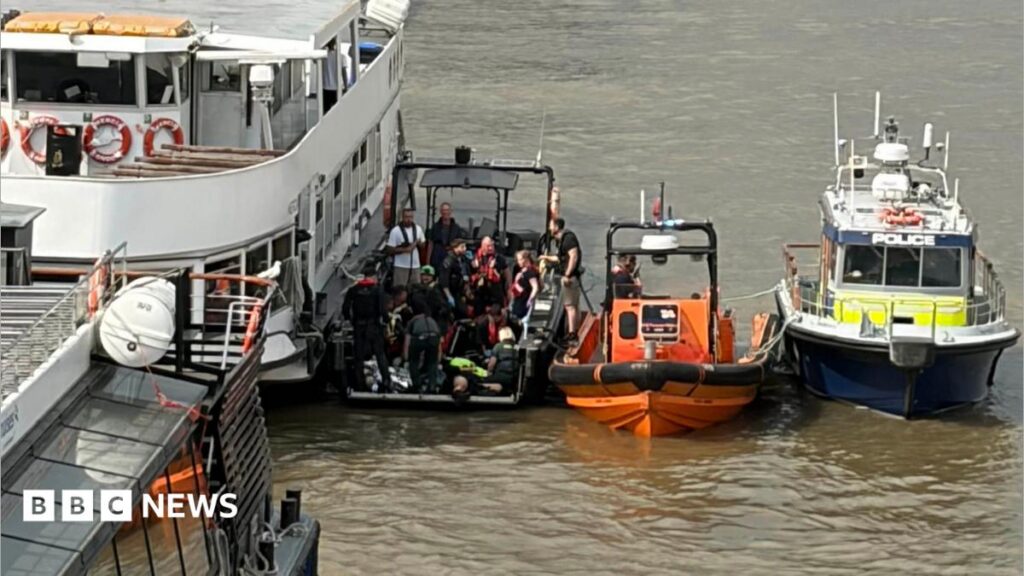
The collision took place near the iconic Westminster Bridge, adjacent to the Houses of Parliament. According to the Metropolitan Police, the boat involved belonged to the Marine Policing Unit and was carrying armed officers at the time of the accident. Following the impact, several officers entered the water but were promptly rescued by emergency personnel.
Five officers sustained injuries and were treated on-site and transported for further medical care. The Metropolitan Police confirmed that no members of the public were involved or injured in the incident. Emergency services, including multiple fire rescue units equipped for water rescues and ambulances, were mobilized to the scene. A fire service boat was also deployed to assist in towing the damaged police boat away from the bridge.
Authorities established a cordon around Westminster Bridge to ensure public safety and facilitate emergency operations. The closure affected traffic flow, with buses and coaches forced to reverse and seek alternative routes. Additionally, some entrances to Westminster Underground station were temporarily closed as a precaution.
Eyewitness Accounts Shed Light on the Collision
Several eyewitnesses provided vivid descriptions of the incident. Jim Bagley, a visitor from the United States, observed two police boats traveling upriver at high speed. He noted that an orange boat passed under the bridge first, creating a significant wake, followed closely by the black police boat, which appeared to lose control after encountering the wake and subsequently collided with the bridge's wall.
Bagley recounted hearing a loud explosion and seeing three officers fall into the river. "We didn't see it happen, but we heard the explosion… the next thing we saw was three people in the water, coming down the river," he said. He also questioned the reason for the boats' high-speed travel in that area.
Another eyewitness, Mateo Bilis-Lusevic, a 12-year-old visitor from Chile, described hearing a loud bang and witnessing officers being rescued from the water. He noted that the officers remained in the river for approximately ten minutes before being pulled out with the aid of a life ring and a rigid inflatable boat. Mateo and his mother were aboard a nearby river tour boat and were evacuated shortly after the incident for safety reasons.
Emergency Services Coordination and Safety Measures
The London Fire Brigade played a critical role in the rescue operation, deploying its fire boat and three fire rescue units specialized in water rescues. The Brigade worked closely with the Metropolitan Police, the Port of London Authority, HM Coastguard, and other partner agencies to manage the situation effectively.
The Port of London Authority confirmed its involvement in supporting the emergency response and coordinating efforts to maintain safety on the River Thames. The collaborative response ensured that the injured officers received prompt medical attention and that the damaged police boat was safely towed away.
Public safety was a top priority throughout the incident. Police cordons restricted access to the bridge and surrounding areas, and authorities managed traffic disruptions caused by the temporary closure. The Metropolitan Police emphasized that the wellbeing of the officers involved remained their primary concern while a thorough review of the incident's circumstances was underway.
Contextual Considerations and Ongoing Investigation
The Marine Policing Unit regularly patrols the River Thames to provide security and respond to incidents, often involving armed officers due to the sensitive nature of the areas they protect. High-speed navigation on the river is sometimes necessary for operational reasons, but it also presents risks, especially near structures like bridges.
At this stage, the Metropolitan Police have not released detailed information regarding the cause of the collision. Investigations are ongoing to determine whether factors such as wake turbulence from preceding vessels, navigational errors, or mechanical issues contributed to the accident.
The incident highlights the challenges faced by law enforcement in balancing rapid response capabilities with safety considerations on busy waterways. Lessons learned from this event may inform future operational protocols to prevent similar occurrences.
What this means
The collision of a Metropolitan Police boat with Westminster Bridge underscores the inherent risks involved in high-speed maritime operations within urban environments. While the swift response of emergency services mitigated the potential severity of the incident, the injuries sustained by the officers highlight the need for continued vigilance and review of safety procedures. As investigations proceed, authorities aim to clarify the factors leading to the crash and implement measures to enhance the safety of police operations on the River Thames. Public safety remains paramount, and the incident serves as a reminder of the complexities faced by law enforcement in protecting critical infrastructure and maintaining security in central London.
Originally reported by bbc.co.uk. Adapted for our readers with AI assistance.
Thousands of young protesters in Delhi continue to demand education reforms and the resignation of Education Minister Dharmendra Pradhan after a police crackdown. The…
Facing a looming financial collapse, Thames Water’s main lenders have offered the UK government a ‘golden share’ and increased local authority involvement to avoid…
Facing record-breaking temperatures and severe drought, Thames Water has introduced a hosepipe ban impacting over 10 million customers across parts of southern England to…