FIFA’s Controversial Investment Plan Faces Strong Opposition from European and North American Football Bodies
FIFA, the global governing body for football, has unveiled a contentious plan to attract private investment by selling minority stakes in its flagship competitions through a newly proposed commercial subsidiary. While FIFA insists that the move will benefit member associations and preserve the integrity of the sport, leading football organizations in Europe and North America have voiced strong opposition. This article explores the details of FIFA’s investment proposal, the reactions from key football bodies, and the potential implications for the sport’s governance and major tournaments.
FIFA’s Controversial Investment Plan Faces Strong Opposition from European and North American Football Bodies
FIFA’s Investment Proposal: Creating a Commercial Subsidiary
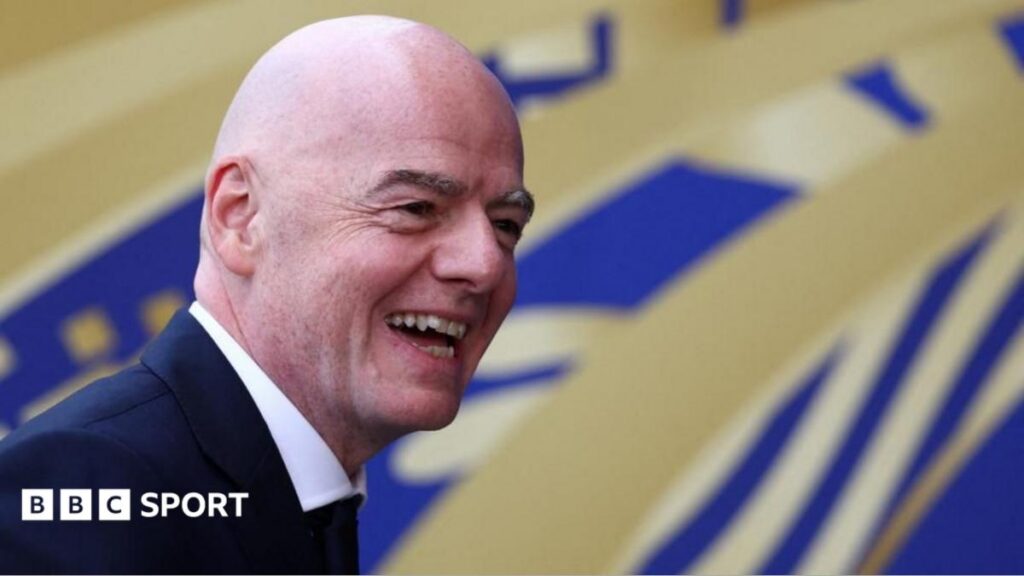
FIFA president Gianni Infantino has proposed the establishment of a commercial entity named FIFA Forward Enterprise (FFE), designed to manage the organization’s primary competitions, including the World Cups. The plan involves inviting external investors to acquire minority, non-controlling stakes in this subsidiary.
According to FIFA, the objective of the FFE is to enable all member associations to participate in the commercial opportunities generated by football within their countries. The organization emphasizes that this initiative will not compromise the spirit or governance of football, nor will it result in the sale of the sport itself.
FIFA’s official statements stress that the consultation process with member associations is ongoing and aims to be transparent and democratic. However, the proposal has been met with skepticism and resistance from influential football bodies.
Strong Opposition from UEFA and CONCACAF
UEFA, the governing body for European football, has taken a firm stance against FIFA’s plan. In a recent vote, UEFA members expressed their intent to boycott future World Cups should the proposal move forward. This unprecedented threat highlights the depth of their opposition.
Similarly, CONCACAF, which oversees football in North and Central America and was responsible for hosting the 2026 World Cup, has publicly rejected the proposal. Its 41 member associations have voiced concerns about the potential impact of private investment on the governance and integrity of football.
Together, UEFA and CONCACAF represent 96 votes out of FIFA’s 211 member associations. Since FIFA requires 106 votes to approve the plan, the combined opposition from these two bodies poses a significant obstacle to its adoption.
Concerns Over Governance and Commercialization
Critics argue that FIFA’s plan could lead to undue influence by private investors over football’s major competitions. UEFA has accused FIFA officials of exploiting the sport to enrich themselves and their associates, raising questions about transparency and accountability.
The involvement of Thrive Eternal, an American venture capital firm led by Joshua Kushner, has further fueled controversy. Thrive is expected to lead the investor group for the FFE. The firm’s connection to prominent political figures has drawn additional scrutiny.
Moreover, FIFA’s offer of $40 million to member associations that support the proposal has been perceived by some as an attempt to unduly influence votes. Federations must decide by 19 September whether to accept an initial $20 million payment tied to backing the plan, adding pressure to the decision-making process.
FIFA’s Response and Commitment to Dialogue
In response to the backlash, FIFA has reiterated that it is not selling football and that the consultation process remains open and democratic. The organization has criticized inaccurate media reports that it says have disrupted constructive discussions among member associations.
FIFA emphasizes that the FFE is intended to empower member associations by allowing them to share in football’s commercial success, rather than ceding control to external parties. The governing body insists that the governance structures of FIFA and football will remain intact.
Despite these assurances, the division between FIFA and key regional bodies underscores the challenges ahead. The outcome of the consultation and the vote will be critical in determining the future direction of football’s commercial and governance landscape.
Potential Impact on Future World Cups and Global Football
If FIFA’s plan is approved despite opposition, UEFA’s threat to boycott future World Cups could profoundly affect the tournament’s prestige and competitive quality. The absence of European teams would diminish the event’s global appeal and financial success.
Conversely, failure to gain approval could stall FIFA’s efforts to modernize and commercialize its competitions, potentially limiting revenue growth and investment in football development worldwide.
The controversy also raises broader questions about the balance between commercial interests and sporting values in global football. How FIFA navigates this tension will shape the sport’s governance and its relationship with fans, players, and stakeholders.
What this means
FIFA’s ambitious plan to attract private investment into its competitions has ignited a fierce debate within the global football community. While the governing body frames the initiative as a way to enhance financial opportunities for member associations without compromising governance, the strong opposition from UEFA and CONCACAF reveals deep mistrust and concern over the sport’s future. The looming vote will be a pivotal moment, determining whether FIFA can push forward with its vision or must reconsider in the face of united resistance. Ultimately, the resolution of this dispute will influence not only the governance and commercial structure of football but also the unity and spirit that underpin the world’s most popular sport.
Editor’s note: The following is AI-generated commentary and context on this topic, not original reporting.
Broader Context and Outlook
For younger athletes and up-and-coming talent, high-profile moments comparable to this can serve as both inspiration and a benchmark for what is achievable with the right support structures in place.
Grassroots participation numbers often see a temporary boost following high-profile moments of this kind, as young fans are inspired to take up the sport themselves.
Governing bodies in sport are frequently balancing commercial pressures against the traditions and expectations of supporters, a tension that plays out publicly whenever a decision or result like this one draws scrutiny.
Sports scientists and analysts increasingly point to marginal gains — in recovery, nutrition, and data-driven tactical preparation — as a growing factor behind performances and decisions of the sort covered here.
Results and moments like the one described in “FIFA’s Controversial Investment Plan Faces Strong Opposition from European and North Am…” are often the product of years of behind-the-scenes work — coaching changes, training regimens, and squad-depth decisions that only become visible to the public in moments of high drama.
Fans and pundits alike tend to view outcomes of this kind through the lens of what they signal for the rest of the season, weighing short-term form against longer-term structural questions facing the team or athlete involved.
The broader competitive landscape — including transfer activity, coaching appointments, and shifting team form — will likely continue to shape how a story like this one is remembered in the context of the wider season.
Broadcast and sponsorship revenue tied to major competitions increasingly shapes decisions once made purely on sporting grounds, a tension that regularly surfaces in discussions like this one.
Injury prevention and squad rotation have become central talking points across professional sport, as data on player workload increasingly informs decisions that once relied mostly on instinct.
Official inquiries or reviews, where they follow a story of this kind, typically take considerably longer to conclude than the news cycle that first brought the story to public attention, which can create a gap between public perception and the eventual documented record.
Originally reported by bbc.co.uk. Adapted for our readers with AI assistance.
Thousands of young protesters in Delhi continue to demand education reforms and the resignation of Education Minister Dharmendra Pradhan after a police crackdown. The…
Facing a looming financial collapse, Thames Water’s main lenders have offered the UK government a ‘golden share’ and increased local authority involvement to avoid…
Facing record-breaking temperatures and severe drought, Thames Water has introduced a hosepipe ban impacting over 10 million customers across parts of southern England to…