News
RUSSIA versus NATO and BRICS vs. NATO Military SWOT
Recall that Poland’s Minister Sikorski’s core claim is partially supported by the numbers, but the framing “quite quickly” and “without the U.S.” does not…
TAMFIS NIG LTDRC 8067447CAC ACTIVEFinima, Bonny Island, Rivers State

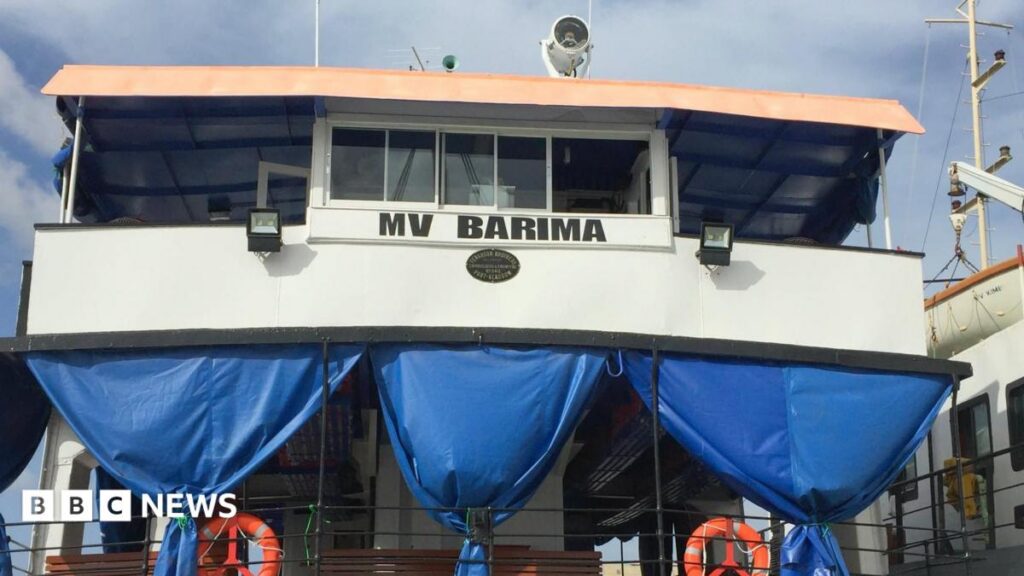
Image source, Transport and Harbours DepartmentImage caption, The MV Barima was built in 1939 and is 40m (131ft) long, according to a listing on VesselFinderByTom BennettPublished38 minutes agoA ferry carrying 116 passengers has sunk off the coast of Guyana with eight people so far rescued, local authorities have said.The MV Barima capsized near Iron Punt, on its route from Georgetown to Port Kaituma.A distress call was received at 23:01 local time (03:01 +1 BST), triggering an urgent search operation involving state and private boats, Public Works Minister Juan Edghill said…
Image source, Transport and Harbours DepartmentImage caption, The MV Barima was built in 1939 and is 40m (131ft) long, according to a listing on VesselFinderByTom BennettPublished38 minutes agoA ferry carrying 116 passengers has sunk off the coast of Guyana with eight people so far rescued, local authorities have said.The MV Barima capsized near Iron Punt, on its route from Georgetown to Port Kaituma.A distress call was received at 23:01 local time (03:01 +1 BST), triggering an urgent search operation involving state and private boats, Public Works Minister Juan Edghill said in a statement posted on social media.The state of the operation is currently unclear and it is not known whether authorities expect to rescue the remaining passengers.The MV Barima was built in 1939 and is 40m (131ft) long, according to a listing on VesselFinder. Edghill said it was fitted with 250 life jackets, two rigid life crafts and six inflatable life crafts. Prime Minister Mark Phillips is said to be leading the government response. Related topicsFerriesGuyana
Editor’s note: The following is AI-generated commentary and context on this topic, not original reporting.
Passenger ferry services connecting remote coastal and river communities, particularly in parts of South America and the Caribbean, often rely on ageing vessels and infrastructure that can be more vulnerable to mechanical failure or adverse weather conditions than modern, purpose-built passenger ferries used elsewhere. Search and rescue operations following a maritime incident of this kind typically involve coordination between government agencies, private vessel operators and, where necessary, international maritime assistance, with the timeline for locating all passengers and crew often extending well beyond the initial hours of a distress call.
Vessel capacity and safety equipment standards for regional ferry routes have historically varied significantly between jurisdictions, prompting recurring calls from maritime safety advocates for stronger enforcement of passenger limits and mandatory safety equipment, particularly on routes serving communities with few alternative transport options. Investigations following incidents of this kind typically examine vessel maintenance records, weather conditions at the time of the incident, and whether the vessel was operating within its rated passenger capacity.
For many communities along Guyana’s coast and interior waterways, ferries represent a critical, and sometimes only, means of transport between population centres separated by dense terrain or limited road infrastructure. Disruption to ferry services following a serious incident can have significant knock-on effects for local communities dependent on these routes for essential travel, trade and access to services.
Regional governments have periodically pledged infrastructure investment aimed at modernising ageing ferry fleets, though funding constraints and the logistical challenges of serving dispersed coastal and river communities have historically slowed the pace of such upgrades. Incidents of this kind typically renew public and political attention on these underlying infrastructure gaps, at least in the immediate aftermath.
Maritime incidents involving significant numbers of passengers typically prompt requests for international search and rescue assistance when local resources are stretched, drawing on regional cooperation agreements between neighbouring countries and international maritime organisations. Coordination challenges in the early hours of a search operation often centre on establishing an accurate passenger manifest, a task complicated on some regional ferry routes by informal or incomplete boarding records.
Survivors and family members awaiting information in the aftermath of a maritime incident typically rely on local authorities and community networks for updates, with official confirmation of the final passenger and crew status sometimes taking days to fully establish depending on the scale and location of the search effort. Public officials overseeing the response generally provide regular updates as the situation develops, balancing the need for transparency against the operational demands of an active search and rescue mission.
Serious maritime incidents of this kind often prompt a formal government inquiry examining vessel safety standards, licensing requirements and emergency response protocols, with recommendations sometimes leading to updated regulations for ferry operators nationwide. Communities that depend on the affected route generally advocate strongly for a swift resumption of safe service, balancing the immediate need for continued transport access against demands for improved safety standards before services fully resume.
International shipping and maritime safety organisations sometimes use incidents of this kind to issue broader advisories or guidance for operators running similar routes elsewhere in the region, aiming to prevent comparable incidents even before a full formal inquiry into this specific case has concluded.
Local fishing and transport operators in the vicinity of an incident like this frequently assist official rescue efforts using their own vessels and local knowledge of the waters, playing a significant informal role alongside government search and rescue teams during the critical early hours.
Government officials have pledged a full review of the incident once search operations conclude, with findings expected to inform any future changes to vessel licensing and passenger safety requirements on the route.
Passenger safety advocates argue that stronger, internationally recognised standards for vessel capacity limits and mandatory life-jacket provisions could meaningfully reduce the risk of similar incidents on comparable regional ferry routes elsewhere in the Caribbean and South America.
Community leaders in the affected coastal towns have called for faster government investment in modernised ferry infrastructure, arguing that continued reliance on ageing vessels leaves residents exposed to unnecessary risk on routes with few practical alternatives.
Originally reported by bbc.co.uk. Adapted for our readers with AI assistance.
Keep reading
News
Recall that Poland’s Minister Sikorski’s core claim is partially supported by the numbers, but the framing “quite quickly” and “without the U.S.” does not…
News
Thousands of young protesters in Delhi continue to demand education reforms and the resignation of Education Minister Dharmendra Pradhan after a police crackdown. The…
News
Facing a looming financial collapse, Thames Water’s main lenders have offered the UK government a ‘golden share’ and increased local authority involvement to avoid…
TAMFIS NIG LTD
Electrical and instrumentation engineering, bid preparation and consulting, IT and software.