
Business
Nigeria’s Economic Performance: Domestic Debt Rise and Agriculture Trade Shift in Q2 2026
Nigeria's economic landscape in the second quarter of 2026 presents a mixed picture of fiscal press...
TAMFIS NIG LTDRC 8067447CAC ACTIVEFinima, Bonny Island, Rivers State

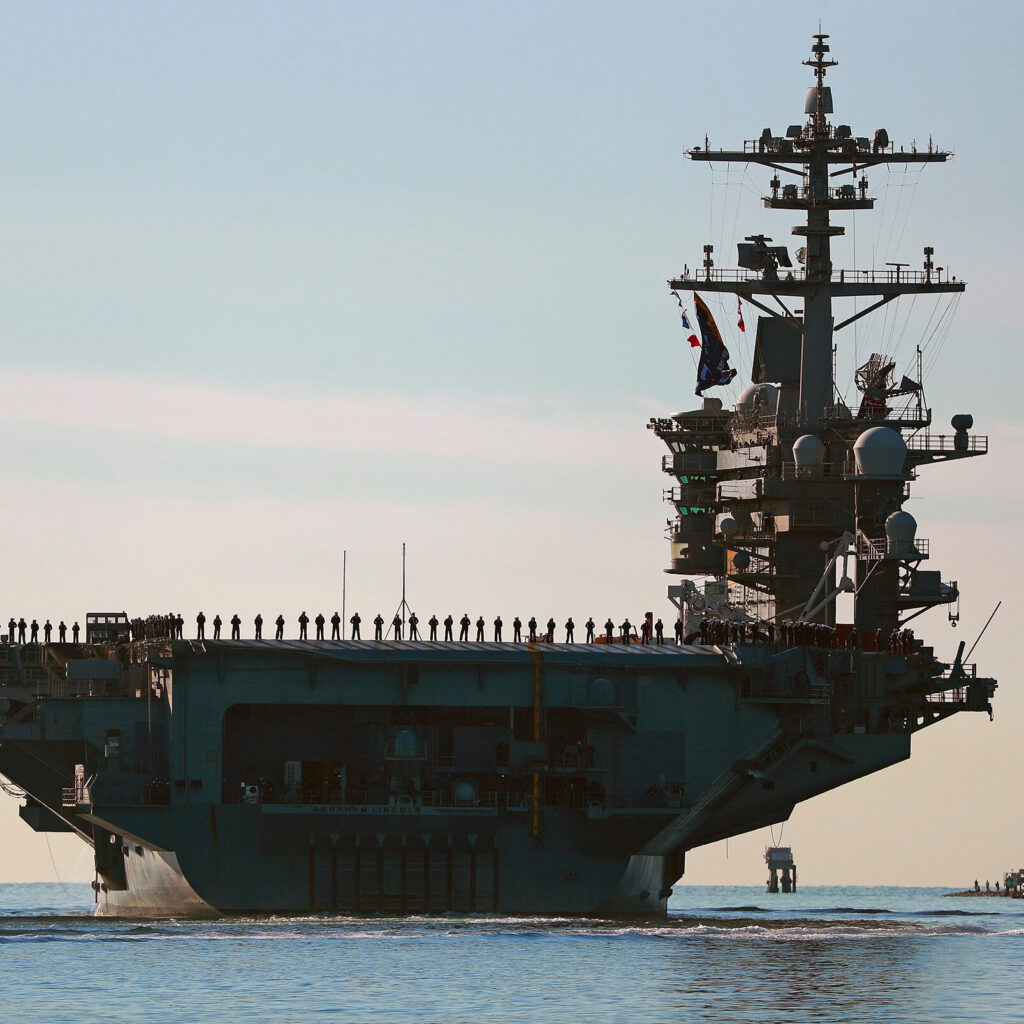
The U.S.S. Abraham Lincoln has been deployed for nearly nine months. Members of Congress are worried about the crew’s well-being. An aircraft-carrier deployment of that length places extraordinary demands on sailors and their families, keeping service members away from home through multiple seasons and operational cycles. Because the carrier and its strike group are central to U.S. naval power, the duration also raises broader questions about how the Navy balances global commitments with the health of its people. Congressional attention to the Lincoln’s deployment is a reminder that military readiness depends not only on ships and aircraft, but also on the resilience of the crew.
The U.S.S. Abraham Lincoln has been deployed for nearly nine months. That extended period at sea has drawn notice on Capitol Hill, where members of Congress are worried about the crew’s well-being. While the Navy routinely sends carrier strike groups overseas for months at a time, a deployment approaching nine months stands out as an unusually long rotation. The extra weeks and months extend every dimension of shipboard life, from flight-deck operations and maintenance to sleep schedules and communication windows with home. Those conditions are why lawmakers have begun to ask whether the crew is receiving adequate support.
A deployment of nearly nine months means sailors spend the better part of a year living and working within the confined spaces of an aircraft carrier. Daily routines revolve around watch rotations, flight operations, training, and maintenance, often on repeating cycles with limited rest. Over time, the absence from family and friends can add strain, especially when birthdays, holidays, and other milestones pass while the ship is underway. Sustained separation can affect mental health, morale, and even physical readiness, since sleep and recovery are harder to manage in a high-tempo environment. Even with modern technology that allows email, phone calls, and video chats, contact with loved ones remains intermittent and subject to operational demands. The well-being of the crew therefore becomes a central concern whenever a deployment stretches well beyond the original expected timeline.
Aircraft carriers are also complex industrial environments. Sailors work around jet engines, arresting gear, munitions, and heavy machinery in all weather conditions and at all hours. Longer deployments extend exposure to noise, heat, and physical hazards. Medical and counseling services are available aboard ship, but they operate within the limits of embarked staff and supplies. As weeks accumulate, small injuries and fatigue can compound, making it important for commanders to monitor both the medical readiness and the morale of the crew.
Members of Congress are worried about the crew’s well-being, which places the Lincoln’s deployment within their oversight responsibilities. Lawmakers control defense funding and set the legal framework under which the armed forces operate, so they regularly review how deployments affect service members. Questions they might pursue include whether the deployment length reflects a gap between Navy missions and available forces, whether sailors are getting sufficient rest and communication access, and what plans exist to relieve the crew or rotate personnel. Congressional committees can request briefings from the Pentagon, hold hearings, or include report language in defense bills that directs the Navy to address personnel tempo and retention.
Lawmakers may also examine whether families on shore are receiving adequate support. Deployment extensions can disrupt child care, finances, and family routines, adding stress that reaches back to the ship through strained communications. Military family advocates often raise similar concerns when deployments run long, emphasizing that readiness at sea is connected to stability at home. Congressional worry therefore signals both a human concern and a strategic one: a tired crew, or one distracted by problems at home, is less able to sustain the demanding work of carrier aviation and maritime operations.
The attention from Capitol Hill does not mean the Lincoln will immediately return to port. Carrier deployments are shaped by global events, maintenance schedules, and the availability of replacement forces. Still, the expression of concern by members of Congress increases the pressure on Navy leaders to explain the timeline and to demonstrate that sailor welfare is being actively managed. The Navy could choose to accelerate a relief deployment, add mental-health and chaplain resources, or adjust operational pacing to give the crew more predictable rest. Whatever the response, the situation underscores the tension between operational requirements and the limits of human endurance.
Public discussion of the Lincoln’s deployment may also prompt broader debates about Navy force structure and deployment policies. If one carrier is kept at sea for nearly nine months, it may point to either a deliberate surge or a sign that the fleet is stretched thin. Those are policy questions that Congress, not the Navy alone, ultimately helps decide through budgets and authorizations. The immediate focus, however, remains on the sailors aboard the U.S.S. Abraham Lincoln and on whether their nearly nine months away from home has left them with the support they need.
The U.S.S. Abraham Lincoln has been deployed for nearly nine months, and members of Congress are worried about the crew’s well-being. Those two facts carry wider meaning for how the United States sustains its naval presence. Extended carrier deployments test not only the ship’s machinery but also the people who operate it, separating sailors from families and exposing them to months of high-tempo work. Congressional concern puts a spotlight on the human side of readiness and may lead to questions about Navy deployment policies, crew support, and the resources needed to avoid overextending the fleet. The outcome will matter for the Lincoln’s sailors and for the broader debate over how to keep America’s carrier force ready without wearing down its crews.
Originally reported by nytimes.com. Adapted for our readers with AI assistance.
Keep reading
Business
Nigeria's economic landscape in the second quarter of 2026 presents a mixed picture of fiscal press...
Business
Liverpool manager Andoni Iraola is confronting a significant selection headache as two key forwards, Cod...
News
Health News tamfitronics [Editor’snote:[Editor’snote: This transcript was generated using both transcription ...
TAMFIS NIG LTD
Electrical and instrumentation engineering, bid preparation and consulting, IT and software.