EU’s New Border System Causes Significant Delays at Passport Control: What Travelers Need to Know
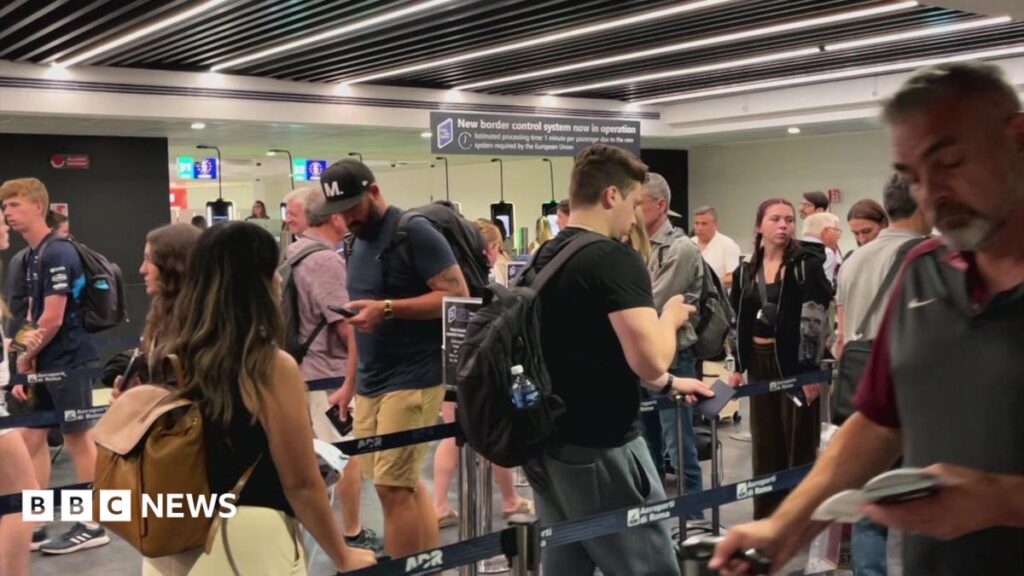
The European Union recently introduced the Entry Exit System (EES) to modernize and strengthen border controls across the Schengen Area. While the system aims to improve security by registering biometric data of non-EU travelers, its rollout has resulted in considerable delays at passport control points, especially for UK nationals and other non-EU visitors. Airports such as Rome’s Fiumicino and Portugal’s Faro have reported queues stretching up to two hours, with some travelers missing flights. This article explores the challenges posed by the EES, the experiences of travelers and airport officials, and the ongoing efforts to resolve these issues.
EU’s New Border System Causes Significant Delays at Passport Control: What Travelers Need to Know
Understanding the Entry Exit System and Its Purpose
The Entry Exit System (EES) is a digital border control mechanism implemented across the Schengen Area, which encompasses 29 European countries. Its primary function is to record biometric data — specifically fingerprints and photographs — of non-EU citizens entering and leaving the region. This data helps authorities monitor and manage the length of stay of travelers, ensuring compliance with visa and entry regulations.
Introduced gradually since October, the EES replaces traditional passport stamping with biometric verification, often conducted via automated kiosks or e-gates. Children under 12, however, must still be processed manually by border officers. The system is intended to streamline border checks and enhance security, but its implementation has revealed significant operational challenges.
Longer Queues and Passenger Experiences at Major Airports
Despite its security benefits, the EES has nearly tripled the time required for passport control at several busy European airports. At Rome’s Fiumicino Airport, a key destination for UK tourists, passengers have reported waiting up to two hours to clear border checks. Carl, a traveler from Yorkshire, described the experience with young children as unexpectedly lengthy, while others like David from the US missed pre-arranged transport due to delays.
Similarly, in Barcelona and Faro airports, queues of nearly an hour or more have become common, with some travelers noting that passport control times rival or exceed their flight durations. These delays have caused frustration among passengers and airlines alike, with Ryanair explicitly warning UK travelers to anticipate extended waits during summer travel.
Passengers have also encountered technical issues, such as non-functioning kiosks, which further slow the process. Barry, arriving in Barcelona, noted that some machines were out of service, contributing to a 45-50 minute wait.
Operational Challenges and System Limitations
Rome’s airport officials acknowledge that the EES rollout has not met expectations. Ivan Bassato, Chief Aviation Officer at Fiumicino, highlighted that despite investing €12 million in self-service kiosks, the volume of passengers using these machines remains impractical. Consequently, the airport has integrated UK nationals into the e-gate system to improve flow, but the average processing time for UK travelers has still increased from seven to 20 minutes.
Bassato emphasized that the current system’s complexity and duplication of processes contribute to inefficiencies. He advocates for urgent reforms to simplify procedures and expand the use of the EU’s pre-registration app, which currently sees limited adoption, with only Sweden and Portugal actively using it.
In Portugal, Superintendent Pedro Oliveira of Faro airport confirmed that the EES system has experienced technical bugs, including server crashes linked to the interconnected EU infrastructure. These issues occasionally cause queues to extend from the usual ten minutes to over thirty, although waits exceeding an hour remain rare.
The reliance on technology means that problems in one member state can ripple across the network, necessitating system reboots and temporary suspensions. To mitigate these challenges, Faro has recruited additional border officers and maintains manual processing for children under 16.
Responses from Authorities and Airlines
The European Commission maintains that disruptions caused by the EES are limited in most airports and pledges ongoing support to member states to optimize the system’s implementation. However, airports and airlines have urged the Commission to allow temporary suspension of the EES during peak travel periods to alleviate pressure on border controls.
A recent meeting on this issue did not result in changes to the policy, leaving airports to manage delays with existing resources. Airlines like Ryanair have publicly criticized the rollout, describing it as 'failed' and advising passengers to allocate extra time for border checks.
Authorities stress that the biometric data collection is crucial for security and migration management, and that the initial teething problems are expected to improve as the system matures and more countries adopt pre-registration tools.
Potential Solutions and Future Outlook
Experts and airport officials agree that streamlining the EES process is essential to reduce wait times and enhance traveler experience. Key recommendations include removing redundant steps, increasing the use of e-gates, and expanding the pre-registration app to more countries, which would allow travelers to submit biometric data before arrival.
Improving the technological infrastructure to minimize server crashes and interdependencies could also enhance system reliability. Additionally, increasing border officer staffing during peak periods can help manage queues more effectively.
While the EES represents a significant advancement in border security, its current operational challenges highlight the complexities of integrating new technology across multiple countries and agencies. Continued collaboration between the European Commission, member states, airports, and airlines will be critical to resolving these issues.
What this means
The Entry Exit System is a crucial step toward enhancing border security across the Schengen Area, but its implementation has revealed significant operational hurdles that affect travelers and airports alike. Extended wait times, technical issues, and procedural complexities underscore the need for urgent improvements and greater system integration. As authorities work to resolve these challenges, travelers should prepare for longer passport control times and plan accordingly. The success of the EES will ultimately depend on balancing security objectives with efficient, traveler-friendly processes.
Originally reported by bbc.co.uk. Adapted for our readers with AI assistance.
Thousands of young protesters in Delhi continue to demand education reforms and the resignation of Education Minister Dharmendra Pradhan after a police crackdown. The…
Facing a looming financial collapse, Thames Water’s main lenders have offered the UK government a ‘golden share’ and increased local authority involvement to avoid…
Facing record-breaking temperatures and severe drought, Thames Water has introduced a hosepipe ban impacting over 10 million customers across parts of southern England to…