Escalating Tensions in the Strait of Hormuz: US Threatens Iran Amid Ongoing Conflict
The Strait of Hormuz, a strategic chokepoint for global oil shipments, has become the focal point of escalating military tensions between the United States and Iran. Following repeated attacks on vessels transiting this narrow waterway, US President Donald Trump has announced a readiness to target Iranian bridges and power plants, signaling a potential intensification of the conflict. This article examines the recent developments, regional responses, and the broader implications for international security and energy markets.
Escalating Tensions in the Strait of Hormuz: US Threatens Iran Amid Ongoing Conflict
Trump’s Threats and Military Actions
President Donald Trump has publicly declared that the United States would destroy Iranian infrastructure, including bridges and power plants, should Iranian forces continue attacks on ships navigating the Strait of Hormuz. In a post on Truth Social, Trump specified that potential targets could be facilities located near or within Tehran, underscoring the seriousness of the US response.
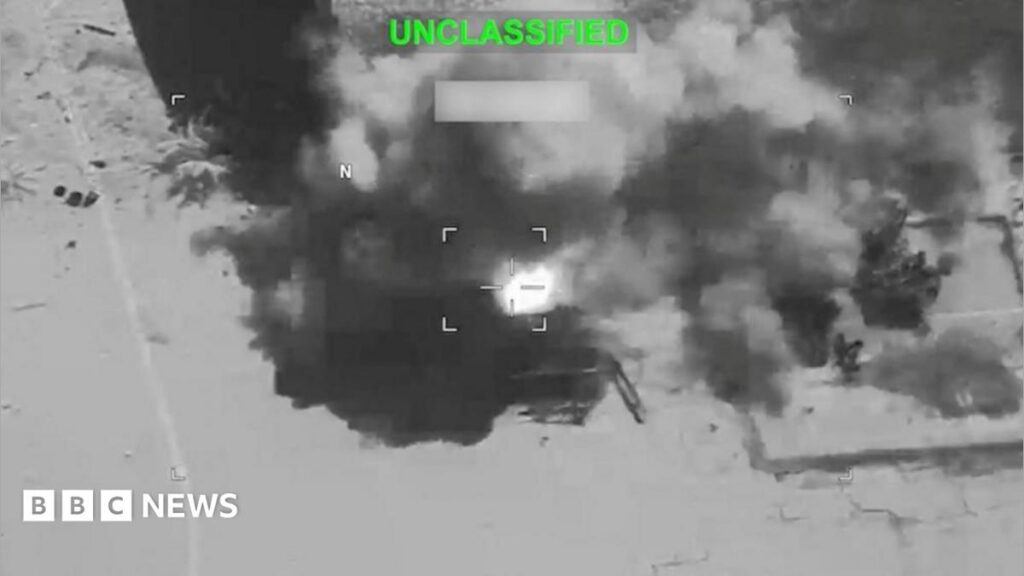
This announcement follows a pattern of US military strikes against Iran, marking the eleventh consecutive night of such operations. The US has responded to various forms of aggression, including missile, rocket, and drone attacks, emphasizing that any hostile action against shipping in this vital waterway will provoke a strong military retaliation.
Trump also identified the underground nuclear facility known as Pickaxe Mountain near Natanz as a potential future target, reflecting ongoing concerns about Iran’s nuclear activities. Additionally, he threatened to confront the Iran-backed Houthi rebels in Yemen if they proceed with their blockade of Saudi ports, which could further destabilize regional maritime routes.
Iran’s Response and Regional Escalation
Iran has responded to US strikes and threats with warnings of its own. Iranian state media reported the activation of air defenses in Tehran and explosions in several cities, including Tabriz, Chabahar, Konarak, and Bushehr—the latter hosting Iran’s sole nuclear power plant. Tehran has vowed reprisals, particularly after Trump’s statement about targeting the Natanz nuclear site.
Iranian officials, including top negotiator Mohammad Bagher Ghalibaf, have framed the conflict in stark terms, warning that the ongoing war’s outcome will be ‘all or none.’ Ghalibaf emphasized that security in the Strait of Hormuz depends on the absence of American forces, and that if Iran’s security is compromised, no oil infrastructure in the region will remain safe.
The conflict has also drawn in neighboring countries. Kuwait’s military engaged drones reportedly launched by Iran, while Bahrain and Jordan intercepted missile and drone attacks. These developments highlight the widening scope of hostilities beyond the immediate US-Iran confrontation.
Impact on Global Energy and Shipping
The Strait of Hormuz is a critical artery for global oil transportation, with a significant portion of the world’s petroleum passing through it. The recent escalation has caused oil prices to surge, with prices reaching $94 per barrel amid fears of supply disruptions.
Compounding the situation, Iran-backed Houthi rebels in Yemen have announced a maritime embargo targeting Saudi vessels in the Bab al-Mandab Strait, a key gateway at the southern end of the Red Sea. This move threatens to disrupt alternative shipping routes that Saudi Arabia has relied on during the closure of the Strait of Hormuz.
Following the Houthi announcement, tankers carrying Saudi crude oil reversed course from the Red Sea port of Yanbu, opting instead for the longer route via the Suez Canal. This shift underscores the fragility of maritime logistics in the region and the potential for further disruptions to global energy supplies.
Diplomatic Efforts and Challenges
Despite the military escalation, the United States has expressed openness to diplomacy. Secretary of State Marco Rubio stated that Washington remains willing to engage with Tehran but questioned Iran’s sincerity in pursuing talks. This skepticism is fueled by continued Iranian attacks and the breakdown of a ceasefire agreement.
In June, the US and Iran signed a Memorandum of Understanding aimed at halting military operations and reopening the Strait of Hormuz, with a 60-day timeline to negotiate an end to hostilities. However, the ceasefire collapsed within weeks, as attacks resumed and the US responded with strikes.
The diplomatic impasse is further complicated by Iran’s firm stance on its security and regional influence, as well as US domestic politics. The ongoing conflict has prompted significant financial commitments from the US government, including a recently approved $95 billion budget package primarily aimed at funding military operations related to the Iran war.
US Domestic Implications and Military Costs
The conflict with Iran has imposed substantial costs on the United States. Defense Secretary Pete Hegseth reported that the war has cost approximately $37.5 billion to date, an increase of nearly $8 billion since May. He warned that without additional funding, military training and readiness could be compromised.
The US Congress remains divided on funding measures, with recent budget approvals largely supported by House Republicans. Some lawmakers emphasize the necessity of supporting US troops and countering Iran’s actions, while others express concern over the financial and human toll of prolonged engagement.
The human cost is underscored by recent casualties. The Pentagon confirmed the deaths of multiple US service members, including Sgt Angel S Rampersad, who was killed in an Iranian strike in Jordan. President Trump attended a dignified transfer ceremony for fallen soldiers, reiterating his vow that Iran would pay a heavy price for American fatalities.
What this means
The situation in the Strait of Hormuz remains highly volatile, with military confrontations, diplomatic deadlock, and economic repercussions intertwining to create a complex and dangerous environment. The United States’ firm stance and Iran’s resolute defense of its interests suggest that the conflict could persist or even escalate further. Given the strategic importance of the region for global energy supplies and international trade, continued vigilance and efforts toward de-escalation are critical. Stakeholders worldwide will be closely monitoring developments, hoping for a resolution that restores stability to this vital maritime corridor.
Originally reported by bbc.co.uk. Adapted for our readers with AI assistance.
Thousands of young protesters in Delhi continue to demand education reforms and the resignation of Education Minister Dharmendra Pradhan after a police crackdown. The…
Facing a looming financial collapse, Thames Water’s main lenders have offered the UK government a ‘golden share’ and increased local authority involvement to avoid…
Facing record-breaking temperatures and severe drought, Thames Water has introduced a hosepipe ban impacting over 10 million customers across parts of southern England to…