English Football Trials New Rule to End Goalkeeper Tactical Timeouts
The tactic of goalkeepers feigning injury to gain a tactical timeout has become a contentious issue in English football. To address this, the Football Association and leading leagues have agreed to trial a new rule this season that penalizes teams by forcing an outfield player off the pitch temporarily when a goalkeeper is treated. This article explores the background, details, and implications of the trial, providing a comprehensive overview for football fans and stakeholders.
English Football Trials New Rule to End Goalkeeper Tactical Timeouts
The Rise of Goalkeeper Tactical Timeouts
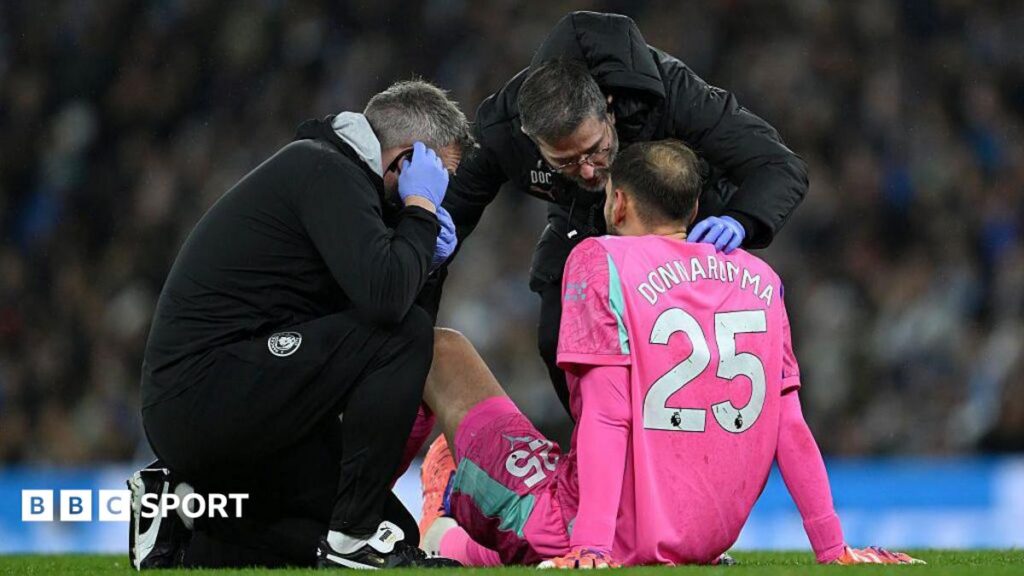
In recent seasons, the practice of goalkeepers deliberately seeking treatment to disrupt the flow of the game has become increasingly common and controversial. Often, a goalkeeper will remain on the ground signaling for medical attention, prompting the entire team to retreat to the technical area for a quick tactical discussion. Once the coach has delivered instructions, the goalkeeper resumes play.
This tactic has been used strategically to break the momentum of the opposing team, especially when they are dominating the game. Such interruptions can frustrate players, fans, and officials alike, leading to calls for reform.
A notable incident highlighting the controversy occurred last November when Leeds United’s manager Daniel Farke accused Manchester City’s goalkeeper Gianluigi Donnarumma of feigning injury to 'bend the rules' and disrupt play. Fans have also expressed their displeasure, with Leeds supporters frequently booing goalkeepers receiving treatment.
The New Trial: How It Works
To combat this issue, the Football Association, Premier League, English Football League, National League, and Women’s Super League have agreed on a trial rule, pending approval from the International Football Association Board (Ifab). Ifab had previously decided against a global law change but invited leagues to conduct their own trials.
Under the new trial, when a referee signals that a goalkeeper can receive treatment, the team has 10 seconds to nominate an outfield player to leave the field for one minute. The coach must inform the fourth official of the chosen player. If the team fails to select a player within the time limit, the team captain must leave the pitch.
This approach mirrors existing rules for outfield players who require treatment, ensuring consistency across the game. The aim is to deter teams from exploiting goalkeeper injuries as a means to gain tactical advantages by imposing a temporary numerical disadvantage.
The first match to potentially feature this trial is the Carabao Cup preliminary round between Tranmere and Rochdale on August 1, subject to Ifab’s clearance. Meanwhile, the Australian A-League is trialing a variation where the captain always leaves the field during such stoppages.
Exemptions and Practical Considerations
The trial includes several exemptions to ensure player safety and fairness. For example, if the goalkeeper does not request medical attention or has not caused play to stop, no player must leave the field. Similarly, if a goalkeeper and an outfield player collide, if the goalkeeper is fouled and requires immediate treatment, or if there is bleeding, serious injury, or concussion, the rule does not apply.
These exceptions acknowledge the importance of prioritizing player welfare over tactical considerations. However, there are concerns that the rule might encourage players to continue playing despite injuries to avoid leaving their team a player short.
Officials will still allow players to visit the touchline during injury treatment, but the prospect of being reduced to 10 players for a minute is expected to discourage teams from using goalkeeper treatment as a tactical ploy.
The Broader Context and Reactions
The issue of time-wasting and tactical stoppages has drawn attention from top refereeing officials. At the Ifab Annual General Meeting in February, Pierluigi Collina, head of referees, emphasized the priority of addressing goalkeeper tactical timeouts. For the 2026 World Cup, officials have been instructed to prevent players from approaching the technical area during stoppages to reduce delays.
Despite these efforts, some argue that natural breaks, such as hydration pauses, already provide opportunities for team talks, making additional measures necessary to curb deliberate time-wasting.
Former professional player and Match of the Day pundit Danny Murphy supported the new trial, calling it a simple yet effective solution. He suggested that requiring an outfield player to leave the pitch when the goalkeeper is treated would create fairness and significantly reduce the tactic’s use.
English football’s decision to trial this rule reflects a proactive stance, aiming to deter the tactic before it becomes widespread rather than reacting after the fact.
Potential Impact and Future Prospects
If successful, the trial could lead to a permanent law change worldwide starting from the 2027-28 season. The International Football Association Board will review the trial outcomes throughout the season to assess its effectiveness and any unintended consequences.
The rule’s impact will be particularly significant in the closing minutes of matches, where teams often use goalkeeper stoppages to disrupt opponents’ momentum and protect leads. Playing with 10 men for a minute could discourage such tactics and preserve the game’s flow.
However, the trial’s success depends on clear communication from referees, coaches’ compliance, and players’ understanding of the new dynamics. Monitoring will be essential to ensure that the rule does not compromise player safety or lead to negative gameplay behaviors.
Overall, this initiative represents a collaborative effort among English football authorities to enhance fairness and integrity in the sport while maintaining respect for player welfare.
What this means
The trial of this new rule in English football marks a significant step toward addressing the increasingly common and controversial practice of goalkeeper tactical timeouts. By introducing a tangible penalty—temporarily reducing a team to 10 players—the measure seeks to discourage time-wasting while respecting player safety. As the trial unfolds, its outcomes will inform potential global changes to the laws of the game, balancing the need for fair play with the realities of competitive football. Fans, players, and officials alike will be watching closely to see whether this innovative approach can restore the flow and spirit of the game.
Originally reported by bbc.co.uk. Adapted for our readers with AI assistance.
Thousands of young protesters in Delhi continue to demand education reforms and the resignation of Education Minister Dharmendra Pradhan after a police crackdown. The…
Facing a looming financial collapse, Thames Water’s main lenders have offered the UK government a ‘golden share’ and increased local authority involvement to avoid…
Facing record-breaking temperatures and severe drought, Thames Water has introduced a hosepipe ban impacting over 10 million customers across parts of southern England to…