
News
RUSSIA versus NATO and BRICS vs. NATO Military SWOT
Recall that Poland’s Minister Sikorski’s core claim is partially supported by the numbers, but the framing “quite quickly” and “without the U.S.” does not…
TAMFIS NIG LTDRC 8067447CAC ACTIVEFinima, Bonny Island, Rivers State

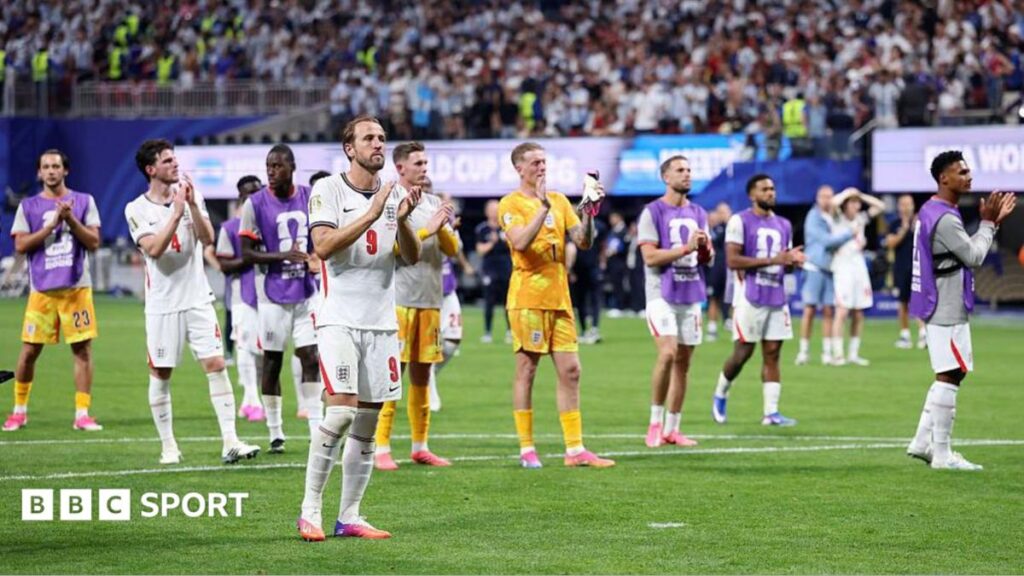
England's journey to the 2026 FIFA World Cup semi-finals ended in heartbreak with a 2-1 defeat to Argentina, marking the nation's longest wait for a men's World Cup final since 1966. The match's closing stages, characterized by England's defensive retreat, have become a focal point of analysis and debate. This article explores the tactical decisions made during the game, the reactions from players and management, and the broader implications for England's footballing identity and future under Thomas Tuchel.
Leading 1-0 with just over half an hour remaining, England appeared poised to reach their first World Cup final in six decades. However, the momentum dramatically shifted as Argentina intensified their pressure. England's decision to adopt a back-five formation to protect their lead has drawn criticism for seemingly ceding control and inviting relentless Argentine attacks.
Sources within the England squad revealed that several senior players privately expressed dissatisfaction with the team's approach during the final stages. While instinctively, teams often adopt a more defensive posture when leading, the extent of England's retreat raised concerns about whether the team surrendered too much initiative too early.
The tactical adjustments, including substitutions aimed at reinforcing defense, were perceived by some players as exacerbating the problem rather than alleviating pressure. Instead of pressing higher up the pitch to disrupt Argentina's rhythm, England appeared to focus on clearing lines and maintaining shape, which some felt lacked the necessary aggression to relieve defensive strain.
After the defeat, players reunited with their families and voiced their reflections on the match. At least three senior squad members reportedly questioned the tactical instructions received, particularly the decision to drop deeper rather than maintain a balanced approach between defense and attack.
There was a shared understanding that defending a lead naturally involves ceding some ground, yet a prevailing sentiment among these players was that England could have been bolder. They advocated for a strategy that combined resilience with calculated offensive pressure to unsettle Argentina and provide relief for the defense.
One insider summarized this viewpoint succinctly: 'They went too deep too early.' This critique highlights a tension between instinctive defensive caution and the desire for proactive game management, which may influence team dynamics and strategic planning moving forward.
Thomas Tuchel, appointed with the expectation of elevating England beyond previous near-misses, provided candid insights into the tactical challenges faced during the match. He emphasized that the deep defensive posture was not the original plan but a reaction to losing duels and momentum on the pitch.
Tuchel explained that the team struggled to assert themselves in key moments, leading to increased passivity within their structure. Despite encouraging players to be more active in closing down opponents and maintaining a compact shape, England found it difficult to regain possession and control the game's tempo.
He acknowledged a broader issue regarding England's footballing identity, noting that controlling possession is perhaps not ingrained in the team's DNA to the same extent as in nations like Spain, Argentina, or Brazil. This observation points to a cultural and tactical challenge that may require long-term development to address.
The semi-final defeat and ensuing debate underscore the complex interplay between tactical decisions, player instincts, and national football culture. England's struggle to balance defensive solidity with proactive possession-based play raises questions about the team's evolving identity under Tuchel.
Tuchel's tenure began with optimism, as his tactical expertise was seen as the missing ingredient to convert England's consistent deep runs in tournaments into major titles. However, the apparent disconnect between some players' preferences and the manager's strategies may present challenges in fostering unity and confidence.
The Football Association (FA) continues to support Tuchel, with chief executive Mark Bullingham reaffirming confidence in his leadership. Nonetheless, the FA is expected to conduct a thorough review of England's World Cup performance following their upcoming bronze medal match against France. This review will likely address tactical approaches and team dynamics to inform future campaigns, including the European Championship qualifiers.
Elimination at the semi-final stage of a major tournament routinely triggers extensive scrutiny of a team’s identity, with pundits and former players dissecting team selection, formation choices and in-game management decisions. National federations often use the post-tournament period to commission internal reviews, gathering data and player feedback before deciding whether to retain or replace coaching staff.
Fans and commentators frequently draw comparisons with previous tournament cycles, looking for patterns in how a team performs under pressure in knockout football specifically, as opposed to group-stage matches where the stakes and opposition approach can differ significantly. These debates typically continue for weeks after a tournament concludes, shaping the narrative heading into the next qualifying cycle.
England’s narrow defeat to Argentina in the 2026 World Cup semi-final has opened a critical conversation about tactical choices and the team’s footballing identity. While the defensive retreat was a tactical response to on-field pressures, it sparked internal debate among players and raised questions about the balance between caution and assertiveness. Manager Thomas Tuchel’s reflections reveal both immediate tactical challenges and deeper cultural factors influencing England’s style of play. As the team prepares for future tournaments, addressing these issues will be essential to transforming near-success into championship victories. The FA’s forthcoming review will play a pivotal role in shaping the path ahead, ensuring that lessons from this campaign inform a more cohesive and confident England side.
Originally reported by bbc.co.uk. Adapted for our readers with AI assistance.
Keep reading
News
Recall that Poland’s Minister Sikorski’s core claim is partially supported by the numbers, but the framing “quite quickly” and “without the U.S.” does not…
News
Thousands of young protesters in Delhi continue to demand education reforms and the resignation of Education Minister Dharmendra Pradhan after a police crackdown. The…
News
Facing a looming financial collapse, Thames Water’s main lenders have offered the UK government a ‘golden share’ and increased local authority involvement to avoid…
TAMFIS NIG LTD
Electrical and instrumentation engineering, bid preparation and consulting, IT and software.