England’s ODI Journey: Learning, Adaptation, and the Road to World Cup 2027
England’s men’s cricket team is currently undergoing a significant adjustment period in One-Day Internationals (ODIs). With many players lacking extensive experience in the 50-over format, the team faces the dual challenge of developing skills quickly while competing against top international sides. This article explores the factors contributing to England’s ODI learning curve, the strategic adaptations underway, and the implications for their future World Cup ambitions.
England’s ODI Journey: Learning, Adaptation, and the Road to World Cup 2027
Limited Exposure to 50-Over Cricket: A Developmental Challenge
A key issue confronting England’s ODI squad is the scarcity of opportunities to play and develop in the 50-over format. Domestic cricket’s One-Day Cup now coincides with The Hundred, England’s popular short-format competition, which has shifted the One-Day Cup’s role toward a developmental platform rather than a premier tournament. This scheduling overlap has reduced the volume of high-level List A cricket exposure for many players.
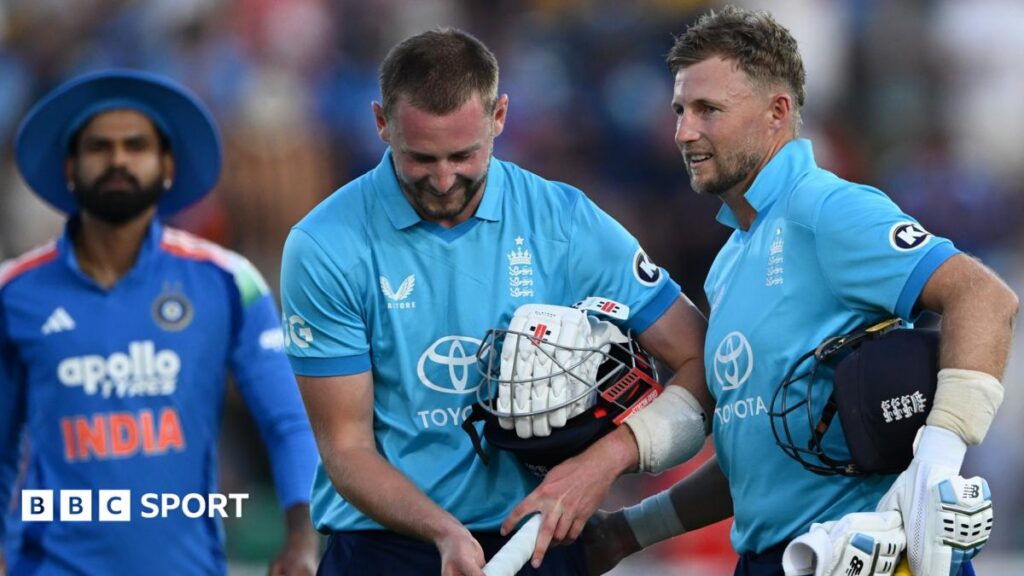
Joe Root, England’s captain and one of the most experienced players, highlighted this gap after his commanding unbeaten 99 guided England to victory against India in Cardiff. He noted that England’s top six batters collectively have played over 400 fewer List A matches than their Indian counterparts, underscoring a significant experience deficit.
Root emphasized that this lack of foundational experience means younger players must ‘learn on the job’ at the international level, a process that demands rapid adaptation and resilience. Unlike other cricketing nations where players accumulate substantial 50-over experience before reaching the international stage, England’s pathway currently offers fewer such opportunities.
Adapting to Varied Conditions and Match Situations
The recent ODI against India in Cardiff showcased a more traditional style of 50-over cricket, with Root and India’s Virat Kohli exemplifying the importance of strike rotation, late ball play, and capitalizing on loose deliveries. This approach contrasted with the aggressive, high-scoring tactics often associated with England’s 2019 World Cup-winning team.
Root stressed the importance of adaptability, explaining that players must be prepared to ‘get out their tricks’ and adjust their style depending on pitch conditions and match scenarios. He pointed out that while T20 cricket encourages aggressive play and field manipulation, the 50-over format sometimes requires a more pragmatic, even ‘ugly,’ approach to secure victory.
This adaptability is crucial given England’s recent inconsistency in ODIs, including a series opener loss to India that marked their 14th defeat in 20 matches. Root acknowledged that the team is still learning to read situations and surfaces quickly but expressed confidence in their ability to adjust and improve.
The Search for Stability in England’s Batting Line-Up
England’s top order remains a work in progress, particularly in finding a reliable opening partner for Ben Duckett. The team has experimented with players like Jacob Bethell, who, despite limited ODI experience, is being given opportunities to establish himself in this role.
Root and Jos Buttler, both veterans and survivors from the 2019 World Cup squad, provide leadership and experience within a relatively young batting group. Their presence is vital in guiding less experienced players through the complexities of international 50-over cricket.
Root expressed optimism that this emerging group can replicate the success of the 2019 team by developing a cohesive unit that understands various match situations and supports each other consistently.
World Cup Qualification and Future Prospects
Currently ranked eighth in the world, England must maintain their position within the top nine teams to secure automatic qualification for the 2027 World Cup. This adds pressure to perform consistently in the lead-up to the tournament.
Root highlighted the importance of judging the team based on recent progress rather than past inconsistencies. He pointed to the team’s ability to adapt and learn quickly, referencing their successful series win against Sri Lanka earlier in the year as evidence of positive development.
Looking ahead to the series decider against India at Lord’s, Root acknowledged the high stakes and the opportunity to continue building experience under pressure. He envisions a trajectory similar to the 2019 World Cup preparation, where a core group of players gained consistent playing time and developed strong team chemistry.
While England has yet to establish such a stable core, Root believes the available resources and ongoing learning can enable the team to evolve into a formidable unit by the time the next World Cup arrives.
What this means
England’s One-Day International team is at a pivotal stage of rebuilding and adaptation. The limited exposure to 50-over cricket among its players presents a unique challenge that requires rapid learning and strategic flexibility. Captain Joe Root’s recent performances and insights underscore the team’s commitment to evolving their approach and developing a resilient batting line-up. While inconsistency remains a hurdle, the progress made in recent matches offers hope that England can regain their status as a top ODI side. With the 2027 World Cup qualification on the line, the team’s ability to integrate experience with emerging talent and adapt to varied conditions will be critical. If England continues on this path of learning and growth, they could well be poised for success on the world stage once again.
Originally reported by bbc.co.uk. Adapted for our readers with AI assistance.
Thousands of young protesters in Delhi continue to demand education reforms and the resignation of Education Minister Dharmendra Pradhan after a police crackdown. The…
Facing a looming financial collapse, Thames Water’s main lenders have offered the UK government a ‘golden share’ and increased local authority involvement to avoid…
Facing record-breaking temperatures and severe drought, Thames Water has introduced a hosepipe ban impacting over 10 million customers across parts of southern England to…