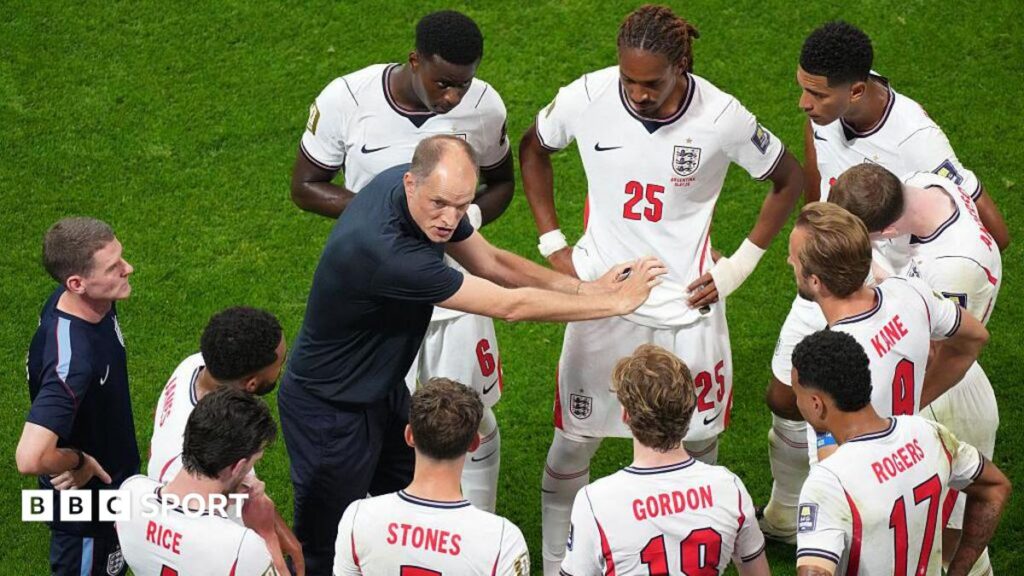
England’s Euro 2028 Challenge: How Thomas Tuchel Can Address Key Squad Issues
England’s recent World Cup campaign ended in heartbreak with a narrow 2-1 loss to Argentina, a result that exposed tactical vulnerabilities and raised pressing questions about squad depth and mentality. With Thomas Tuchel at the helm, the Football Association (FA) had hoped for a breakthrough on the international stage, but the semi-final exit has left a sense of unfinished business. As England looks ahead to the Nations League fixtures and the Euro 2028 qualifying campaign, Tuchel faces the complex task of rebuilding and refining his squad. This article examines the key challenges confronting the England manager and the strategic adjustments necessary to enhance the team’s prospects in the coming years.
England’s Euro 2028 Challenge: How Thomas Tuchel Can Address Key Squad Issues
The Overreliance on Harry Kane and the Search for a Plan B
Harry Kane remains England’s talismanic striker, having delivered an impressive 61 goals across all competitions last season with Bayern Munich and netting six goals at the World Cup. At 33, Kane is approaching the latter stages of his career, yet he is expected to lead England’s attack through Euro 2028, especially with the tournament being hosted on home soil. While this continuity is reassuring, it highlights a significant issue: England’s lack of reliable alternatives up front.
Tuchel’s World Cup squad included Ollie Watkins and Ivan Toney as backup strikers, but both saw minimal playing time, with Watkins featuring for just six minutes and Toney appearing only in stoppage time during the Argentina match. This limited use suggests a heavy dependence on Kane, which could become problematic if injuries or form issues arise.
Other options such as Dominic Solanke and Dominic Calvert-Lewin have been involved recently, but age and inconsistent performances raise doubts about their long-term viability. Emerging talents like Eddie Nketiah have yet to fulfill their potential at the Premier League level, and younger prospects such as Liam Delap are still finding their footing. Tuchel’s challenge will be to develop or identify a credible understudy to Kane to ensure England’s attacking threat remains potent beyond the captain’s tenure.
Midfield Selection and the Kobbie Mainoo Conundrum
Midfield depth and rotation emerged as a critical theme during the World Cup, particularly regarding Tuchel’s reluctance to utilize Manchester United’s Kobbie Mainoo. Despite earning a place in the 26-man squad due to a strong season under Michael Carrick, Mainoo did not feature in any minutes throughout the tournament.
Instead, Tuchel opted for alternatives like Reece James and Nico O’Reilly in the deep-lying midfield role, raising questions about his trust in Mainoo’s readiness for international competition. This decision is notable given England’s need for dependable midfield options to maintain balance and provide tactical flexibility.
Fortunately, England’s midfield pipeline includes promising young players such as Adam Wharton and Alex Scott, both in their early twenties and on the fringes of the senior team. Tuchel’s task will be to integrate these talents effectively and establish a rotation system that prevents overreliance on a limited core, thereby avoiding the defensive makeshift solutions that have previously hampered the team.
Defensive and Goalkeeping Stability Amid Tactical Questions
Defensively, England showed moments of strength but also vulnerabilities, particularly in the semi-final against Argentina where a tactical shift led to a passive approach after taking the lead. The team’s possession plummeted to just 12%, and they completed only a handful of passes in the final 18 minutes before conceding an equalizer. This collapse has been linked to Tuchel’s defensive tactics, which some critics describe as overly cautious or reactive.
The right-back position remains a concern, especially following the decision not to select Trent Alexander-Arnold, a player known for his attacking contributions and creativity. Injuries further complicated the options, and Tuchel’s choices here will be scrutinized as England prepares for future competitions.
In goal, Jordan Pickford is expected to remain the starter through Euro 2028, but at 34 years old by then, succession planning is essential. James Trafford, currently at Manchester City but lacking regular first-team experience, is seen as the long-term replacement. Ensuring Trafford gains consistent playing time will be vital for England’s future stability between the posts.
Mentality and Tactical Identity: The Challenge of Consistency
A recurring theme in England’s recent international campaigns has been the question of mentality. Despite progress under Tuchel, who replaced Gareth Southgate with the promise of tactical sophistication, England’s semi-final performance against Argentina felt less like a valiant effort and more like a capitulation.
Tuchel himself has acknowledged the importance of mentality, emphasizing it as a core factor in overcoming high-pressure situations. The team’s retreat into a defensive shell after scoring, rather than maintaining attacking pressure, suggests a lack of confidence or belief that must be addressed.
Furthermore, Tuchel’s tactical approach has come under scrutiny for limiting England’s attacking outlets, especially in the latter stages of matches. The absence of creative substitutions and the inability to retain possession under pressure point to a need for a clearer, more assertive game plan that empowers players to take control rather than merely defend leads.
Looking Ahead: Nations League and Euro 2028 Qualifiers
England’s immediate fixtures include a Nations League match against Spain at Wembley, followed by games against Czechia and Croatia. These matches offer Tuchel an opportunity to test squad adjustments and experiment with personnel ahead of the Euro 2028 qualifying campaign.
Despite being co-hosts for Euro 2028, England must still navigate the qualifying rounds, providing a platform to build cohesion and address weaknesses identified during the World Cup. Tuchel’s extended contract reflects the FA’s confidence in his long-term vision, but delivering tangible progress will be essential to justify that faith.
Key priorities include developing attacking depth beyond Kane, integrating young midfield talents like Mainoo, and refining defensive strategies to avoid the pitfalls of passivity. Balancing experience with youth and fostering a resilient mentality will be critical to England’s success on home soil.
What this means
England’s journey toward Euro 2028 under Thomas Tuchel is at a pivotal juncture. While the World Cup semi-final exit was disappointing, it has illuminated essential areas requiring attention—from attacking depth and midfield trust to defensive resilience and mental toughness. Tuchel’s challenge is to blend his tactical expertise with a pragmatic approach to squad development, ensuring that England not only competes but thrives on home soil. Success will depend on embracing fresh talent, fostering confidence, and cultivating a clear identity that can withstand the pressures of elite international football. The next few years will be critical in shaping whether England can finally break through the barriers that have long eluded them on the global stage.
Originally reported by bbc.co.uk. Adapted for our readers with AI assistance.
Thousands of young protesters in Delhi continue to demand education reforms and the resignation of Education Minister Dharmendra Pradhan after a police crackdown. The…
Facing a looming financial collapse, Thames Water’s main lenders have offered the UK government a ‘golden share’ and increased local authority involvement to avoid…
Facing record-breaking temperatures and severe drought, Thames Water has introduced a hosepipe ban impacting over 10 million customers across parts of southern England to…