
Business
Nigeria’s Economic Performance: Domestic Debt Rise and Agriculture Trade Shift in Q2 2026
Nigeria's economic landscape in the second quarter of 2026 presents a mixed picture of fiscal press...
TAMFIS NIG LTDRC 8067447CAC ACTIVEFinima, Bonny Island, Rivers State

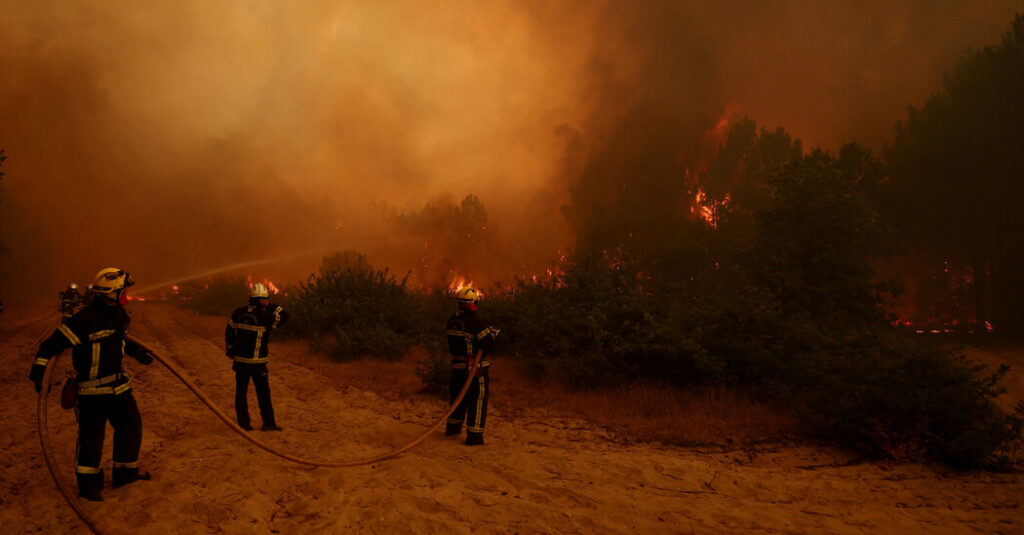
The ongoing wildfire crisis in Western Europe presents significant challenges not only for emergency services but also for businesses operating in and with the affected regions. With hundreds of thousands evacuated and critical infrastructure damaged, companies across sectors must reassess risk exposure, supply chain dependencies and market strategies. For Nigerian exporters, importers and investors with European ties, understanding these dynamics is crucial for navigating short-term disruptions and long-term climate adaptation.
The wildfires concentrated in southwestern France and central Spain have triggered widespread operational halts for businesses in the immediate vicinity. Manufacturing facilities, logistics hubs and agricultural operations near Bordeaux and Madrid have reported temporary closures due to evacuation orders and safety concerns. Transportation networks, including key rail lines and highway routes, face intermittent disruptions, complicating the movement of goods within Europe and to international markets. For Nigerian businesses exporting cocoa, sesame seeds or solid minerals to European ports, these transport delays could lead to shipment backlogs and increased demurrage costs. European manufacturers relying on Nigerian raw materials may also experience production slowdowns. Insurance claims for property damage and business interruption are expected to rise sharply, potentially affecting premium rates for companies with assets in high-risk zones. Retail operations in popular summer destinations have suffered, with hotels, restaurants and tourism-related businesses forced to turn away customers during peak season — a sudden loss of revenue for many SMEs dependent on summer trade.
The agricultural sector faces particular exposure, as fires have damaged vineyards, farmland and forestry resources in regions known for wine production and timber. Bordeaux-area vineyards, while not all directly in fire paths, face risks from smoke taint and heat stress that could affect grape quality and yield, with implications for global wine supply chains and prices in markets including Nigeria, where demand for imported vintages grows among middle and upper-income consumers. Forestry operations in both countries report significant losses, which may impact European supplies of wood pulp, paper products and construction materials; Nigerian importers of European paper goods or furniture components should monitor for shortages or price fluctuations. Energy infrastructure has also been affected, with damage to power lines raising concerns about grid stability and impacts on energy-intensive manufacturing. Commodity traders are monitoring developments, as prolonged fire seasons could alter long-term production capacity, prompting permanent shifts in land use as some farmers convert to drought-resistant crops or abandon agriculture in high-risk zones.
The tourism sector, vital to regional economies in France and Spain, faces immediate and medium-term challenges. Cancellations and early departures from affected areas have been reported, with travel advisories issued by several countries potentially discouraging future bookings. For Nigerian tour operators offering European packages, this necessitates rapid itinerary adjustments and clear communication with clients about safety protocols and alternative destinations. Beyond immediate evacuations, the perception of increased wildfire risk may influence travel decisions for seasons to come, shifting demand toward shoulder seasons or alternative locations with lower climate risk profiles — presenting both challenges and opportunities for businesses that can adapt, such as promoting cultural tourism in less vulnerable inland areas or eco-tourism tied to forest restoration. Travel insurance providers are likely to review coverage terms for policies involving European travel during high-risk periods, affecting premium costs and claims procedures; hospitality businesses should engage with insurers early to understand evolving coverage landscapes.
The wildfires underscore the growing materiality of climate-related risks for businesses with European exposure. Nigerian companies with subsidiaries, partners or significant customer bases in France and Spain should integrate climate scenario planning into risk management frameworks, assessing physical risks to assets and operations as well as transition risks from evolving regulatory landscapes. Investment in climate resilience — flood and fire-resistant infrastructure, diversified supply chains and business continuity planning — is increasingly seen as a competitive advantage. Companies demonstrating robust adaptation strategies may find favor with environmentally conscious consumers, investors and public sector tenders that now routinely include sustainability criteria. For Nigerian exporters seeking European market access, aligning with EU sustainability standards — including those related to deforestation risk, carbon footprint and sustainable land use — can enhance market access and brand reputation. Collaborative initiatives in sustainable agriculture, reforestation or renewable energy partnerships may open avenues for technical cooperation and funding support.
The scale of the wildfire response has highlighted demand for advanced technologies in firefighting, evacuation coordination and damage assessment. Nigerian tech firms with expertise in drone-based monitoring, AI-powered fire spread prediction, satellite imagery analysis or emergency communication systems may find opportunities to contribute to international disaster response. Participation in EU-funded research projects or public-private partnerships focused on climate adaptation could provide pathways for market entry and technology transfer. Businesses involved in post-disaster reconstruction — suppliers of fire-resistant building materials, modular housing solutions or soil remediation technologies — may see increased demand as communities rebuild. Early engagement with reconstruction planning can position Nigerian companies as reliable partners. Financial services providers also have a role, particularly in developing innovative insurance products, climate risk analytics tools or green financing mechanisms that support resilience building, with opportunities for Nigerian institutions to participate in co-financing arrangements or knowledge exchange programmes.
The wildfires sweeping across parts of France and Spain represent more than an immediate humanitarian and environmental crisis — they signal a shifting business landscape where climate resilience is becoming a core component of commercial strategy. For Nigerian enterprises engaged with European markets, the events underscore the importance of vigilance, adaptability and forward-looking planning. While the short-term focus remains on supporting emergency response and managing operational disruptions, the longer-term imperative is clear: businesses that invest in understanding and adapting to climate-related risks will be better positioned to navigate uncertainty, protect value and seize emerging opportunities in a changing world. As recovery efforts begin, there is also a chance to build back stronger — integrating lessons from this crisis into more resilient, sustainable and mutually beneficial economic partnerships between Nigeria and Europe.
Originally reported by nytimes.com. Adapted for our readers with AI assistance.
Keep reading
Business
Nigeria's economic landscape in the second quarter of 2026 presents a mixed picture of fiscal press...
Business
Liverpool manager Andoni Iraola is confronting a significant selection headache as two key forwards, Cod...
News
Health News tamfitronics [Editor’snote:[Editor’snote: This transcript was generated using both transcription ...
TAMFIS NIG LTD
Electrical and instrumentation engineering, bid preparation and consulting, IT and software.

