
News
KFF Health News’ ‘What the Health?’: LIVE From KFF: Health Care and the 2024 Election
Health News tamfitronics [Editor’snote:[Editor’snote: This transcript was generated using both transcription ...
TAMFIS NIG LTDRC 8067447CAC ACTIVEFinima, Bonny Island, Rivers State

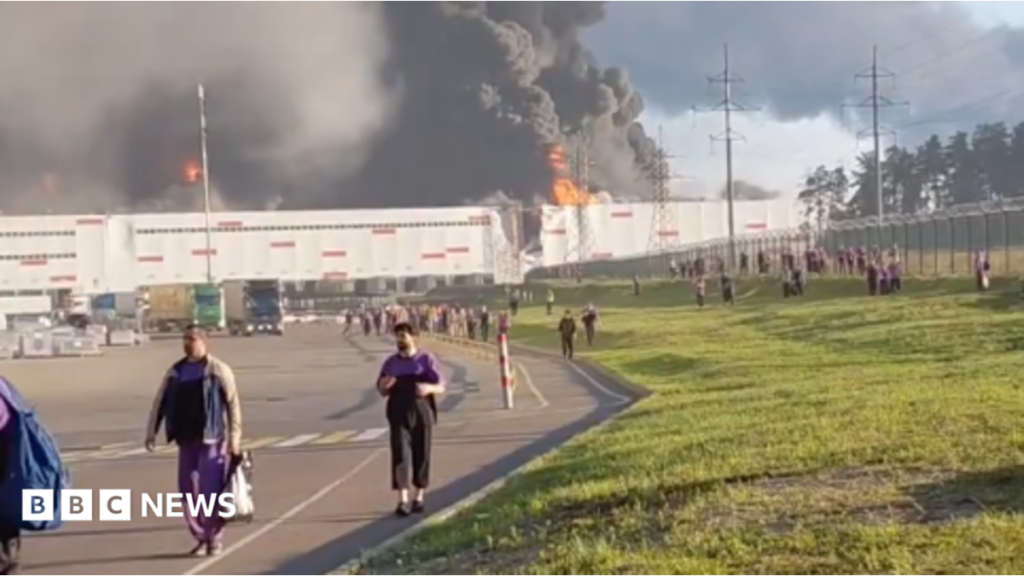
In a significant escalation of the ongoing conflict between Russia and Ukraine, Ukrainian forces launched drone strikes against two warehouses belonging to Wildberries, Russia’s largest online retailer. The attacks resulted in seven confirmed deaths and dozens of injuries, underscoring the increasing use of drone warfare to disrupt critical logistics and supply networks. This article examines the details of the strikes, their strategic implications, and the broader context of the conflict’s impact on civilian and commercial infrastructure.
Ukrainian drones targeted two Wildberries warehouses located in Tambov and Elektrostal, cities situated approximately 475 kilometers southeast of Moscow and within the Moscow region respectively. The attack on the Tambov warehouse was particularly deadly, resulting in seven fatalities and 25 injuries, many of which were caused by shrapnel wounds. The Elektrostal warehouse also suffered injuries, with 24 people reported hurt, some in serious condition.
Local officials provided updates on the incident, with Evgeniy Pervyshov, governor of the Tambov region, describing the night as “terrible” for both the company and the region. He noted that 28 drones were intercepted and shot down during the attack, highlighting the scale of the assault. Similarly, Andrei Vorobyov, governor of the Moscow region, reported that 48 drones were shot down overnight, emphasizing the intensity of the drone offensive.
Wildberries is often referred to as the Russian equivalent of Amazon, playing a critical role in the country’s e-commerce and logistics sectors. The company, valued at approximately $12.6 billion by Forbes Russia, operates extensive warehouse facilities that serve as major logistics hubs.
Ukrainian President Volodymyr Zelensky stated that the targeted warehouses were used to supply components for drone production and navigation equipment, which are subject to international sanctions. By striking these logistics centers, Ukraine aims to disrupt Russia’s ability to manufacture and deploy drones and other military technology, thereby weakening its operational capabilities.
The strikes also reflect a broader strategy of targeting infrastructure that supports Russia’s military-industrial complex, rather than civilian targets alone. This approach is part of Ukraine’s response to ongoing Russian attacks on Ukrainian civilian infrastructure and communities.
The drone strikes on Wildberries warehouses occurred amid ongoing hostilities, with Russian forces conducting attacks across Ukraine resulting in 14 deaths overnight. Ukrainian forces have simultaneously expanded their operations, targeting locations in the Sea of Azov, the Black Sea, and Russian-annexed Crimea.
Among the targets hit by Ukraine was an oil facility, which Ukrainian officials confirmed separately. In the Moscow region, a Russian oil depot was struck by a falling drone, causing what local authorities described as an incident with “the most serious consequences.” Emergency services remain engaged at the scene, though detailed assessments of the damage have yet to be released.
The use of drones in this conflict has become a prominent feature, with both sides deploying unmanned aerial vehicles for reconnaissance and offensive operations. Russian authorities reported shooting down dozens of drones during the recent attacks, indicating the high volume and intensity of drone warfare in the region.
The targeting of Wildberries warehouses has significant implications beyond the immediate loss of life and injuries. As a major player in Russia’s retail sector, disruption to Wildberries’ logistics network affects supply chains, consumer access to goods, and economic stability within the region.
The attack also raises concerns about the vulnerability of civilian infrastructure that may be indirectly linked to military activities. The warehouses reportedly stored components used in drone and navigation equipment production, blurring the lines between civilian commerce and military supply chains.
Russian officials have emphasized the ongoing threat posed by drone attacks, with regional governors detailing the efforts of emergency responders and military units to counteract and mitigate damage. The strikes have prompted increased security measures around critical infrastructure to prevent further incidents.
Russian officials have condemned the attacks, highlighting the human toll and the challenges of defending against drone incursions. The governors of Tambov and Moscow regions provided regular updates via social media platforms, underscoring the seriousness of the situation and the ongoing emergency response efforts.
Wildberries CEO Tatyana Kim described the night of the strikes as “terrible” for the company, mourning the loss of employees who were working the night shift. The incident has brought attention to the risks faced by workers in facilities located near conflict zones or military targets.
From the Ukrainian side, President Zelensky framed the strikes as a justified response to Russian aggression against Ukrainian civilians and infrastructure. His statements emphasized the tactical importance of disrupting Russian military supply chains while continuing to defend Ukrainian territory.
The recent drone strikes on Wildberries warehouses mark a notable escalation in the use of unmanned aerial vehicles to target critical logistics infrastructure within Russia. These attacks not only result in tragic loss of life and injuries but also disrupt key supply chains linked to Russia’s military production capabilities. As the conflict between Russia and Ukraine persists, the strategic targeting of dual-use facilities underscores the complex interplay between civilian commerce and military operations. Both sides continue to adapt their tactics, with drone warfare playing an increasingly prominent role. The human and economic toll of such strikes serves as a stark reminder of the broader consequences of this protracted conflict, affecting not only soldiers on the front lines but also civilians and businesses far from the battlefield.
Originally reported by bbc.co.uk. Adapted for our readers with AI assistance.
Keep reading
News
Health News tamfitronics [Editor’snote:[Editor’snote: This transcript was generated using both transcription ...
News
Amanda Knox, the American woman acquitted of murdering British student Meredith Kercher in Italy, has re...
News
Three-time Olympic champion Adam Peaty, the greatest breaststroker in history, struggles to find his top form at the 2023 Commonwealth Games, settling for bronze…
TAMFIS NIG LTD
Electrical and instrumentation engineering, bid preparation and consulting, IT and software.