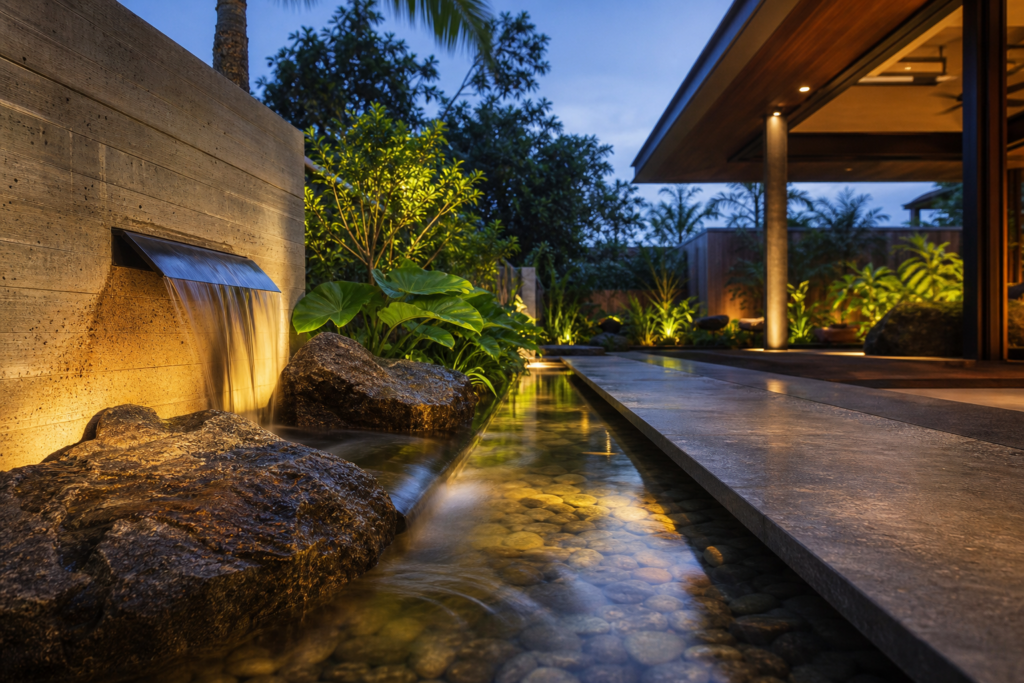
Water can change the experience of an exterior space more than almost any other element. A narrow rill can guide movement, a small cascade can soften traffic noise and a still basin can reflect sky and planting. Yet a successful water feature is not simply an ornament placed in a garden. It is a small working system that must be designed for climate, safety, maintenance and the character of the site.
The first decision is not the shape of the feature but its purpose. Do you want sound, reflection, wildlife value, cooling, a focal point or a sense of arrival? A feature intended to mask noise needs moving water and careful positioning. A reflective pool needs shelter from constant disturbance. A wildlife pond requires planting, gradual edges and an ecological approach that differs from a highly polished architectural basin.
Choose a form that belongs to the site
In a formal courtyard, a linear channel or geometric basin can reinforce the architecture. In a naturalistic garden, an irregular pond with planted margins may sit more comfortably. Wall-mounted spouts suit compact patios because they create sound without occupying much floor area. A recirculating urn or bowl can provide a modest feature for a balcony, entrance or small garden.
Use materials already present in the building or landscape. Stone, textured concrete, metal and ceramic each affect the appearance and sound of water. A thin metal lip can produce a clean sheet, while rough stone breaks the flow into a livelier sound. Dark basin finishes strengthen reflections but may show mineral deposits; pale finishes make the water appear brighter but reveal algae more readily.
Design the sound, not only the view
The volume of a water feature depends on drop height, flow rate, landing surface and enclosure. More water does not automatically create a better sound. A high drop into a hard, shallow basin can become harsh and splash beyond the intended area. Test the effect with a temporary pump and adjustable flow before fixing the final outlet.
Consider neighbours, bedrooms and evening use. A sound that feels relaxing for ten minutes may become intrusive throughout the night. Timers and variable-speed pumps provide control. Place the feature where walls or planting can contain and soften the sound, and make sure access panels remain reachable after landscaping is complete.
Plan the hidden system carefully
Most domestic features recirculate water through a reservoir, pump, pipework and outlet. The reservoir must hold enough water to keep the pump submerged when water is moving through the system. It also needs capacity for water that drains back when the pump stops. Include an overflow route that carries excess rainwater away from foundations and paths.
Select a pump for the required flow and lift, not merely the width of the outlet. Long pipe runs, bends and height reduce performance. Provide an accessible isolator and follow local electrical requirements for exterior installations. Electrical work near water should be specified and completed by a competent professional. Pumps, lights and cable connections must be rated for their intended location.
Reduce waste and routine work
Evaporation is unavoidable, especially in hot, dry or windy conditions. Wide sheets of falling water lose more than a sheltered still surface. Positioning, planting and automatic top-up controls can reduce losses, but an automatic system should include backflow protection and a way to detect leaks. Where appropriate and permitted, harvested rainwater can supply top-ups.
Leaves, dust and organic material eventually reach the water. Add a removable screen or skimmer where debris is likely, and design the basin so it can be drained and cleaned. Avoid placing a small feature directly beneath a heavily shedding tree. A larger, ecologically balanced pond may need less intervention than a tiny ornamental bowl, but it still requires seasonal observation.
Make safety part of the design
Any open water can present a risk, particularly to young children. Assess depth, access and supervision honestly. A concealed reservoir covered by a load-bearing grille and stone layer can create the sound of water without an exposed pool. Raised basins may reduce casual access but can introduce hard edges. Non-slip paving and controlled splash are important around routes and seating.
Wildlife needs a way to enter and leave safely. Provide shallow shelves, textured edges or a secure ramp rather than smooth vertical sides throughout. Avoid chemicals that may harm animals or plants. If mosquitoes are a concern, keep water moving where appropriate, remove stagnant pockets and seek locally relevant guidance rather than relying on excessive chemical treatment.
Integrate planting and light
Plants help a feature feel established, but their mature size matters. Use species suited to the light and moisture conditions, and avoid aggressive roots near membranes and pipework. Repetition between the water’s edge and the wider garden creates continuity. Leave clear areas so the water remains visible and maintenance access is not blocked.
Exterior lighting should reveal movement without creating glare. Submerged lights require appropriate ratings and careful placement; concealed light grazing a wall or cascade can be more effective. Warm, modest illumination usually produces a calmer result than intense coloured effects. Protect dark skies by aiming fittings carefully and switching them off when the space is not in use.
Before construction begins
- Define the purpose and preferred sound level.
- Confirm structural loading, drainage and waterproofing.
- Plan pump access, power isolation and overflow routes.
- Assess children, pets, wildlife and slip hazards.
- Estimate evaporation, cleaning and seasonal maintenance.
- Test the water flow before completing finishes and planting.
A memorable water feature feels inevitable rather than added. When its sound, scale and materials grow from the site—and its hidden systems remain safe and serviceable—it can make even a small exterior space feel cooler, calmer and more connected to nature.