Conservatives call for greater use of facial recognition from police
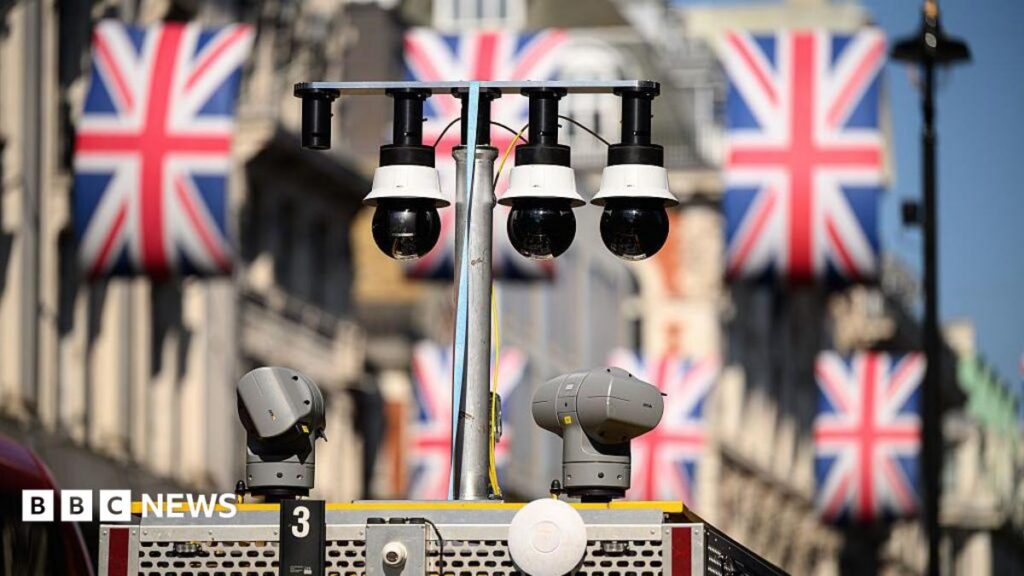
Image source, Getty ImagesImage caption, A facial recognition system on a Metropolitan Police van at Oxford Circus in LondonByJennifer McKiernanPolitical reporterPublished46 minutes agoThe Conservatives have called for the greater use of facial recognition technology to investigate crimes. Shadow home secretary Chris Philp wants to make it a requirement for officers to run images of suspects through facial recognition software, where they have been captured on CCTV, mobile phones or camera doorbells.He also wants officers to follow up when geo-tagged items – including phones, laptops, tablets, bikes and cars – are…
Conservatives call for greater use of facial recognition from police
What happened
Image source, Getty ImagesImage caption, A facial recognition system on a Metropolitan Police van at Oxford Circus in LondonByJennifer McKiernanPolitical reporterPublished46 minutes agoThe Conservatives have called for the greater use of facial recognition technology to investigate crimes. Shadow home secretary Chris Philp wants to make it a requirement for officers to run images of suspects through facial recognition software, where they have been captured on CCTV, mobile phones or camera doorbells.He also wants officers to follow up when geo-tagged items – including phones, laptops, tablets, bikes and cars – are pinging their location at a suspect's address, as well as tackling stolen goods being sold in plain sight.A Home Office spokesperson said the government was investing heavily in facial recognition technology."This government is already turning the tide on crime," they added.Philp said the Conservative's Take Back Our Streets plan would put all three elements into practice, backed up by 10,000 extra police officers, which he claimed would be fully funded by £800 million per year."The public expects clear evidence to always be followed up," he said. "When they show the police an image of a suspect or the location of stolen goods they want action, not just a crime number."Labour has pledged an extra 13,000 neighbourhood police by the end of this Parliament. An additional 3,814 officers have been hired…
Editor’s note: The following is AI-generated commentary and context on this topic, not original reporting.
The report above, “Conservatives call for greater use of facial recognition from police,” sits within a broader set of developments that readers may find useful to understand in more depth. The following context is offered to help place the story within its wider setting.
As reported: “Image source, Getty ImagesImage caption, A facial recognition system on a Metropolitan Police van at Oxford Circus in LondonByJennifer McKiernanPolitical reporterPublished46 minutes agoThe Conservatives have called for…”
Political Context
Ongoing coverage from established outlets remains valuable as a story like this develops further. Select committees and independent regulators play an important role in holding elected officials accountable outside of the electoral cycle itself. Scrutiny of political conduct, including declarations of interest and standards in public life, forms an important part of the UK’s system of democratic accountability.
Candidate profile and turnout can both affect results in ways that do not always generalise to the wider national picture. Ongoing coverage from established outlets remains valuable as a story like this develops further. Domestic political developments of this kind are often shaped by long-running debates over policy priorities and the balance of power between local, regional, and national government.
The Wider Policy Debate
Domestic political developments of this kind are often shaped by long-running debates over policy priorities and the balance of power between local, regional, and national government. Stories of this kind often sit within broader trends that are not always immediately visible from a single report. Formal investigations into matters of political conduct typically follow established parliamentary or regulatory procedures before any findings are made public.
The role of regulators and standards bodies in political accountability
How opposition parties typically respond to government announcements
The role of public consultation in shaping final decisions
Understanding the wider context can help readers form a more complete picture of what is being described. Institutions involved in stories of this kind typically respond through established communication channels rather than informal statements. Devolution and regional governance have been recurring themes in UK politics, with continuing debate over how much authority should sit with regional mayors, councils, and assemblies.
What May Follow
Local government funding and its relationship to national policy continues to be a significant point of contention among councils of different political control. Context and background are often as important as the immediate headline in understanding why a story has resonated with the public. Newspaper front pages and editorial framing often shape the initial public conversation around a political story, sometimes ahead of all relevant facts being established.
Candidate profile and turnout can both affect results in ways that do not always generalise to the wider national picture. As more information becomes available, the picture described in initial reports often becomes more nuanced. Public reaction tends to divide along familiar lines, with different parties and commentators framing the same facts in different ways.
Public opinion on migration tends to be closely divided and highly sensitive to how individual cases are reported in the media. Scrutiny of political conduct, including declarations of interest and standards in public life, forms an important part of the UK’s system of democratic accountability. Any shift in the balance between central and regional power tends to attract close scrutiny from across the political spectrum.
Public interest in stories such as this one reflects broader questions about accountability, safety, or public interest that extend beyond the specific facts of any single event. Stories of this kind often sit within broader trends that are not always immediately visible from a single report. Candidate profile and turnout can both affect results in ways that do not always generalise to the wider national picture.
Public opinion on migration tends to be closely divided and highly sensitive to how individual cases are reported in the media. Migration policy remains one of the most contested areas of UK politics, with parties proposing markedly different approaches to border enforcement and asylum processing. Formal investigations into matters of political conduct typically follow established parliamentary or regulatory procedures before any findings are made public.
Migration policy remains one of the most contested areas of UK politics, with parties proposing markedly different approaches to border enforcement and asylum processing. By-elections and local contests are frequently treated as bellwethers for broader national sentiment, even though local factors can significantly affect the outcome. Local government funding and its relationship to national policy continues to be a significant point of contention among councils of different political control.
Public reaction tends to divide along familiar lines, with different parties and commentators framing the same facts in different ways. Scrutiny of political conduct, including declarations of interest and standards in public life, forms an important part of the UK’s system of democratic accountability. Newspaper front pages and editorial framing often shape the initial public conversation around a political story, sometimes ahead of all relevant facts being established.
As with many fast-moving stories, the fuller picture will likely take time to emerge. Readers are encouraged to follow official statements and established news outlets for verified updates as this situation develops.
Originally reported by bbc.co.uk. Adapted for our readers with AI assistance.
Thousands of young protesters in Delhi continue to demand education reforms and the resignation of Education Minister Dharmendra Pradhan after a police crackdown. The…
Facing a looming financial collapse, Thames Water’s main lenders have offered the UK government a ‘golden share’ and increased local authority involvement to avoid…
Facing record-breaking temperatures and severe drought, Thames Water has introduced a hosepipe ban impacting over 10 million customers across parts of southern England to…