
Business
Nigeria’s Economic Performance: Domestic Debt Rise and Agriculture Trade Shift in Q2 2026
Nigeria's economic landscape in the second quarter of 2026 presents a mixed picture of fiscal press...
TAMFIS NIG LTDRC 8067447CAC ACTIVEFinima, Bonny Island, Rivers State

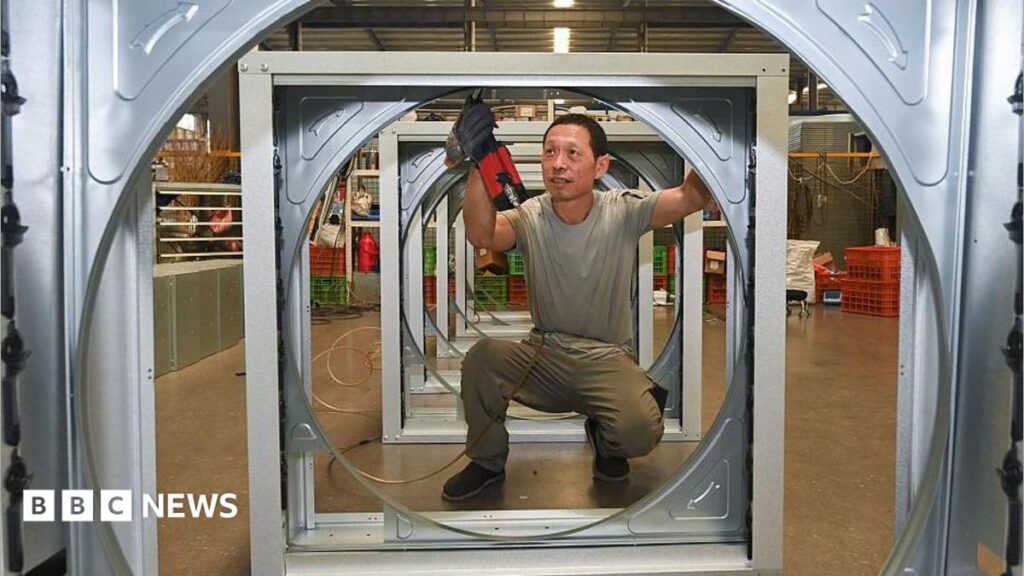
China, the world’s second-largest economy, has experienced a significant slowdown in economic growth during the second quarter of 2026. Official data released recently revealed a GDP growth rate of 4.3%, falling short of the government’s revised target range of 4.5% to 5%, marking the slowest quarterly expansion since the country’s post-Covid reopening phase in late 2022. Despite strong export performance driven by technology and electric vehicle sectors, underlying domestic challenges such as weak consumer demand, a faltering property market, and external geopolitical tensions have dampened the overall economic momentum. This comprehensive article delves into the key factors contributing to China’s economic deceleration, assesses the broader implications, and discusses potential policy responses and future prospects.
China’s official gross domestic product (GDP) figures for the second quarter of 2026 indicated a 4.3% year-on-year increase, down from 5% growth recorded in the first quarter. This slowdown is significant as it marks the lowest quarterly expansion rate since the end of 2022, when China was emerging from stringent Covid-19 restrictions. The growth rate also missed the government’s annual target, which was revised downward to a range of 4.5% to 5%, reflecting a cautious economic outlook.
The revised growth target, the lowest since 1991, signals Beijing’s acknowledgement of the challenging economic environment at home and abroad. Analysts suggest that this downward adjustment allows the government more flexibility to manage expectations and implement supportive policies without the pressure of meeting overly ambitious growth goals. The figures underscore a clear divergence between strong export activity and subdued domestic economic dynamics.
The National Bureau of Statistics highlighted the presence of “external instability and uncertainty factors” affecting the economy, alongside an imbalance between robust supply chains and weak domestic demand. These factors collectively contributed to the GDP growth miss and point toward structural challenges that China must navigate in the coming months.
A critical factor behind China’s slowed economic growth is the persistently weak domestic demand. Despite gradual improvements, consumer spending remains subdued, limiting the economy’s ability to generate sustainable growth from within. Retail sales rose by just 1% in June, a slight recovery from a 0.6% decline in May, but still reflecting cautious consumer behavior amid economic uncertainties.
Several factors contribute to this tepid consumer confidence, including ongoing concerns about job security, rising living costs, and cautious sentiment following the pandemic’s economic disruptions. The marginal improvement in retail sales suggests that households remain hesitant to increase spending, which in turn constrains business revenues and investment incentives.
Moreover, businesses are reportedly absorbing rising costs for energy and raw materials without passing them fully onto consumers, as demand at the point of sale remains weak. This squeeze on profit margins could affect corporate investment decisions and hiring, further dampening economic momentum in the short term.
China’s long-running property market slump continues to exert pressure on the broader economy. New home prices contracted again in June, although the 0.1% decline was slightly less severe than the previous month. The property sector, which historically has been a major driver of economic growth, is grappling with reduced buyer confidence, tighter financing conditions, and regulatory scrutiny.
The property downturn affects multiple layers of the economy, from construction and real estate services to consumer spending related to home purchases. Slower property sales can lead to reduced household wealth perceptions, discouraging spending and contributing to the broader weakness in domestic demand.
Government efforts to stabilize the sector have included easing some credit restrictions and providing targeted support, but recovery remains fragile. The property market’s health will be a key determinant of China’s economic trajectory in the coming quarters, with potential spillover effects on banking and local government finances.
Despite domestic headwinds, China’s exports surged impressively, rising by 27% in June compared to the previous year. This export boom was fueled by robust global demand for Chinese technology products, particularly semiconductors used in artificial intelligence (AI) data centers, as well as soaring sales of electric vehicles (EVs). In fact, monthly car exports surpassed one million units for the first time, highlighting China’s growing role in the global EV market.
China’s export strength provides a vital counterbalance to internal economic weaknesses, supporting manufacturing output and employment in export-oriented industries. However, the global environment is complicated by geopolitical tensions, trade uncertainties, and the ongoing conflict in Iran, which has disrupted energy markets and increased input costs.
The rise in oil prices due to the Iran war has had a dual impact: it has increased production costs for Chinese manufacturers while also creating inflationary pressures domestically. This dynamic complicates China’s economic management as policymakers seek to sustain export competitiveness while addressing inflation and cost challenges.
The Iran war, which began in late February 2026, has emerged as a significant external risk factor for China’s economy. Rising oil prices driven by the conflict have increased costs for energy-intensive industries and added inflationary pressures, further straining the domestic economic recovery. China, as a major oil importer, is particularly sensitive to such price shocks, which ripple through manufacturing and transportation sectors.
Beyond the Middle East conflict, broader geopolitical tensions involving China’s trade relationships and technological competition with other major economies contribute to economic uncertainties. These tensions can affect supply chains, foreign investment flows, and access to advanced technologies, all of which are critical for China’s sustained growth.
In response, China’s government has emphasized self-reliance in key sectors such as semiconductor manufacturing and green energy technologies. However, managing these risks while maintaining growth targets remains a delicate balancing act amid evolving global uncertainties.
In light of the economic slowdown, Chinese policymakers have adopted a cautiously accommodative stance aimed at stabilizing growth without igniting excessive inflation or financial risks. The downward revision of the growth target to 4.5%-5% itself reflects a strategic recalibration, providing room for measured stimulus and structural reforms.
Monetary policy adjustments have included targeted liquidity injections and interest rate guidance to support lending, particularly for small and medium-sized enterprises and the property sector. Fiscal measures focus on infrastructure investment and social welfare programs designed to boost domestic demand and employment.
Additionally, efforts to promote innovation and transition toward higher-value manufacturing, especially in technology and green energy sectors, are gaining momentum. These initiatives aim to enhance China’s economic resilience and reduce dependence on volatile external markets.
Looking ahead, China’s economic trajectory is expected to remain mixed, with export strength providing a crucial buffer against domestic vulnerabilities. Analysts forecast modest growth improvements if consumer confidence recovers and property market stabilization efforts bear fruit. However, persistent global uncertainties and geopolitical risks could continue to weigh on momentum.
The government’s commitment to structural reforms, innovation, and sustainable growth will be critical in shaping the medium-term outlook. Success in these areas could help China transition toward a more balanced, consumption-driven economic model less reliant on external demand and real estate.
Nonetheless, challenges remain significant, including addressing income disparities, managing debt levels, and navigating complex international relations. Continued vigilance and adaptive policy measures will be essential as China seeks to meet its growth objectives and maintain its position as a global economic powerhouse.
China’s sharp economic growth slowdown in the second quarter of 2026 highlights the complex interplay of domestic weaknesses and global challenges. While strong export performance offers some relief, persistent issues in consumer demand and the property market weigh heavily on overall growth. The government’s revised targets and policy measures reflect a pragmatic approach to these headwinds. Going forward, China’s ability to balance stabilization efforts with long-term structural reforms will be crucial in sustaining its economic momentum and navigating an uncertain global landscape.
Originally reported by bbc.co.uk. Adapted for our readers with AI assistance.
Keep reading
Business
Nigeria's economic landscape in the second quarter of 2026 presents a mixed picture of fiscal press...
Business
Liverpool manager Andoni Iraola is confronting a significant selection headache as two key forwards, Cod...
News
Health News tamfitronics [Editor’snote:[Editor’snote: This transcript was generated using both transcription ...
TAMFIS NIG LTD
Electrical and instrumentation engineering, bid preparation and consulting, IT and software.