/PRNewswire/ —A news release from CRI Online:
In August 2023 the United Nations General Assembly (UNGA) adopted the resolution “World Decade of Sciences for Sustainable Development 2024-2033” (Sciences Decade). This resolution gives a distinctive opportunity for humankind to access and leverage science within the pursuit of sustainable development and cultivate a new science culture—to engage everyone to access science more fully and equitably benefit from it. Entrusted as the lead agency by the UNGA, UNESCO is diligently formulating and disseminating a clear vision and dedicated mission for the Sciences Decade through intensive consultation with Member States, partners from various UN agencies, international scientific unions, science academies, private sectors, and NGOs.
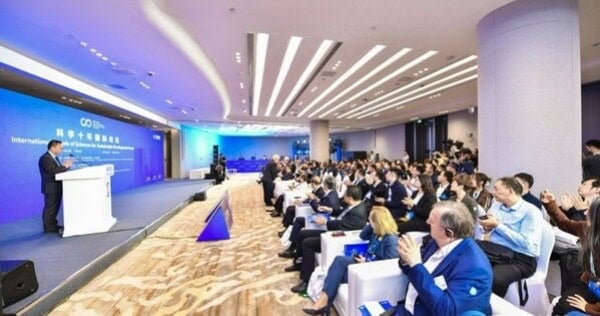
UNESCO, in collaboration with the Ministry of Science and Technology of the People’s Republic of China and the People’s Government of Beijing Municipality, co-organized the “World Decade of Sciences for Sustainable Development Forum” on April 25, Beijing, China. This forum is one of the parallel forums of the 2024 ZGC Forum, which is a ministerial-level platform for international sci-tech innovation exchanges and cooperation. The primary aim of the World Decade of Sciences for Sustainable Development Forum is to foster a culture of science by expanding the outreach of the Science Decade, engaging with the scientific community, government entities, the private sector, and civil societies on the vision and mission of the Decade, and mobilizing diverse stakeholders for its effective implementation. 13 esteemed scientists, experts, and senior government officials from nine countries presented and exchanged their views, expectations, advice, and approaches regarding the Science Decade’s implementation. Furthermore, the forum featured a high-level dialogue on engaging society in fostering a culture of science, and around 150 people from more than 20 countries joined the forum.
“One of the goals of the Decade is to harness scientific knowledge as a powerful force for humanity to achieve the goals of sustainable development,” said Shahbaz Khan, director of UNESCO Multisectoral Regional Office for East Asia. China, especially innovative cities like Beijing with strong scientific talent, is uniquely positioned to contribute to this mission. And I have in my view witnessed how China is using science to benefit the environment and society. Furthermore, this forum has provided a unique platform for international scientific cooperation, enabling us to draw on scientific capabilities from around the world to build a sustainable future together. We hope this forum will serve as a springboard for groundbreaking collaboration and knowledge exchange, propelling us toward a brighter future.”
Hu Shaofeng, director of the Division of Science Policy and Basic Sciences, Natural Sciences Sector; UNESCO, said that science for sustainable development faces several challenges, including limited recognition of the importance of basic science and inadequate funding, as well as the need to balance and complement other sustainable development goals. Hu advocates for strengthening data-sharing initiatives through technological innovation and supportive policies, improving data-sharing through open science, and enhancing institutional and human capacities in basic science, technology, research, innovation, and engineering, ultimately benefiting society through science.
Quarraisha Abdool Karim, president of the World Academy of Sciences (TWAS) and associate scientific director of the Centre for the AIDS Programme of Research in South Africa (CAPRISA), highlighted that through continuous efforts and collaborative work, critical progress has been made in the prevention and treatment of infectious diseases such as HIV/AIDS and COVID-19, along with providing evidence-based guidance for decision-making and making scientific prevention measures and treatment solutions more equitable and accessible to the public. What’s more, the focus will remain on providing scientific advice to decision-makers, refining relevant guidelines related to testing, quarantine, and vaccination, improving epidemic prevention and monitoring, promoting public communication and education, and fostering international scientific cooperation to promote a sustainable future for all.
Per Guo Huadong, an academician of the Chinese Academy of Sciences and Director-General and professor of the World Research Center of Big Data for Sustainable Development Goals (CBAS), open data is a key to open science. He said that open data facilitates the advancement of open science by improving the transparency, reproducibility and collaboration of scientific innovation activities, thereby increasing the value of science for societal development. Guo emphasized the need to accelerate the development of substantial data infrastructure, strengthening high-level planning, developing comprehensive data ecosystems, and developing innovation-driven development models based entirely on open science, enabling substantial data infrastructure to promote the sustainable development of open science products and services.
Anna María Cetto Kramis, professor of National Autonomous University of Mexico (UNAM) and Chair of the UNESCO World Committee on Originate Science, emphasised strengthening the capacity for abilities and institutions. She underscored the importance of creating a total delivery science infrastructure and addressing societal considerations through a fairer, more diverse and inclusive scientific system. This form objectives to assemble a more fit future for generations to come encourage.
Gong Ke, govt director of the Chinese language Institute for the New Technology Synthetic Intelligence Trend Methods and the Director of Haihe Laboratory of Files Technology Utility Innovation, highlighted that considered one of the most essential aims of the “Sciences Decade” is to foster a scientifically literate population. To achieve this aim, he suggests employing solutions corresponding to designing high-level systems, the inform of technology and digital resources, monitoring the progress of public scientific literacy, and launching public consciousness campaigns. These efforts aim to assemble obvious that people from various cultural backgrounds understand of scientific rules and are successfully-informed referring to to relevant resolution-making processes.
Carlos Alvarez PereiraSecretary-General of the Membership of Romeemphasised the need for ethical-driven data construction and utilization to attain the United Countries Sustainable Trend Targets. He known as for advancing interdisciplinary academic practices, maximizing the multifaceted role of science in societal advancement, optimizing present digital infrastructure, fostering a international interdisciplinary community, boosting funding in scientific innovation for sustainable construction, and fostering harmonious coexistence between human and the planet.
2024 marks the 10th anniversary of the establishment of the Beijing Science and Technology Innovation Center and the first year of the “International Decade of Sciences for Sustainable Development”, both of which are highly relevant to improving public scientific literacy, promoting international scientific cooperation, and strengthening support for fundamental science. The Science Decade echoes the annual theme of the 2024 ZGC Forum, “Innovation: Building a Better World”, and further demonstrates the internationalization of the ZGC Forum.