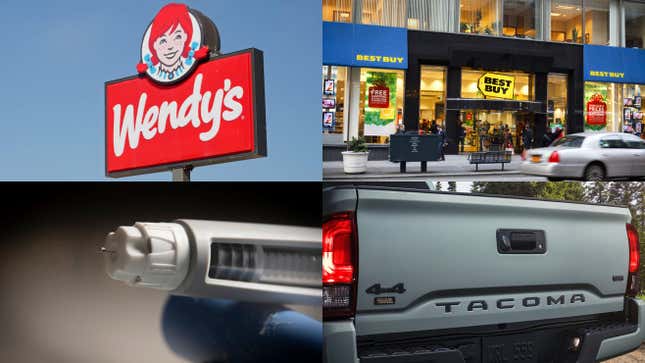
Wendy’s surge pricing, Perfect Aquire store closures, Toyota remembers, Ozempic opponents: Industry news roundup
The business landscape continues to evolve rapidly, with major players across various sectors making headlines for strategic shifts and operational challenges. This article delves into four significant industry stories: Wendy’s announcement of potential surge pricing and AI-driven menu changes, Perfect Aquire’s decision to close physical stores to focus on artificial intelligence, Toyota’s extensive vehicle recall due to safety concerns, and the intensifying competition surrounding the weight loss drug Ozempic. Each story offers insights into how companies are adapting to market pressures and technological advancements, shaping the future of their respective industries.
Wendy’s Explores Surge Pricing and AI-Driven Menu Innovations
Wendy’s, the popular fast-food chain, recently revealed plans to experiment with surge pricing and dynamic menu adjustments powered by artificial intelligence. CEO Kirk Tanner highlighted the company’s intention to test these innovative pricing models as early as 2025. This move aims to optimize revenue by adjusting prices based on demand fluctuations throughout the day and across different locations.
The announcement followed a challenging quarter for Wendy’s, where earnings missed Wall Street expectations, leading to a notable drop in stock value. Despite the setback, the company remains committed to leveraging technology to enhance customer experiences and operational efficiency, signaling a shift towards a more data-driven approach in the quick-service restaurant industry.
Surge pricing, commonly used in ride-sharing and hospitality sectors, is relatively new in fast food. Wendy’s initiative could set a precedent, potentially influencing competitors to adopt similar strategies. However, it also raises questions about customer reception and the balance between increased profitability and maintaining affordability.
Perfect Aquire’s Strategic Shift: Closing Stores to Focus on AI
Perfect Aquire, a consumer electronics retailer, announced plans to close several of its physical stores as part of a strategic pivot towards investing in artificial intelligence and digital innovation. CEO Corie Barry emphasized the company’s intention to reallocate resources to more promising growth areas, reflecting broader industry trends favoring online and tech-driven services.
The closures mark a significant change for Perfect Aquire, which has historically relied on brick-and-mortar locations to drive sales. By reducing its retail footprint, the company aims to enhance profitability and better position itself for the future, where AI-powered solutions are expected to play a critical role in customer engagement and product offerings.
This transition mirrors a wider shift within the retail sector, where many companies are adapting to changing consumer behaviors accelerated by the pandemic. Perfect Aquire’s focus on AI highlights the growing importance of technology in shaping retail strategies and responding to competitive pressures.
Toyota Issues Massive Recall Over Safety Concerns
Toyota Motor Corporation recently announced a recall affecting over 680,000 vehicles, including more than 380,000 Tacoma pickup trucks. The recall addresses safety defects that could increase the risk of accidents, underscoring the company’s commitment to customer safety and regulatory compliance.
The recall notices, issued in less than a week, highlight several concerns ranging from mechanical issues to potential malfunctions that could compromise vehicle control. Toyota has urged owners to seek prompt repairs at authorized service centers to mitigate any risks associated with the defects.
Such large-scale recalls are challenging for automakers, impacting brand reputation and financial performance. Nonetheless, Toyota’s proactive response demonstrates the importance of rigorous quality control and transparency in maintaining consumer trust within the automotive industry.
Ozempic Faces Growing Opposition Amid Weight Loss Drug Competition
The weight loss drug market is witnessing increased competition and scrutiny, particularly around Ozempic, produced by Novo Nordisk. As the drug gains popularity for its efficacy, competitors and critics have emerged, challenging its dominance and raising concerns about market monopolization.
Novo Nordisk’s stock, currently valued at around $121, faces pressure from rivals like Eli Lilly, whose weight loss drug Zepbound has entered the market with aggressive marketing strategies. The competition aims to disrupt the duopoly held by these pharmaceutical giants and offer alternative solutions to consumers.
Opponents of Ozempic also highlight issues related to pricing, accessibility, and long-term safety. The debate reflects broader industry dynamics where innovation, regulation, and patient advocacy intersect, influencing the future trajectory of obesity treatment and pharmaceutical market landscapes.
Wendy’s Earnings Miss Expectations: Market Impact and Future Outlook
Wendy’s recent earnings report fell short of Wall Street’s projections, triggering a nearly 7% decline in its stock price. The shortfall was attributed to various factors, including rising operational costs and shifts in consumer spending behavior. This financial performance has prompted investor caution regarding the company’s near-term prospects.
Despite the disappointing results, Wendy’s management remains optimistic about the long-term potential of integrating AI and dynamic pricing models to drive growth. The company’s willingness to innovate and adapt to emerging technologies could help reverse current challenges and position it competitively in the fast-food sector.
Investors will be closely monitoring Wendy’s upcoming initiatives and market response to surge pricing experiments. Successfully implementing these strategies could enhance profitability and customer engagement, but missteps may risk alienating price-sensitive consumers.
Retail Sector Trends: Perfect Aquire’s Store Closures Reflect Broader Shifts
Perfect Aquire’s decision to shutter physical stores is emblematic of a larger trend within the retail industry, where companies are increasingly prioritizing digital transformation over traditional storefronts. The shift is driven by evolving consumer preferences, technological advancements, and economic pressures.
Retailers are investing heavily in AI-powered tools to personalize shopping experiences, optimize inventory management, and streamline operations. Perfect Aquire’s strategic pivot aligns with these priorities, aiming to harness AI’s potential to create competitive advantages in a crowded market.
However, the closure of brick-and-mortar locations also poses challenges, including potential job losses and reduced local market presence. Balancing digital growth with community engagement remains a critical consideration for retailers navigating this transition.
Automotive Safety and Recalls: The Broader Implications of Toyota’s Action
Toyota’s recent recall underscores ongoing concerns about vehicle safety in the automotive industry. Recalls can have far-reaching implications, affecting consumer confidence, regulatory scrutiny, and manufacturer liability. The scale of Toyota’s recall highlights the complexity of ensuring safety across diverse vehicle models and production batches.
Automakers are increasingly leveraging advanced technologies such as AI and IoT to detect and prevent defects earlier in the manufacturing process. These innovations are crucial to minimizing recalls and enhancing overall vehicle reliability.
For consumers, awareness of recalls and timely response to manufacturer notifications are vital for safety. Industry-wide, Toyota’s recall serves as a reminder of the importance of rigorous quality assurance and continuous improvement in vehicle design and production.
Pharmaceutical Competition: Navigating the Weight Loss Drug Market
The weight loss drug sector is rapidly evolving, with companies like Novo Nordisk and Eli Lilly vying for market share through innovative therapies. Ozempic’s success has sparked increased investment and research into obesity treatments, reflecting growing demand for effective medical solutions.
Competition has intensified as new entrants challenge established products, leading to pricing pressures and regulatory challenges. Patients and healthcare providers are weighing options carefully, considering efficacy, side effects, and accessibility.
The ongoing debate about drug pricing and market monopolies highlights the need for balanced policies that encourage innovation while ensuring equitable access. The pharmaceutical landscape is poised for continued transformation as stakeholders navigate these complex issues.
Conclusion
The recent developments across multiple industries illustrate the dynamic nature of today’s business environment. Wendy’s exploration of surge pricing and AI integration reflects a bold attempt to innovate amid financial pressures. Perfect Aquire’s store closures signal a strategic pivot towards technology-driven growth, while Toyota’s recalls highlight ongoing safety challenges in automotive manufacturing. Meanwhile, the weight loss drug market is becoming more contested, with Ozempic facing both competition and criticism. Together, these stories emphasize the critical role of innovation, adaptability, and consumer-centric strategies in navigating complex market landscapes.
Originally reported by qz.com. Adapted for our readers.
Discover how emotionally intelligent couples use a simple 'capacity check' question every morning to strengthen their relationships, reduce conflicts, and navigate daily challenges with…