China Scientific College Scientific institution (CMUH) Explores’BrainHealth’to Catch Dementia interior a Minute, Industry Records
Dementia, a progressive neurocognitive disorder impacting millions worldwide, poses significant challenges to timely and accurate diagnosis. Traditional clinical assessments require extensive time-consuming cognitive tests, blood work, and imaging studies, often overwhelming healthcare systems and patients alike. To address these challenges, China Medical University Hospital (CMUH) in Taiwan has pioneered BrainHealth, an artificial intelligence (AI) tool that can detect dementia severity in under a minute. By leveraging MRI data and sophisticated AI algorithms, BrainHealth offers clinicians a groundbreaking approach to streamline dementia diagnosis, promising improved patient outcomes and healthcare efficiency.
The Growing Challenge of Dementia Diagnosis
Dementia encompasses a range of neurodegenerative disorders characterized by cognitive decline, memory impairment, and behavioral changes. With an aging global population, the prevalence of dementia is rapidly increasing, placing immense pressure on healthcare infrastructures.
Conventional dementia diagnosis involves multiple steps including detailed patient history, neuropsychological testing such as the Mini-Mental State Examination (MMSE), blood tests, and neuroimaging. These assessments are not only time-intensive but often require specialist interpretation, leading to delays and variability in diagnosis accuracy.
In Taiwan alone, over 300,000 individuals were estimated to suffer from dementia in 2022, with projections exceeding 500,000 cases by 2030. The surge in dementia incidence underscores the urgent need for faster, more reliable diagnostic tools to facilitate early intervention and care planning.
Introducing BrainHealth: An AI-Driven Diagnostic Innovation
In response to these challenges, CMUH developed BrainHealth, an AI-powered platform designed to evaluate dementia severity swiftly and accurately. BrainHealth integrates two core AI components: the Brain Age Prediction Machine and the Neural Gene Discrimination Machine, both trained on extensive datasets of brain MRIs and clinical profiles.
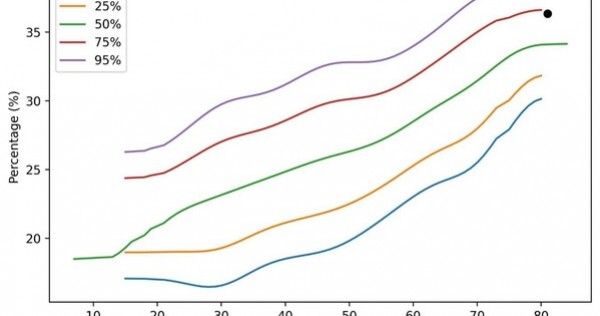
The Brain Age Prediction Machine analyzes MRI scans focusing on critical brain structures such as gray and white matter, cerebrospinal fluid volumes, and the hippocampus. By comparing these parameters against a normative database of nearly 3,000 healthy individuals and 500 dementia patients, the AI estimates the brain’s biological age relative to chronological age.
Complementing this, the Neural Gene Discrimination Machine leverages genetic and molecular data to further refine dementia classification and severity assessment. Together, these systems enable clinicians to obtain a comprehensive and objective evaluation within approximately one minute, a stark contrast to traditional multi-hour assessments.
Clinical Validation and Accuracy of BrainHealth
BrainHealth’s diagnostic performance was validated in clinical settings, demonstrating an area under the curve (AUC) of 87%, reflecting high accuracy in differentiating dementia cases from healthy controls. Sensitivity was reported at 91.7%, indicating the tool's effectiveness in correctly identifying dementia patients.
A notable case involved Mr. Chang, an 81-year-old veteran experiencing memory lapses and communication difficulties. Traditional assessments showed brain atrophy and decreased MMSE scores. BrainHealth predicted his brain age to be 86.4 years, five years older than his chronological age, corroborating early-stage dementia diagnosis.
These findings highlight BrainHealth’s ability to detect subtle neurodegenerative changes that may precede overt clinical symptoms, enabling earlier therapeutic interventions and tailored care strategies.
How BrainHealth Transforms Clinical Workflows
BrainHealth addresses the critical bottleneck of time-consuming cognitive assessments by delivering rapid diagnostic insights. This efficiency reduces patient wait times and alleviates workload pressures on neurologists and healthcare staff.
The AI tool’s objective analysis minimizes subjective bias inherent in traditional cognitive testing, standardizing dementia evaluation across diverse clinical settings. Such consistency enhances diagnostic confidence and supports evidence-based decision-making.
Moreover, BrainHealth’s integration into hospital information systems facilitates seamless data management and longitudinal monitoring of dementia progression, empowering clinicians to adjust treatment plans dynamically.
The Science Behind Brain Age Prediction
Brain age prediction is a cutting-edge technique that estimates the biological aging of the brain by analyzing neuroimaging biomarkers. In dementia, accelerated brain aging manifests as reductions in gray matter volume, hippocampal atrophy, and increased cerebrospinal fluid spaces.
CMUH’s AI model was trained on a large dataset encompassing healthy aging brains and various dementia subtypes, allowing it to learn complex patterns associated with neurodegeneration. The resulting brain age metric serves as a sensitive indicator of cognitive health.
Scientific literature supports that in healthy individuals, brain age closely aligns with chronological age within a margin of three years. Deviations exceeding this range, as detected by BrainHealth, suggest pathological aging processes indicative of dementia.
Implications for Dementia Subtypes and Personalized Medicine
Dementia includes diverse subtypes such as Alzheimer’s disease, vascular dementia, Lewy body dementia, frontotemporal dementia, and Parkinson’s disease dementia, each with distinct pathophysiological mechanisms and clinical presentations.
BrainHealth’s AI algorithms can differentiate these subtypes by analyzing unique neuroanatomical and genetic signatures, facilitating subtype-specific diagnosis. This precision supports personalized treatment approaches tailored to the underlying disease process.
Early and accurate subtype classification is critical for optimizing therapeutic interventions, improving prognosis, and enhancing patient quality of life.
Future Directions and Broader Impact
The success of BrainHealth paves the way for broader AI adoption in neurodegenerative disease diagnostics. Ongoing research aims to incorporate additional biomarkers such as blood-based assays and functional imaging data to further enhance model robustness.
Scaling BrainHealth across healthcare systems could democratize access to advanced dementia diagnostics, particularly benefiting under-resourced regions with limited specialist availability.
Furthermore, integrating BrainHealth with telemedicine platforms may enable remote screening and monitoring, supporting early detection and continuous care beyond traditional clinical settings.
Conclusion
China Medical University Hospital’s BrainHealth represents a paradigm shift in dementia diagnosis by harnessing artificial intelligence to deliver rapid, accurate, and objective assessments. This innovation addresses critical challenges in clinical workflows, enabling earlier detection and personalized management of dementia. As the global burden of neurodegenerative diseases continues to rise, AI-driven tools like BrainHealth are poised to transform healthcare delivery, improve patient quality of life, and support clinicians worldwide in combating dementia more effectively.
Originally reported by asiaone.com. Adapted for our readers.
Discover how emotionally intelligent couples use a simple 'capacity check' question every morning to strengthen their relationships, reduce conflicts, and navigate daily challenges with…