Business News
NDLEA Intensifies Operations Against Narcotic Trade and Illegal Trafficking
The National Drug Law Enforcement Agency has arrested multiple suspects and seized significant drug consignments in recent operations across Nigeria.
TAMFIS NIG LTDRC 8067447CAC ACTIVEFinima, Bonny Island, Rivers State

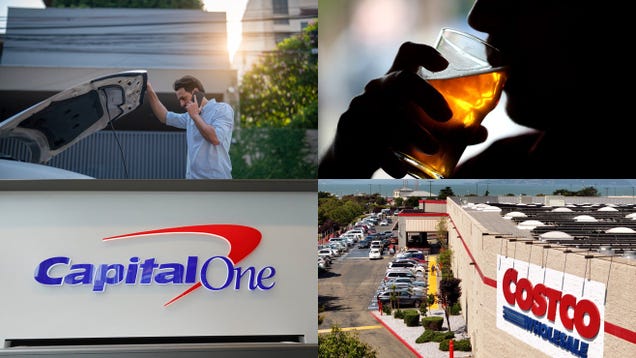
The business landscape in 2024 is witnessing significant shifts across various sectors, from regulatory battles to corporate social responsibility and high-profile political engagements. Big Alcohol faces renewed scrutiny as states push for modernized taxation aimed at addressing public health concerns. Meanwhile, retail giant Costco stands out by maintaining its commitment to diversity, equity, and inclusion (DEI) efforts amid a broader corporate pullback. Adding to the intrigue, major technology firms are making headlines by aligning themselves with former President Donald Trump’s upcoming political events. This article delves into these critical stories, unpacking their implications for businesses and consumers alike.
Nearly a century after the repeal of Prohibition, the alcohol industry is confronting a new wave of regulatory challenges, particularly surrounding taxation policies. In New Mexico, lawmakers are actively debating proposals to overhaul the state's alcohol tax system, which critics argue has remained outdated and inequitable for decades. The current tax rates are flat and regressive, with fixed amounts per liter or gallon that have not kept pace with inflation or public health needs.
Two key proposals are at the center of this debate. One advocates for instituting a uniform 3% tax rate on all alcoholic beverages, while the other suggests an inflation-adjusted tax combined with a 20-cent per drink 'public health investment fee.' Proponents of these measures argue that such reforms could generate additional revenue for health programs and reduce alcohol-related mortality, which is notably high in New Mexico.
Big Alcohol companies are pushing back against these changes, citing concerns over increased costs for consumers and potential impacts on sales. Industry representatives emphasize the importance of balanced policies that do not stifle economic growth or harm small businesses reliant on alcohol sales. This clash underscores the ongoing tension between public health priorities and commercial interests within the alcohol sector.
While many large U.S. corporations are scaling back their diversity, equity, and inclusion (DEI) programs amid shifting political and social climates, Costco Wholesale Corporation is bucking the trend. The retail giant has publicly reaffirmed its dedication to fostering an inclusive workplace and promoting equitable practices across its operations.
Costco’s leadership highlights the importance of DEI initiatives not only as a moral imperative but also as a driver of business success. By cultivating a diverse workforce and inclusive culture, the company aims to enhance employee satisfaction, reduce turnover, and better serve its diverse customer base. These efforts include targeted recruitment, comprehensive training programs, and community engagement initiatives.
This steadfast approach contrasts with other corporations that have curtailed or rebranded their DEI strategies in response to political pressures and shareholder concerns. Costco’s continued investment signals a long-term view that prioritizes sustainable growth and social responsibility, setting a benchmark for peers in the retail sector.
As former President Donald Trump prepares for a highly publicized inauguration event, several major technology company CEOs are reportedly slated to attend. This development highlights the evolving relationship between Big Tech and political powerhouses, especially in the context of the 2024 U.S. presidential transition.
Tech leaders’ participation at the Trump show has sparked discussions around corporate neutrality, political alignment, and the influence of technology firms in shaping public discourse. While some view their involvement as a strategic move to maintain access and influence regardless of political shifts, others express concern about the implications for regulatory scrutiny and public trust.
The presence of Big Tech at such a politically charged event also reflects the sector’s increasing entanglement with government affairs. As digital platforms face mounting pressure over content moderation, privacy, and antitrust issues, their engagement with political figures underscores the complex dynamics at play between innovation, governance, and public accountability.
In a significant regulatory action, the Consumer Financial Protection Bureau (CFPB) has filed a lawsuit against Capital One Financial Corporation, alleging that the bank deprived customers of billions of dollars in interest payments on savings accounts. The CFPB contends that Capital One’s practices violated consumer protection laws by manipulating interest calculations.
This lawsuit highlights growing regulatory scrutiny of financial institutions’ treatment of retail customers, particularly in the highly competitive savings account market. The CFPB’s aggressive stance signals an intent to hold banks accountable for transparent and fair financial product offerings.
For consumers, this case serves as a reminder to vigilantly monitor account statements and understand the terms and conditions of their financial products. For banks, it underscores the importance of compliance and ethical practices to avoid costly legal challenges and reputational damage.
Walmart recently issued a recall for its Great Value Family Size Chicken Broth due to potential packaging failures that could compromise product sterility. The U.S. Food and Drug Administration (FDA) has warned that these defects might lead to spoilage, posing a health risk to consumers.
This recall arrives at a critical time, coinciding with colder months when demand for hearty soups and broths typically rises. The disruption could affect Walmart’s sales and consumer trust, particularly among shoppers who rely on the retailer’s store-brand products for affordability and convenience.
Walmart is responding by enhancing quality control measures and communicating transparently with customers to mitigate concerns. This incident also underscores the challenges large retailers face in maintaining consistent product safety standards across extensive supply chains.
The Federal Trade Commission (FTC) has released a report revealing that three major pharmaceutical middlemen artificially inflated prices on generic drugs used to treat cancer, HIV, and multiple sclerosis. The markups generated an estimated $7.3 billion in additional revenue, raising alarms about the cost of essential medications.
This investigation shines a light on the opaque pricing mechanisms within the pharmaceutical supply chain, where intermediaries can significantly impact drug affordability. The FTC’s findings may prompt calls for regulatory reforms aimed at increasing transparency and curbing exploitative pricing practices.
Patients and healthcare providers alike are affected by these inflated costs, which can limit access to life-saving treatments. The report adds to a growing body of evidence advocating for systemic changes to ensure that medication pricing aligns with public health interests.
Pharmaceutical giant Eli Lilly & Co. recently adjusted its revenue forecast for the fourth quarter of 2024, citing weaker-than-anticipated demand for its popular weight-loss drugs, Zepbound and Mounjaro. These medications have been significant revenue drivers for the company over recent years.
CEO Dave Ricks emphasized plans to continue investing in research and development, highlighting the company’s pipeline of experimental drugs, including orforglipron, which could receive regulatory approval as early as 2026. This strategic focus aims to sustain growth despite short-term market fluctuations.
The evolving landscape of weight-loss treatments reflects broader trends in healthcare innovation and consumer preferences. Eli Lilly’s experience underscores the challenges pharmaceutical companies face in balancing market expectations with scientific advancement.
Billionaire entrepreneur Elon Musk has been hit with new charges by the Securities and Exchange Commission (SEC) related to his 2022 acquisition of Twitter. The timing of these charges, just before a change in federal administration, adds complexity to ongoing regulatory oversight of high-profile tech figures.
The SEC alleges Musk engaged in actions that misled investors, contributing to heightened scrutiny of his business dealings and social media influence. This case exemplifies the challenges regulators face in policing the activities of influential individuals operating at the intersection of technology and finance.
Musk’s legal battles may have broader implications for market confidence and corporate governance standards in the tech industry. Investors and stakeholders are closely watching developments to assess potential risks and regulatory responses.
The business environment in 2024 is marked by dynamic challenges and strategic responses across multiple industries. From Big Alcohol’s regulatory battles and Costco’s steadfast DEI commitment to the nuanced interactions between Big Tech and political power, these stories illustrate the complex forces shaping today’s corporate landscape. Regulatory actions targeting financial and pharmaceutical sectors further emphasize the growing demand for transparency and accountability. As companies navigate these evolving dynamics, stakeholders must remain attentive to the implications for economic performance, social responsibility, and governance. This comprehensive roundup offers valuable insights for investors, consumers, and policymakers seeking to understand the current and future state of business.
Originally reported by qz.com. Adapted for our readers.
Keep reading
Business News
The National Drug Law Enforcement Agency has arrested multiple suspects and seized significant drug consignments in recent operations across Nigeria.
Business
Global investment banking giant J.P. Morgan is preparing to establish its first merchant banking operation in Nigeria, targeting a pre-year-end 2026 commencement pending regulatory…
AI in Business
Nigerian investment fintech Cowrywise has processed over 1 million stock trades on the Nigerian Exchange within a year of launching its Stocks product, reflecting…
TAMFIS NIG LTD
Electrical and instrumentation engineering, bid preparation and consulting, IT and software.