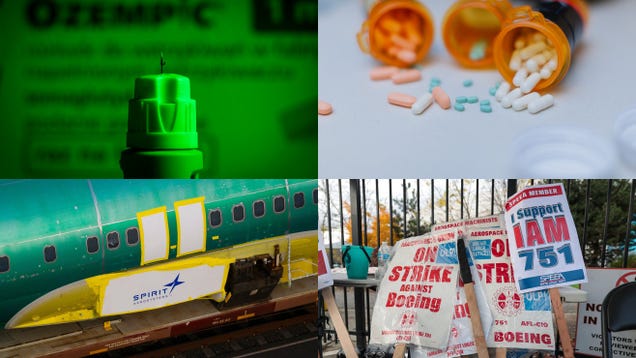
A stronger Ozempic, a Boeing supplier in trouble, and a simpler Starbucks: Business news roundup
In the dynamic landscape of global business, recent developments have captured the attention of investors, industry experts, and consumers alike. Novo Nordisk is making strides with its next-generation GLP-1 medication, aiming to enhance efficacy and safety in weight management. Meanwhile, Spirit AeroSystems, a key Boeing supplier, faces significant financial hurdles threatening its operational future. On a different front, Starbucks is streamlining its service model to prioritize speed and simplicity, reflecting a renewed focus on customer experience. This roundup covers these pivotal stories, providing insights into their implications for the respective industries.
Novo Nordisk’s Next-Generation Ozempic: CagriSema on the Horizon
Novo Nordisk, the Danish pharmaceutical powerhouse, recently revealed promising details about its upcoming GLP-1 medication, CagriSema, during an investor call. Positioned as a potential successor to Ozempic, CagriSema aims to deliver enhanced weight-loss efficacy with improved safety profiles. Analysts probed the company on supply chain readiness and clinical outcomes, signaling strong market interest.
The GLP-1 class of drugs, including Ozempic, has revolutionized obesity and diabetes treatment by mimicking the body's natural hormones to regulate appetite and blood sugar. CagriSema is designed to build on this success by offering longer-lasting effects and potentially fewer side effects, addressing patient concerns such as nausea and gastrointestinal discomfort.
Novo Nordisk's strategic focus on innovation and scalability suggests the company is preparing for significant demand growth. The development of CagriSema not only reinforces its leadership in the weight-loss medication market but also underscores the ongoing importance of pharmaceutical advancements in tackling global health challenges.
Viking Therapeutics Advances Weight-Loss Drug Pipeline
Complementing Novo Nordisk’s efforts, Viking Therapeutics has released new clinical trial data on its experimental weight-loss medications, including a highly anticipated oral pill formulation. This advancement marks a potential shift from injectable treatments to more user-friendly oral therapies, which could broaden patient accessibility and adherence.
The clinical results highlight promising weight reduction outcomes with manageable side effects, a critical factor in the competitive obesity treatment market. Viking's innovation emphasizes convenience without compromising efficacy, positioning the company as a noteworthy contender in the pharmaceutical landscape.
As obesity rates continue to climb globally, the demand for effective and tolerable weight management solutions is intensifying. Viking Therapeutics’ progress reflects the broader industry trend toward personalized and patient-centric approaches, which may reshape treatment paradigms in the near future.
Spirit AeroSystems Faces Financial Turbulence Amid Boeing Supply Chain Pressures
Spirit AeroSystems, a major fuselage manufacturer and key supplier to Boeing, has issued warnings about its financial viability. The company expressed concerns over insufficient cash flow to sustain ongoing operations, highlighting the fragility within aerospace supply chains post-pandemic.
The challenges stem from production slowdowns, rising material costs, and delayed aircraft deliveries impacting revenue streams. Spirit AeroSystems’ situation illustrates the cascading effects of supply chain disruptions on suppliers, which could have broader implications for Boeing’s manufacturing timelines.
Industry analysts are closely monitoring Spirit's restructuring efforts and potential government support, as the supplier's stability is critical to the aerospace sector. The evolving scenario underscores the importance of resilience and adaptability within complex manufacturing ecosystems.
Zealand Pharma’s Promising Weight-Loss Drug with Reduced Side Effects
Denmark-based Zealand Pharma has introduced an experimental weight-loss drug that has shown potential for significant patient weight reduction with fewer side effects compared to existing medications. This development could address a key barrier in obesity treatment—patient tolerance and long-term adherence.
Preliminary studies indicate that the drug may mitigate common adverse effects such as nausea, making it a viable alternative for individuals who have discontinued other therapies. Zealand’s innovation aligns with the growing emphasis on balancing efficacy with quality of life in chronic disease management.
If successful, this drug could complement the expanding portfolio of anti-obesity treatments and enhance competitive dynamics within the pharmaceutical industry. Zealand Pharma’s focus on patient-centered outcomes highlights the evolving priorities in drug development.
Starbucks Under Brian Niccol: Prioritizing Speed and Simplicity
Since Brian Niccol assumed the role of Starbucks CEO in September, he has identified a core challenge: simplifying the coffee ordering experience to deliver faster service. Niccol’s mantra, “Sometimes you just want a brewed cup of coffee really quick,” reflects a strategic pivot toward efficiency and customer convenience.
Niccol aims to reduce beverage preparation times to under four minutes, a goal he emphasized during Starbucks’ October earnings call. This focus involves streamlining operations, optimizing store layouts, and refining menu offerings to cater to customers seeking quick, quality coffee.
This approach signals a return to Starbucks’ roots, emphasizing brewed coffee and straightforward service to meet evolving consumer preferences. By enhancing speed without sacrificing quality, Starbucks intends to strengthen its competitive edge in a crowded market.
Implications of Starbucks’ Operational Shift for the Coffee Industry
Starbucks’ renewed emphasis on simplicity and speed could set new industry benchmarks, prompting competitors to reassess their service models. Faster preparation times may also attract time-conscious consumers, particularly in high-traffic locations such as airports and urban centers.
Operational changes may include increased automation, staff training enhancements, and menu rationalization. These initiatives could improve customer satisfaction and drive higher throughput during peak hours, ultimately boosting sales and profitability.
However, maintaining product quality while accelerating service will be critical. Starbucks’ success in this endeavor could influence broader trends in retail food and beverage, highlighting the balance between efficiency and experience.
Broader Economic Context: Political Changes and Market Responses
The recent U.S. presidential election, resulting in Donald Trump’s victory, introduces new variables for the business environment. With potential Republican majorities in Congress, policy shifts affecting trade, regulation, and taxation are anticipated, influencing corporate strategies and investor sentiment.
Businesses across sectors may need to adapt to evolving regulatory landscapes and geopolitical dynamics. For companies like Boeing and pharmaceutical firms, government policies on manufacturing incentives and healthcare could impact operational priorities.
Market participants are monitoring these developments closely, balancing optimism for pro-business policies with caution amid political uncertainties. The intersection of politics and business underscores the importance of agility in navigating future challenges.
Conclusion
This business news roundup highlights significant shifts across diverse sectors—from pharmaceutical innovations targeting obesity to operational challenges in aerospace manufacturing and strategic pivots in global coffee retail. Novo Nordisk and its peers are pushing the boundaries of weight-loss treatments, reflecting a robust demand for effective solutions. Meanwhile, Spirit AeroSystems’ financial difficulties serve as a cautionary tale about supply chain resilience. Starbucks’ renewed focus on speed and simplicity under new leadership exemplifies adaptive strategies in a competitive market. Together, these developments underscore the dynamic nature of today’s business landscape, where innovation, operational agility, and responsiveness to external factors remain crucial for sustained success.
Originally reported by qz.com. Adapted for our readers.
Discover how emotionally intelligent couples use a simple 'capacity check' question every morning to strengthen their relationships, reduce conflicts, and navigate daily challenges with…