
News
KFF Health News’ ‘What the Health?’: LIVE From KFF: Health Care and the 2024 Election
Health News tamfitronics [Editor’snote:[Editor’snote: This transcript was generated using both transcription ...
TAMFIS NIG LTDRC 8067447CAC ACTIVEFinima, Bonny Island, Rivers State

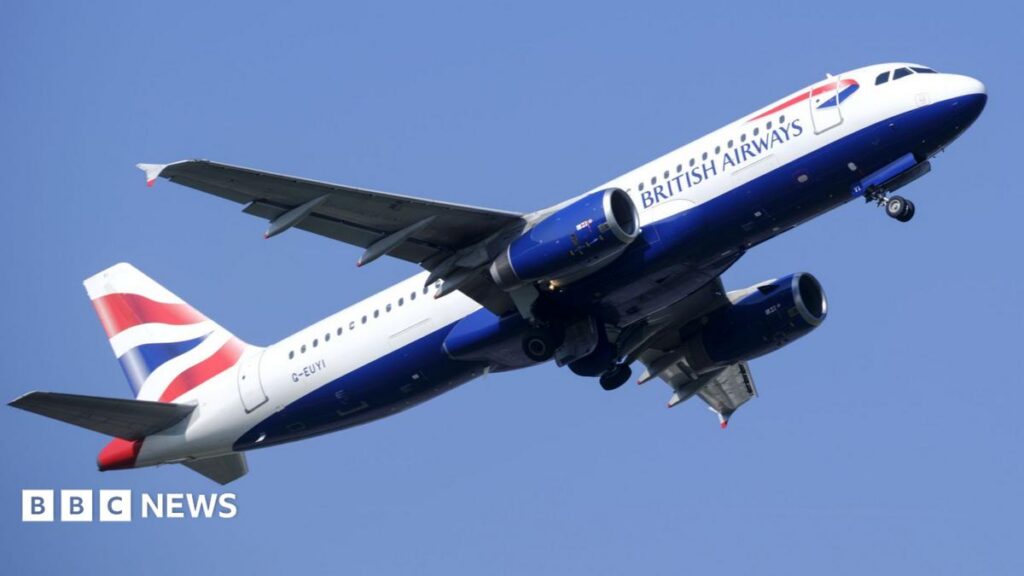
On July 6, a British Airways Airbus A320 encountered a serious in-flight issue while approaching London Heathrow Airport, prompting the flight crew to issue a mayday distress call. The incident followed two stall warnings triggered by a data system failure, leading the pilots to switch to a flight mode that reduces automated protections. Although the aircraft landed without further complications, the event has drawn the attention of aviation safety investigators in both the UK and France. This article examines the details of the incident, the implications for flight safety, and the ongoing investigation.
The British Airways flight involved was an Airbus A320 operating a route from Dusseldorf Airport in Germany to London Heathrow. On July 6, as the aircraft was on final approach to Heathrow, the crew experienced two stall warnings. These warnings are critical alerts indicating that the aircraft’s wings are at risk of losing lift, which can lead to loss of control if not addressed promptly.
According to the French Air Safety Investigation Authority (BEA), the stall warnings were triggered by a failure in the aircraft’s data system. This failure caused the flight control system to revert to an alternate law mode. Alternate law mode reduces the level of automated flight protections, requiring the pilots to manually manage certain flight parameters that are normally assisted by the aircraft’s automation.
Following the second stall warning at approximately 3,000 feet altitude, the flight crew escalated their urgency call to a mayday, signaling imminent danger. The aircraft ultimately landed safely without further incident, but the seriousness of the situation warranted an investigation.
Modern commercial aircraft like the Airbus A320 are equipped with sophisticated flight control systems designed to assist pilots and enhance safety. These systems operate under different 'laws' or modes, which provide varying levels of automation and protection.
Normal law is the default mode, offering full flight envelope protection to prevent stalls, overspeed, and excessive bank angles. When a system fault occurs, the aircraft may switch to alternate law, which disables some protections and requires more manual input from the pilots. This mode is less forgiving and demands heightened attention and skill.
Stall warnings are activated when sensors detect that the aircraft’s angle of attack—the angle between the wing and the oncoming air—is approaching a critical threshold where lift could be lost. Receiving two stall warnings during approach is highly unusual and indicates a potentially hazardous situation.
In this incident, the stall warnings were reportedly caused by a data system failure rather than actual aerodynamic stall conditions, complicating the pilots’ response.
The UK’s Air Accidents Investigation Branch (AAIB) confirmed it is investigating the incident as a serious event. The AAIB described the investigation as a correspondence inquiry, meaning that it will be conducted through document review and communication rather than deploying a physical investigation team to the site.
The French BEA provided additional context, noting the technical cause of the stall warnings and the flight crew’s reaction. While the BEA’s statement was attributed to the AAIB, the UK agency did not explicitly confirm this attribution.
British Airways has stated it is cooperating fully with the AAIB’s investigation but declined to comment further due to legal restrictions during ongoing inquiries.
Experts in aviation safety emphasize that mayday calls can vary in nature. According to investigator David Gleave, urgency messages are relatively common and can be issued for various reasons, including medical emergencies. However, a mayday call related to a significant technical failure on board is less frequent and indicates a higher level of risk.
While the aircraft landed safely, the incident highlights the challenges pilots face when automated systems malfunction, especially during critical phases like approach and landing.
The switch to alternate law mode demands increased pilot workload and vigilance, underscoring the importance of rigorous pilot training and adherence to emergency protocols.
For passengers, such events can be alarming, but the successful handling of the situation by the flight crew demonstrates the robustness of safety procedures and the effectiveness of pilot training.
From an operational perspective, the incident may prompt British Airways and Airbus to review system reliability and maintenance procedures to prevent recurrence.
Regulators and manufacturers often use findings from such investigations to enhance aircraft design, update training programs, and refine operational guidelines.
Aviation remains one of the safest modes of transportation globally, with continuous improvements driven by rigorous investigation of incidents and accidents.
The issuance of a mayday call is a serious measure, reflecting the crew’s assessment of imminent danger. However, the fact that the aircraft landed without further incident is a testament to the multiple layers of safety built into modern aviation systems.
This event also illustrates the complexity of modern aircraft systems, where software and sensor failures can have significant operational impacts.
Ongoing investigations like this contribute to the broader knowledge base that helps prevent future incidents and maintain high safety standards.
The July 6 incident involving a British Airways Airbus A320 highlights the challenges posed by technical failures in modern aircraft, especially during critical flight phases such as approach and landing. While the situation was serious enough to warrant a mayday call, the successful landing without further incident demonstrates the effectiveness of pilot training and safety systems. The ongoing investigation by UK and French authorities will provide valuable insights to prevent similar occurrences in the future, reinforcing the aviation industry's commitment to safety and continuous improvement.
Originally reported by bbc.co.uk. Adapted for our readers with AI assistance.
Keep reading
News
Health News tamfitronics [Editor’snote:[Editor’snote: This transcript was generated using both transcription ...
News
Amanda Knox, the American woman acquitted of murdering British student Meredith Kercher in Italy, has re...
News
Three-time Olympic champion Adam Peaty, the greatest breaststroker in history, struggles to find his top form at the 2023 Commonwealth Games, settling for bronze…
TAMFIS NIG LTD
Electrical and instrumentation engineering, bid preparation and consulting, IT and software.