Breaking News
Cowboys release OT Matt Waletzko, close book on Amari Cooper trade
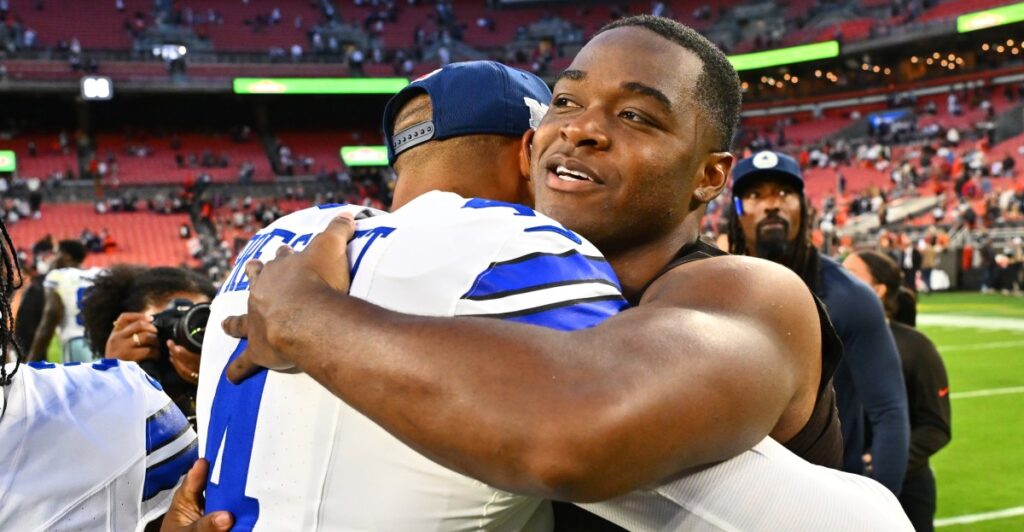
In the ever-evolving landscape of the NFL, player trades and roster moves often carry significant long-term consequences. The Dallas Cowboys’ decision to release offensive tackle Matt Waletzko from injured reserve has quietly wrapped up a chapter that started with the high-profile trade of wide receiver Amari Cooper to the Cleveland Browns in 2022. While Waletzko’s career with Dallas was marked by limited playing time and injury setbacks, his release symbolizes the final piece in a transaction that has been widely scrutinized. This article explores the details of Waletzko’s departure, evaluates the overall impact of the Cooper trade, and examines what lies ahead for the Cowboys in terms of roster construction and salary cap management.
Matt Waletzko’s Tenure with the Cowboys: A Brief Overview
Matt Waletzko, a fourth-year offensive tackle prospect, was drafted by the Dallas Cowboys as part of the assets acquired from the Amari Cooper trade. Despite being a promising Day 3 pick, Waletzko’s time in Dallas was marred by injuries and limited opportunities. Over three seasons, he appeared in just 20 offensive snaps, struggling to make a tangible impact on the Cowboys’ offensive line.
His journey was further hindered by an ankle injury during the 2023 training camp, which led to him being waived injured and subsequently placed on injured reserve. After clearing waivers, Waletzko remained on the IR list until the Cowboys reached a settlement, officially releasing him from his rookie contract. This move was expected, given his lack of progression and the team’s constant search for healthier, more reliable depth at offensive tackle.
Waletzko’s release underscores the harsh realities of the NFL, where late-round picks must quickly prove their worth or face the consequences. For the Cowboys, this decision closes the door on a player who, despite potential, never managed to contribute meaningfully during his tenure.
The Amari Cooper Trade: Context and Initial Expectations
In March 2022, the Dallas Cowboys made a surprising move by trading their star wide receiver Amari Cooper to the Cleveland Browns. The deal brought back a fifth-round draft pick and a swap of sixth-round picks, which allowed Dallas to move up ten spots in the sixth round. This trade was initially seen as a salary cap move, aimed at freeing up space while acquiring some draft capital.
From the outset, the trade raised eyebrows given Cooper’s status as a proven WR1 and the modest compensation Dallas received. The Cowboys used the fifth-round pick to draft Waletzko and the sixth-round pick to select linebacker Devin Harper. Both players were viewed as developmental prospects rather than immediate contributors, reflecting the team’s cautious approach to the trade compensation.
The trade was widely interpreted as a salary cap maneuver more than a strategic football decision. The Cowboys needed to clear roughly $16 million in cap space, which they planned to reinvest in other areas of the roster. While the draft picks were a bonus, the primary motivation was financial flexibility rather than on-field assets.
Evaluating the Draft Picks from the Cooper Trade
The players selected with the picks acquired from the Cooper trade—Matt Waletzko and Devin Harper—have had limited impact for the Cowboys. Harper, a linebacker, contributed mainly on special teams before suffering an injury that curtailed his early career. Although he made the 2023 roster due to injuries elsewhere, his stay was brief, and he was waived shortly after.
Waletzko’s struggles, as previously outlined, further highlight the underwhelming return Dallas received from the trade in terms of on-field talent. Neither player has developed into a reliable contributor or starter, which is often the hope for Day 3 draft selections.
Comparatively, the Cowboys also drafted cornerback DaRon Bland just twelve picks after Waletzko, who has shown more promise. Additionally, the Los Angeles Rams selected running back Kyren Williams between those two picks. These outcomes underscore the inherent uncertainty and risk of late-round draft choices, often referred to as “gems” when they succeed.
Financial Implications and Salary Cap Management
From a financial perspective, the real benefit Dallas gained from trading Amari Cooper was the $16 million in salary cap relief. This substantial cap space allowed the Cowboys to pursue key roster moves, including re-signing wide receiver Michael Gallup and adding safeties Jayron Kearse and Malik Hooker.
The expectation was that some of this freed-up money would also be allocated to defensive end Randy Gregory, though contract negotiations with him stalled late in the process. Despite this, the cap room provided much-needed flexibility for Dallas to address multiple roster needs in 2022 and beyond.
However, the financial gains came with trade-offs. The Cowboys essentially replaced Cooper’s production with Gallup’s, a move that did not pan out as hoped. Gallup struggled to return to his pre-injury form and departed the team two years later, leaving Dallas without a true WR2 for an extended period.
On-Field Impact and Offensive Production Post-Trade
The departure of Amari Cooper left a noticeable void in the Cowboys’ receiving corps. While the team maintained a productive passing offense in 2023—highlighted by quarterback Dak Prescott’s MVP-caliber season—the lack of a reliable secondary receiver was evident in critical game moments.
Situational football, especially against top-tier NFL opponents, exposed the Cowboys’ diminished receiving depth. This shortfall contributed to struggles in clutch scenarios and playoff contention, underscoring the importance of having multiple weapons on offense.
Recognizing this deficiency, Dallas made a significant move in the 2023 offseason by trading for wide receiver George Pickens. This acquisition aimed to restore balance and provide Prescott with a dependable WR2, addressing a glaring weakness created by Cooper’s exit.
Coaching Dynamics and the Influence on the Trade Decision
Reports have suggested that the trade involving Amari Cooper was influenced heavily by interpersonal dynamics within the Cowboys organization, particularly between Cooper and head coach Mike McCarthy. The two reportedly had a strained relationship, which may have accelerated Dallas’s willingness to part ways with their star receiver.
This behind-the-scenes friction has become more public over time, raising questions about the rationale behind the trade. Given McCarthy’s underwhelming tenure with Dallas, some analysts speculate that the coach’s influence may have led to a suboptimal personnel decision.
The fallout from this dynamic not only affected the trade’s outcome but also shaped how the team managed its roster and cap space in subsequent seasons. It serves as a reminder of how off-field relationships can significantly impact on-field roster decisions.
Lessons Learned and Future Outlook for the Cowboys
The Amari Cooper trade and the subsequent release of Matt Waletzko offer valuable lessons for the Cowboys’ front office. Primarily, the team learned the risks of trading a proven star for minimal draft capital and salary cap relief, especially without securing immediate on-field replacements.
Moving forward, Dallas appears committed to balancing financial flexibility with acquiring impactful talent. The addition of George Pickens and other strategic signings indicate a shift towards more calculated roster building aimed at sustained competitiveness.
While Waletzko’s departure closes a chapter, it also opens opportunities for the Cowboys to explore new offensive line options and continue refining their roster. The organization’s ability to adapt and learn from past missteps will be critical as they pursue championship aspirations in the coming seasons.
Conclusion
The release of Matt Waletzko from the Dallas Cowboys roster symbolizes more than just the end of a young offensive tackle’s journey—it closes the final chapter on a controversial trade that has had lasting implications for the franchise. While the Cowboys gained salary cap relief and modest draft capital in exchange for Amari Cooper, the on-field returns have been underwhelming. As Dallas continues to rebuild and refine its roster, the lessons learned from this trade and Waletzko’s tenure will undoubtedly inform future personnel decisions. Ultimately, the Cowboys’ ability to leverage cap space effectively and identify impactful talent will determine their success in the coming years, with the hope that such missteps become a thing of the past.
Originally reported by bloggingtheboys.com. Adapted for our readers.