Breaking News
Breaking News Live: Prime Minister Narendra Modi will address the nation today at 5 pm

This week the headline cycle is dominated by security, sanctions and platform governance rather than sale flyers and supply-chain spreadsheets. Yet each story carries a price tag for procurement teams, cross-border traders, digital advertisers and household shoppers. A TikTok ownership settlement could reshape where marketing budgets flow; naval and aerial build-ups from the Caribbean to the Baltic remind firms to stress-test logistics; and fresh sanctions rhetoric ahead of the UN General Assembly may ripple through energy and commodity markets. Below is a commercially-focused reading of the major developments, with practical implications for Nigerian and global business consumers.
TikTok Deal: What US Board Control Means for Digital Advertisers
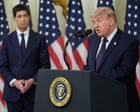
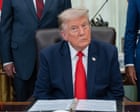
The White House says an emerging TikTok agreement will place the app's algorithm under US corporate control and give Americans six of seven seats on a board overseeing US operations. Oracle is expected to handle data and security, according to press secretary Karoline Leavitt. The announcement follows a phone call between President Donald Trump and China's Xi Jinping, and comes after Congress passed legislation that would have banned the platform from January had the administration not kept it operating through successive extensions.
For businesses, the signal is that TikTok's US advertising environment is likely to remain open, but with stricter governance over data handling, content recommendation and third-party integrations. Brands that rely on TikTok Shop, influencer campaigns and short-form video commerce should review their vendor contracts, data-sharing terms and contingency plans should the ownership structure change again. Procurement teams buying media should also expect more audit requirements and compliance paperwork from agencies running campaigns on the platform.
The episode is a case study in platform geopolitics. Any business using Chinese-owned digital infrastructure should map dependencies carefully, because regulatory risk can shift advertising costs and audience access overnight.
Defence Budgets and Procurement Transparency: The US-Pakistan Dimension
Reports that Washington is seeking oversight of Pakistan's defence budgets underscore a broader trend: donor and partner countries are attaching stricter accountability conditions to military and security spending. For procurement professionals and tender bidders, this means defence contracts may increasingly require open-book accounting, local-content reporting and anti-corruption certifications.
Suppliers chasing public-sector tenders in emerging markets should prepare for deeper due diligence. Businesses that can demonstrate transparent supply chains, audited financials and compliance with international standards are likely to gain an edge. The same principle applies in reverse: if you are a buyer evaluating bids, budget oversight clauses can become a useful risk-mitigation tool.
Maritime Security: Naval Build-ups and Supply-chain Risk
The Indian Navy has joined a multinational submarine rescue exercise in Singapore with INS Nistar, while the United States has expanded its naval and surveillance presence in the Caribbean, ostensibly for counternarcotics work but widely interpreted as pressure on Venezuela. Meanwhile, Russian jets ignored NATO signals during an incursion into Estonian airspace, and Moscow denied the violation.
Taken together, these events highlight choke-point risk in global shipping and logistics. The Strait of Malacca, Caribbean shipping lanes and European air corridors are all commercially sensitive. Higher military activity can mean rerouted vessels, delayed air freight, rising insurance premiums and tighter customs scrutiny.
Business consumers should expect knock-on effects on delivery times and freight costs, especially for electronics, automotive parts and perishables moving through these regions. Procurement teams should review supplier lead times, diversify routes where possible, and factor geopolitical risk into total cost of ownership rather than treating logistics as a fixed line item.
Sanctions, Industrial Policy and the UN General Assembly
Ukrainian President Volodymyr Zelenskyy is due to meet Donald Trump at the UN General Assembly and is expected to push for tougher sanctions on Russia as Moscow intensifies attacks. At the same time, the Lieutenant Governor of Jammu and Kashmir has called on large companies, corporate houses and MSMEs to treat the rapid industrialisation of the Union Territory as a shared responsibility.
These two stories point in different directions but share a common theme: governments are using industrial policy and sanctions as levers to shape business behaviour. Sanctions on Russian energy and commodities continue to redirect global trade flows, creating both disruption and opportunity for traders in African, Asian and Middle Eastern markets. Conversely, India's push to industrialise Jammu and Kashmir opens fresh tendering, infrastructure and investment opportunities for firms willing to engage with the region.
For Nigerian and international businesses, the lesson is to monitor sanctions lists, letters of credit restrictions and correspondent-banking relationships as closely as commodity prices. A deal that looks attractive on paper can become expensive if compliance costs spike or payment channels close.
Consumer Pressure and Political Risk in Key Markets
Cuba's Supreme Court has sentenced at least 15 protesters to up to nine years in prison over demonstrations sparked by blackouts lasting up to 13 hours a day and food shortages. The protests, which took place in Santiago de Cuba, Bayamo and Santa Marta, were the largest since the unrest of July 2021. In the Netherlands, anti-immigration protesters clashed with police in The Hague, throwing bottles and rocks and setting a police car alight; the offices of the social-democratic D66 party were also targeted.
Both events illustrate how energy, food and migration pressures can spill into consumer and labour-market instability. Retailers and consumer-goods firms with exposure to these markets should factor social risk into their planning, including potential store closures, supply interruptions and currency volatility.
Closer to the cultural economy, the mortal remains of Assamese singer Zubeen Garg are being kept at Guwahati's Sarusajai Stadium for public tribute after he died following a scuba diving accident in Singapore. While primarily a human-interest story, it is a reminder that travel, leisure and event industries must maintain rigorous safety standards and crisis-response protocols, particularly in activities that attract international visitors.
What this means
This week's headlines do not read like a shopping newsletter, but they directly shape the cost, availability and safety of goods and services. Whether you are a household consumer tracking food and energy prices, a small business bidding on tenders, or an e-commerce operator running ads on TikTok, the common thread is geopolitical risk. The most useful response is to diversify suppliers, stress-test logistics, read the compliance fine print and keep contingency budgets flexible. In volatile markets, preparation is the best deal you can get.
Originally reported by news.google.com. Adapted for our readers with AI assistance.