Bandits or Terrorists? Nigeria’s Unequal Justice and the Politics of Labels in Nigeria
Nigeria grapples with violent conflicts across its regions, but the state’s responses expose troubling inconsistencies. Armed groups in the Northwest, often labeled as 'bandits,' receive negotiations and amnesty, despite committing grave atrocities. Meanwhile, Niger Delta militants who fought decades of economic marginalization remain stigmatized, and Biafran activists are branded terrorists and suppressed. These divergent labels and treatments raise critical questions about justice, political convenience, and the true unity of Nigeria. This article examines the politics behind these labels, the impact of selective justice, and what must change for Nigeria to move toward equitable peace.
The Bandit Paradox: Violence Met with Dialogue
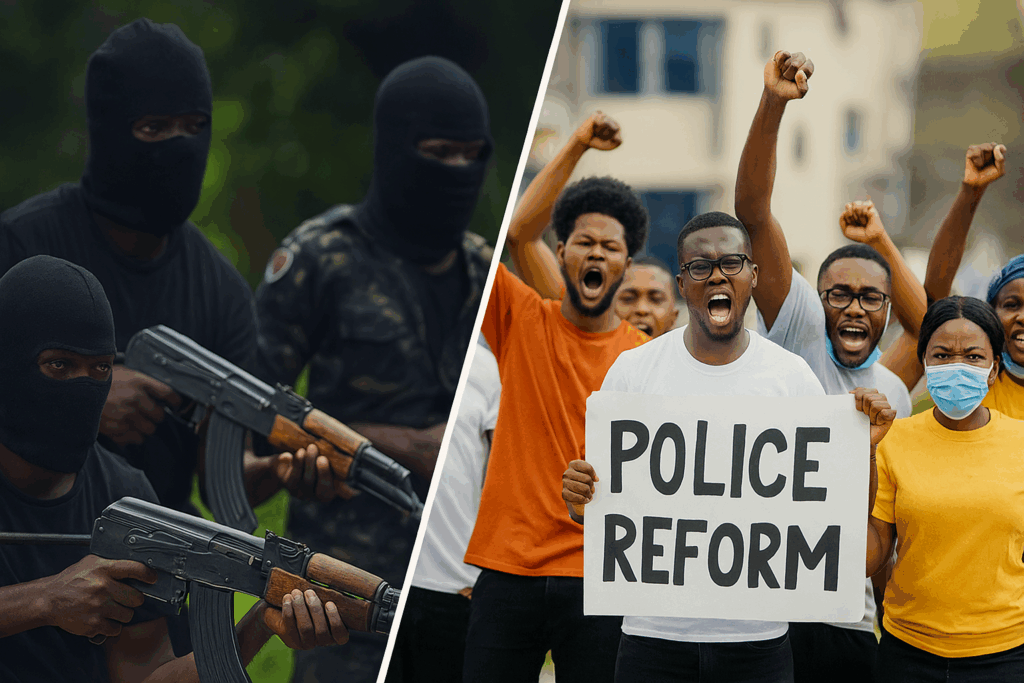
In northern Nigeria, the term 'bandit' has become a euphemism for heavily armed groups responsible for mass killings, kidnappings, and widespread displacement. Despite their brutality, these groups are often treated with a surprising degree of leniency. State governors have engaged in peace talks with them, and ransoms are sometimes paid under the guise of negotiations. The Federal Government has notably refrained from designating these groups as terrorists, even though their violent tactics resemble those of Boko Haram.
This softer language serves political sensitivities but risks minimizing the severity of their crimes. Some repentant bandits have returned to violence after amnesty programs, suggesting that the current approach lacks effective accountability and fails to deter further bloodshed. The label 'bandit' sanitizes their brutality, framing them more as misguided youths than as perpetrators of terror.
Niger Delta Militants: Fighting for Justice, Not Anarchy
The Niger Delta conflict arose from decades of environmental degradation, economic exploitation, and neglect of a region critical to Nigeria’s oil wealth. The militants’ actions—such as sabotaging pipelines—were disruptive but rooted in demands for economic justice rather than a desire to dismantle the nation.
The 2009 amnesty program for Niger Delta militants acknowledged these grievances and offered pathways to reintegration. Yet, the label 'militant' remains a stigma, used to marginalize and suppress these communities. Their struggle for economic emancipation is often portrayed as rebellion, contrasting sharply with the forgiving treatment of northern bandits whose motivations are less clear and whose crimes are more violent.
This disparity raises fundamental questions about how Nigeria defines legitimate resistance versus criminality and whether economic and regional biases influence these definitions.
IPOB and the Politics of Terrorism Labels
The Indigenous People of Biafra (IPOB), advocating for the Southeast’s self-determination, were proscribed as a terrorist organization in 2017, well before any significant violence. Their primary methods involved protests and political expression rather than armed conflict.
Despite this, IPOB members have faced harsh military crackdowns, arrests, and suppression. This contrasts sharply with the treatment of northern armed groups, whose violent acts have not attracted the same level of state condemnation or designation as terrorists.
This selective labeling reflects ethnic and regional biases, where southern groups advocating for political rights are criminalized, while northern groups committing violent crimes are often framed as insurgents or bandits deserving of dialogue.
The Power of Language in Shaping Justice
Language plays a crucial role in framing public perception and state responses. Terms like 'bandit' versus 'terrorist' carry different connotations and legal implications. By choosing softer terms for northern armed groups, the Nigerian state effectively downplays their violence and shields them from full accountability.
Conversely, southern groups are more readily labeled as existential threats, justifying military suppression and legal proscription. This linguistic inconsistency reinforces an ethnic hierarchy in which crimes are judged less by their severity and more by the perpetrator’s origin.
Such disparities undermine the rule of law and fuel resentment among marginalized communities who see justice as unevenly applied.
Amnesty: Healing or Political Convenience?
Amnesty programs ideally serve as tools for reconciliation, offering offenders a chance to reintegrate while addressing underlying grievances. In Nigeria, the 2009 Niger Delta amnesty was a landmark effort to heal decades of conflict by providing training and inclusion opportunities for militants.
However, when similar programs are extended to northern bandits, they often appear as revolving doors that enable impunity rather than genuine peacebuilding. The lack of clear frameworks, accountability mechanisms, or victim reparations diminishes their effectiveness.
This selective application of amnesty risks rewarding violence when politically expedient, undermining the legitimacy of justice and deepening divisions.
Is Nigeria Truly One Nation?
The foundation of any nation rests on equal justice for all its citizens. Nigeria’s disparate treatment of armed groups reveals a fractured reality where geography and ethnicity influence who is punished and who is pardoned.
While northern bandits engage in violent acts with relative impunity, southern activists face harsh repression for political expression or economic demands. The Southeast’s youth languish in prisons for waving flags, while northern bandits appear alongside governors in peace talks.
This unequal justice undermines national unity and fosters silent resentment. Without addressing these disparities, Nigeria risks remaining a collection of divided regions rather than a cohesive nation.
Pathways to Fairness and National Reconciliation
For Nigeria to move toward lasting peace, justice must transcend ethnic and regional biases. Crimes should be labeled accurately and prosecuted equally, regardless of the perpetrators’ origins.
Amnesty programs should be transparent, structured, and coupled with accountability and victim support to avoid enabling impunity. The government must engage genuinely with legitimate grievances from all regions, including the Southeast and Niger Delta, rather than suppressing dissent.
Restoring national trust requires rebuilding institutions that uphold fairness and equity. Only then can Nigeria hope to overcome its divisions and forge a united future.
What this means
Nigeria’s selective justice system exposes deep contradictions that threaten the nation’s cohesion. While some violent actors are forgiven and integrated, others are perpetually criminalized based on their region or ethnicity. This double standard not only erodes trust in the rule of law but also fuels divisions that hinder peace and development. For Nigeria to thrive as a unified country, it must commit to impartial justice, transparent governance, and inclusive dialogue. Only by confronting these uncomfortable truths can the nation move beyond fragile peace toward genuine reconciliation and equity.