
News
KFF Health News’ ‘What the Health?’: LIVE From KFF: Health Care and the 2024 Election
Health News tamfitronics [Editor’snote:[Editor’snote: This transcript was generated using both transcription ...
TAMFIS NIG LTDRC 8067447CAC ACTIVEFinima, Bonny Island, Rivers State

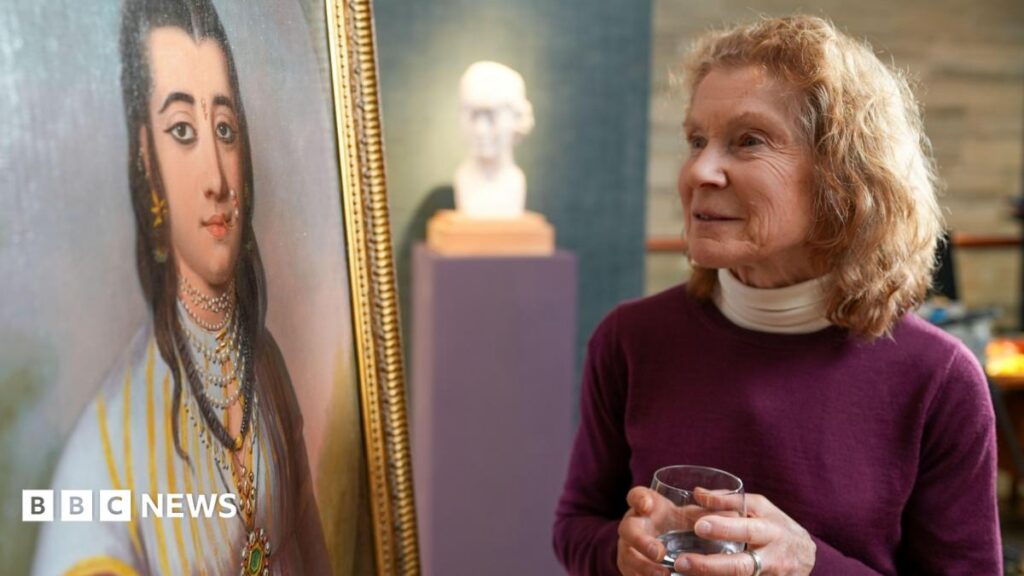
The BBC’s investigative art programme Fake or Fortune has brought to light an exceptionally rare and valuable 18th-century portrait by the Scottish artist Katherine Read. The painting, which had been stored wrapped in a sleeping bag for decades, is now recognized as an important work depicting an Indian woman who likely belonged to the Nawab’s family in Madras (now Chennai). This discovery not only elevates Read’s legacy but also highlights the underexplored history of female artists working internationally during the period.
The portrait was inherited by retired accountant Mary-Louise Wedderburn from her uncle’s will approximately twenty years ago. Despite the painting’s modest storage conditions, Wedderburn had long suspected it was the work of Katherine Read, a distant relative known for her portraits of women and children.
The painting features an Indian woman posed formally, adorned with a string of pearls, a prominent emerald pendant, and a nose ring. This striking image immediately suggested a connection to Read’s known style and subject matter, prompting further investigation by the Fake or Fortune team.
Art historian Charles Greig described the painting as one of the most challenging he had encountered. The team undertook extensive research, including comparisons with other authenticated works by Read, examination of family archives, and consultations with experts.
A key element in confirming the painting’s authenticity was technical analysis conducted by the Courtauld Institute. The pigments, brushwork, and figure modelling closely matched those found in Read’s confirmed portrait of her niece, Helena Beatson.
Additional archival research uncovered letters and wills that provided insights into Read’s time in India, particularly her connections with the Nawabs of Arcot, the Mughal rulers of Madras during the 18th century. This context helped link the sitter to a royal Indian family rather than the more commonly depicted European households.
Greig emphasized the rarity of the portrait’s subject. Unlike many European paintings of Indian women from the era, which typically portrayed companions or wives of Europeans, this painting likely depicts a member of the Nawab’s family itself.
This distinction makes the work historically significant, as it represents one of the earliest known European female artist depictions of an Indian sitter within a royal court context. Such portraits are scarce and provide valuable insight into cultural exchanges and artistic patronage during the colonial period.
Katherine Read was a prominent portraitist in her time, trained in Europe and active within elite social circles. She achieved notable financial success, reportedly earning more than some of her better-known male contemporaries, including Thomas Gainsborough.
Despite her accomplishments, Read’s work fell into obscurity as artistic fashions evolved and some of her paintings were mistakenly attributed to male artists. The rediscovery and authentication of this portrait contribute to a broader reevaluation of her artistic legacy.
Wedderburn expressed profound personal and familial pride in the painting’s authentication, highlighting Read’s remarkable career and character. The revelation has sparked hope that more of Read’s works, especially those created during her time in India, may be uncovered.
Art dealer and Fake or Fortune presenter Philip Mould noted the discovery’s potential to encourage the emergence of additional works by Read from India. Such finds could enrich understanding of cross-cultural artistic interactions in the 18th century.
Presenter Fiona Bruce emphasized the importance of making the painting accessible to the public through exhibitions. Displaying the portrait in galleries would not only honor the sitter’s identity but also amplify the recognition of Read’s contributions as a pioneering woman artist.
The painting’s authentication exemplifies the value of combining historical research, scientific analysis, and expert collaboration to uncover lost artworks and restore their rightful place in art history.
The authentication of this rare portrait by Katherine Read not only restores a significant work to the art historical canon but also enriches our understanding of the cultural and artistic exchanges between Europe and India in the 18th century. It challenges prevailing narratives about female artists’ roles and highlights the importance of continued research and public engagement to bring such hidden stories to light. As more works by Read and her contemporaries come to attention, they promise to reshape appreciation of women’s contributions to art and history.
Editor’s note: The following is AI-generated commentary and context on this topic, not original reporting.
Attics, storage units, and family collections around the world continue to yield artworks whose significance was unrecognised for generations, often because provenance records were lost, damaged, or never properly documented in the first place. Programmes dedicated to art authentication rely on a combination of stylistic analysis, historical research, and increasingly, scientific techniques such as pigment analysis and infrared imaging to establish whether a work can be confidently attributed to a known artist.
Rediscoveries of paintings by historically underrepresented artists, including women working in periods when their contributions were often diminished or attributed to male contemporaries, carry significance beyond monetary value. Such findings can prompt renewed academic interest in an artist’s broader body of work and contribute to a more complete historical record of who was actually producing notable art during a given era, correcting gaps that have persisted in museum collections and scholarship for centuries.
Originally reported by bbc.co.uk. Adapted for our readers with AI assistance.
Keep reading
News
Health News tamfitronics [Editor’snote:[Editor’snote: This transcript was generated using both transcription ...
News
Amanda Knox, the American woman acquitted of murdering British student Meredith Kercher in Italy, has re...
News
Three-time Olympic champion Adam Peaty, the greatest breaststroker in history, struggles to find his top form at the 2023 Commonwealth Games, settling for bronze…
TAMFIS NIG LTD
Electrical and instrumentation engineering, bid preparation and consulting, IT and software.