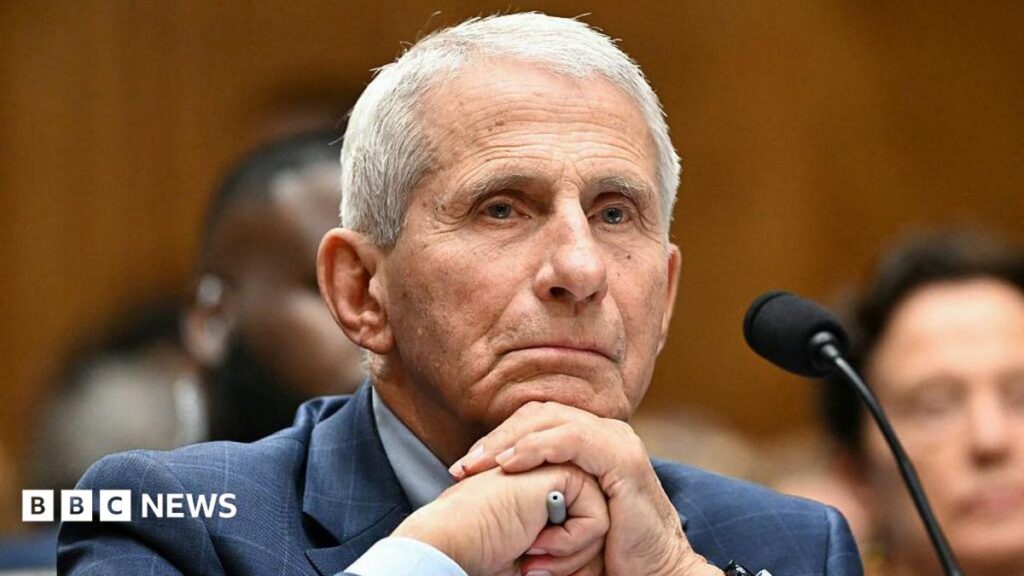
Anthony Fauci Invokes Fifth Amendment Amid Senate Hearing on Covid-19 Origins
In a highly charged Senate hearing on the origins of the Covid-19 pandemic, former National Institute of Allergy and Infectious Diseases (NIAID) director Anthony Fauci invoked his constitutional right to remain silent under the Fifth Amendment. This move came amid intense questioning by Republican lawmakers, particularly Senator Rand Paul, who has long promoted the lab-leak theory of the virus’s origin. Fauci’s refusal to testify marks a significant moment in the ongoing political and scientific debate over how the pandemic began, underscoring the complexities of accountability, evidence, and public trust in pandemic response.
Anthony Fauci Invokes Fifth Amendment Amid Senate Hearing on Covid-19 Origins
Fauci’s Invocation of the Fifth Amendment: Context and Implications
During the Senate hearing held on July 29, 2026, Anthony Fauci declined to answer questions regarding the origins of Covid-19, invoking the Fifth Amendment of the US Constitution. This amendment protects individuals from being compelled to testify against themselves in criminal cases. Fauci explained that his decision was influenced by the recent public release of his private diary entries by Senator Rand Paul, which he argued was part of an effort to prosecute him.
Fauci emphasized his respect for the legislative branch but stated that his legal counsel advised him to refrain from answering to avoid potential self-incrimination. It is important to note that invoking the Fifth Amendment is not an admission of guilt; rather, it is a legal safeguard against coercion and unfair legal burdens. Fauci had previously testified under oath before congressional committees but cited what he described as Paul’s “obsession” with criminal prosecution as a reason for his silence this time.
The Political Dynamics Behind the Hearing
The hearing was led by Republican lawmakers, with Senator Rand Paul taking a central role in questioning Fauci. Paul accused Fauci of publicly misleading the American people about the virus’s origins, contrasting Fauci’s public statements supporting natural origins with private diary entries suggesting Fauci considered a lab leak plausible. Paul has been a vocal proponent of the lab-leak theory, which posits that the virus may have accidentally escaped from the Wuhan Institute of Virology in China.
The hearing grew tense, with Fauci’s legal team attempting to interject during questioning, leading to a security guard removing one of Fauci’s lawyers from the room. Democrats defended Fauci, with Senator Maggie Hassan describing the hearing as a political entrapment. They also raised concerns about current public health challenges under the leadership of US Health Secretary Robert F. Kennedy Jr., who has criticized Fauci and was involved in the release of Fauci’s diary entries.
Scientific Uncertainty Over Covid-19 Origins
The origins of Covid-19 remain scientifically unresolved, with two primary theories under consideration: natural spillover from animals to humans and a laboratory accident. Fauci’s diary entries from early 2020 reveal that scientists did not reach consensus on the virus’s origin at the pandemic’s onset. Fauci himself expressed openness to both possibilities but leaned toward natural evolution from a species jump.
In one entry, Fauci noted that while multiple theories were possible, they were not equally probable. This nuanced position reflects the broader scientific community’s stance, which has not definitively confirmed either theory. Many scientists favor the animal spillover hypothesis based on available evidence, but a lab leak has not been conclusively ruled out.
The debate over origins has significant implications for public health policy, international relations, and future pandemic preparedness, making it a highly sensitive and politicized issue.
Fauci’s Role and Public Perception During the Pandemic
As the head of NIAID from 1984 until his retirement in 2022, Fauci was a central figure in the US response to the Covid-19 pandemic. His guidance shaped policies on mask mandates, social distancing, and vaccine development. Throughout the pandemic, Fauci faced intense criticism, particularly from Republican politicians who opposed certain public health measures.
Fauci also endured personal attacks and death threats, highlighting the polarized environment in which pandemic decisions were made. His frequent public disagreements with former President Donald Trump, especially regarding unproven treatments and the seriousness of the virus, further fueled political divisions.
Despite the controversies, Fauci maintained a commitment to science-based decision-making, which earned him respect in the scientific community but also made him a target for political opposition.
Current Public Health Challenges and Leadership
The hearing also brought attention to ongoing public health issues in the United States, including rising cases of measles and cyclosporiasis, a parasitic infection causing diarrhoea. These concerns were raised in the context of the leadership of Robert F. Kennedy Jr., the current US Health Secretary and a vocal critic of Fauci.
Kennedy’s tenure has been marked by controversy, particularly regarding his skepticism of established public health measures. The release of Fauci’s diary entries, which Kennedy reportedly helped uncover from multiple government servers, has intensified political battles over pandemic narratives and accountability.
These developments underscore the challenges facing US public health institutions as they navigate both scientific uncertainties and political pressures.
What this means
The Senate hearing on Covid-19 origins and Anthony Fauci’s invocation of the Fifth Amendment highlight the complex interplay of science, politics, and public accountability in the pandemic era. While Fauci’s silence protects his legal rights, it also leaves many questions unanswered amid ongoing debate about the virus’s beginnings. The polarized political environment complicates efforts to reach a clear understanding, underscoring the need for transparent, evidence-based inquiry. As the US continues to face public health challenges, balancing scientific integrity with political realities remains crucial for effective pandemic preparedness and response.
Originally reported by bbc.co.uk. Adapted for our readers with AI assistance.
Thousands of young protesters in Delhi continue to demand education reforms and the resignation of Education Minister Dharmendra Pradhan after a police crackdown. The…
Facing a looming financial collapse, Thames Water’s main lenders have offered the UK government a ‘golden share’ and increased local authority involvement to avoid…
Facing record-breaking temperatures and severe drought, Thames Water has introduced a hosepipe ban impacting over 10 million customers across parts of southern England to…