Anthony Fauci Faces Contempt Vote After Invoking Fifth Amendment in Covid-19 Senate Hearing
Anthony Fauci, the former director of the National Institute of Allergy and Infectious Diseases and a key figure in the United States’ Covid-19 response, recently appeared before the Senate Committee on Homeland Security and Governmental Affairs. The hearing, marked by intense questioning and political tension, centered on Fauci’s role during the pandemic, including his public statements and private beliefs about the virus’s origins. Fauci invoked the Fifth Amendment over 100 times, refusing to answer many questions, a move that has sparked calls for a contempt of Congress vote. This article examines the hearing’s context, the legal and political implications of Fauci’s testimony, and the broader debates surrounding the pandemic’s origins and government accountability.
Anthony Fauci Faces Contempt Vote After Invoking Fifth Amendment in Covid-19 Senate Hearing
The Senate Hearing and Fauci’s Invocation of the Fifth Amendment
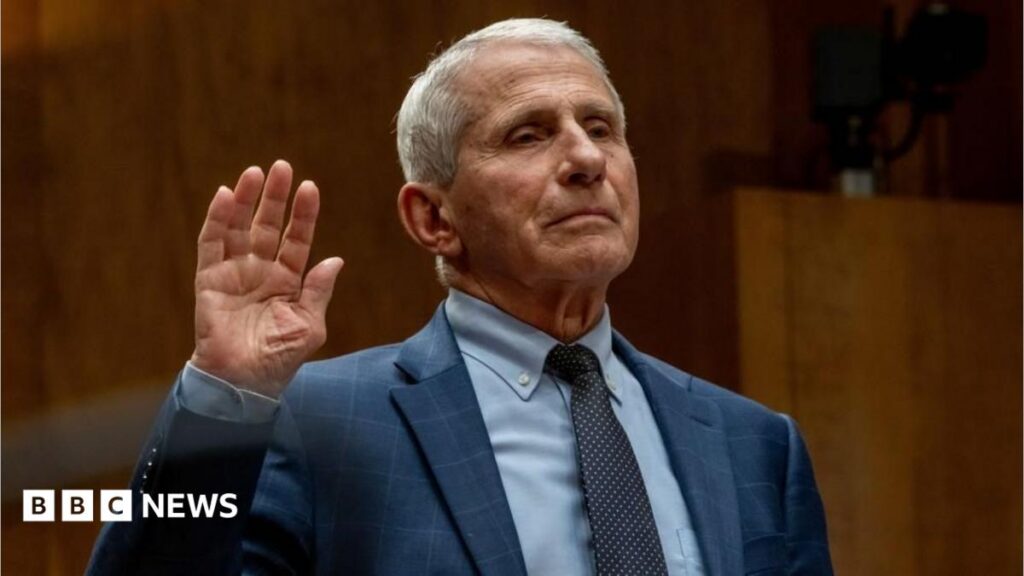
On a highly charged day in the Senate, Anthony Fauci was questioned by the Senate Committee on Homeland Security and Governmental Affairs about his handling of the Covid-19 pandemic. Throughout the hearing, Fauci repeatedly invoked his constitutional right against self-incrimination, known as the Fifth Amendment, more than 100 times. This legal protection allows individuals to refuse to answer questions that might incriminate them.
Fauci’s decision to invoke the Fifth Amendment was made on the advice of his attorneys. While invoking this right is not an admission of guilt and is a common legal practice in criminal investigations, it is unusual for a former government official to use it so extensively in a congressional hearing. Fauci’s refusal to answer questions has led Senate Republicans, led by Senator Rand Paul of Kentucky, to push for a vote to hold him in criminal contempt of Congress.
Political Context and Accusations
Senator Rand Paul, who chairs the Senate committee, has been a vocal critic of Fauci, accusing him of attempting to cover up the origins of the coronavirus and funding research at the Wuhan Institute of Virology in China. Paul and some other Republicans support the lab leak theory, which suggests the virus may have accidentally escaped from a laboratory setting. Fauci has consistently denied any wrongdoing and maintained that the virus most likely originated naturally.
The hearing also featured Republicans questioning Fauci about the shifting public health guidance during the pandemic. These changes reflected evolving scientific understanding but have been criticized by some as inconsistent or confusing. Fauci has defended his decisions and the adjustments made as new information became available.
Democrats, meanwhile, defended Fauci, with Senator Maggie Hassan describing the hearing as an attempt to entrap the former health official. The partisan divide underscored the broader political tensions surrounding the pandemic response and public trust in health authorities.
Legal Implications and the Contempt Vote
Following Fauci’s extensive use of the Fifth Amendment, Senator Rand Paul announced that the committee would vote on a resolution to hold Fauci in criminal contempt of Congress. Should the committee approve the measure, it would proceed to the full Senate, where it would require a supermajority of 60 votes to pass. Given the current political makeup, this outcome appears unlikely without bipartisan support.
If passed, the contempt resolution would be referred to the top prosecutor for the District of Columbia for potential criminal charges. However, the legal path forward is uncertain. Before leaving office, President Joe Biden issued a pre-emptive pardon covering Fauci’s actions from 2014 to 2025, which may shield him from federal prosecution for conduct during that period. Nevertheless, any alleged offenses occurring after the pardon’s timeframe, including those related to the Senate hearing itself, could still be subject to investigation.
Moreover, presidential pardons only apply to federal offenses and do not protect against state-level charges. In this context, Florida’s top prosecutor announced an investigation into Fauci, though details about the alleged crimes have not been disclosed.
The Debate Over Covid-19 Origins
A central theme of the hearing was the origin of the coronavirus. Senator Rand Paul highlighted discrepancies between Fauci’s public statements and his private diaries, suggesting Fauci may have privately believed the virus originated in a lab, despite publicly endorsing the natural origin theory. This allegation has fueled ongoing controversy and conspiracy theories.
The lab leak theory has gained some support, including from the CIA, which stated in early 2025 that a lab leak was the most likely source of the outbreak. Nonetheless, the World Health Organization has maintained that the natural spillover from animals to humans remains the best-supported explanation based on current evidence, while acknowledging that the question remains inconclusive pending further investigation.
This debate is significant not only for understanding the pandemic’s origins but also for shaping future policies on global health security and laboratory safety.
Public and Political Reactions
The hearing and Fauci’s testimony have elicited strong reactions across the political spectrum. Former President Donald Trump criticized Fauci on social media, calling him "crazy" and accusing him of protecting China by disputing the lab leak theory. Trump’s comments reflect the ongoing politicization of the pandemic and its origins.
Fauci, who was once one of the most trusted public officials during the pandemic, has faced significant backlash, including death threats. His security detail was removed by Trump in 2024, further underscoring the contentious environment surrounding his public service.
Despite the controversy, Fauci’s contributions to the US Covid-19 response were recognized by Trump in 2021, when Fauci received a presidential commendation for his role in Operation Warp Speed, the vaccine development initiative.
What this means
The Senate hearing with Anthony Fauci has brought to the forefront unresolved questions about the Covid-19 pandemic’s origins and the government’s response. Fauci’s extensive invocation of the Fifth Amendment underscores the legal complexities and political sensitivities involved. While the prospect of a contempt of Congress vote signals heightened tensions, the likelihood of Fauci facing prosecution remains uncertain due to presidential pardons and the need for bipartisan consensus. Beyond the legal battles, the hearing reflects broader challenges in balancing public health transparency with political accountability. As investigations continue at both federal and state levels, the discourse surrounding the pandemic’s lessons and future preparedness will remain a critical focus for policymakers and the public alike.
Originally reported by bbc.co.uk. Adapted for our readers with AI assistance.
Thousands of young protesters in Delhi continue to demand education reforms and the resignation of Education Minister Dharmendra Pradhan after a police crackdown. The…
Facing a looming financial collapse, Thames Water’s main lenders have offered the UK government a ‘golden share’ and increased local authority involvement to avoid…
Facing record-breaking temperatures and severe drought, Thames Water has introduced a hosepipe ban impacting over 10 million customers across parts of southern England to…