
News
RUSSIA versus NATO and BRICS vs. NATO Military SWOT
Recall that Poland’s Minister Sikorski’s core claim is partially supported by the numbers, but the framing “quite quickly” and “without the U.S.” does not…
TAMFIS NIG LTDRC 8067447CAC ACTIVEFinima, Bonny Island, Rivers State

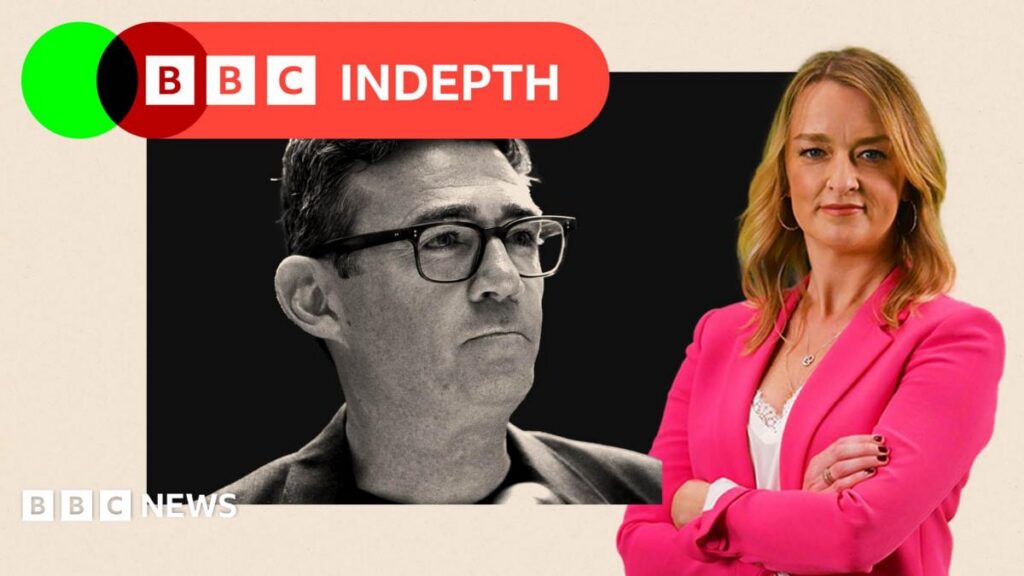
Andy Burnham is poised to become the 59th Prime Minister of the United Kingdom, stepping into a role fraught with political and economic challenges. A seasoned politician, former cabinet minister, and the popular Mayor of Greater Manchester, Burnham’s rise to power has been marked by both admiration and skepticism. This article explores the multifaceted personality and political journey of Andy Burnham, drawing on insights from colleagues, friends, and political insiders to paint a balanced picture of the man who now holds the country’s highest office.
Andy Burnham defies simple categorization. He is known as the "King of the North," a well-liked mayor who has championed regional development, but also as a ruthless political operator who played a key role in the internal Labour revolt that led to the ousting of Sir Keir Starmer. Outside politics, he is an Everton fan and a self-described "dad dancer," famously choosing to play New Order’s "True Faith" at a Labour event to celebrate his leadership.
Burnham’s personality combines warmth and approachability with a steely determination. Despite the political maneuvering that brought him to power, colleagues describe him as affable and decent, a rarity in the often brutal arena of British politics. However, this likability has also raised questions about whether it will be enough to navigate the complexities of leading a fractured party and a nation facing economic uncertainty.
Burnham’s political career began decades ago in Westminster, initially as a researcher before becoming a Member of Parliament and rising quickly through the ranks to cabinet positions. He served as Chief Secretary to the Treasury and held other key roles during the Labour governments of the 2000s. His time in Westminster was marked by both popularity and criticism; some colleagues viewed him as lacking substance, while others admired his intellect and adaptability.
A notable turning point in Burnham’s career was his move from Westminster to become Mayor of Greater Manchester. This shift allowed him to step out of the traditional party politics and focus on regional governance, where he earned praise for his leadership and ability to work across party lines. His mayoral tenure has been described as a liberation, enabling him to develop a pragmatic, place-based approach to politics, emphasizing the importance of local issues over party ideology.
Despite his public image as a genial and approachable leader, Burnham is known to be ruthless behind the scenes. Insiders reveal that he is willing to assert his agenda firmly, even if it means sidelining dissenters within his party. His decision to support new oil and gas drilling in the North Sea, contrary to the preferences of some cabinet members, illustrates his readiness to make tough, sometimes controversial decisions.
Burnham’s leadership style has been compared to that of Sir Alex Ferguson, the legendary Manchester United manager, who once advised him to be decisive and uncompromising when necessary. This blend of warmth and toughness may prove crucial as Burnham seeks to unify a divided Labour Party and assert his authority as Prime Minister.
Despite his strengths, there are significant doubts within the Labour Party and beyond about Burnham’s readiness to handle the prime ministership. Some colleagues worry that his desire to be liked could undermine his ability to make unpopular but necessary decisions. Others question whether his experience as a mayor and cabinet minister can translate into effective leadership on the national and international stage, especially given the fast pace and complexity of issues facing the UK.
The political landscape Burnham inherits is challenging: a fractured party, a post-Brexit economy struggling to find its footing, and high public expectations for social and economic improvements. Labour insiders acknowledge that Burnham has a limited window—estimated at six to eight months—to demonstrate progress and regain public trust. Failure to do so could lead to further leadership instability within the party.
One of Burnham’s defining political beliefs is the importance of place over party allegiance. His time as Mayor of Greater Manchester shaped his conviction that where people live matters more than how they vote. This perspective informs his approach to governance, emphasizing collaboration across political divides and focusing on tangible improvements in people’s lives.
Burnham promises to be an inclusive leader within Labour, avoiding factionalism and encouraging MPs to unite behind a common agenda despite differing views. His commitment to listening and working across party lines could help heal some of the internal divisions that have plagued Labour in recent years.
As Burnham prepares to move into 10 Downing Street, many questions remain unanswered. The composition of his cabinet, the specific policies he will prioritize, and how he will navigate the UK’s fiscal constraints are still unclear. Political insiders admit that even within his team, there is uncertainty about the direction his government will take on key issues.
Observers will be watching closely to see if Burnham can scale up from mayoral politics to the national stage, manage the demands of a complex economy, and deliver on the high expectations of Labour supporters. His ability to balance decisiveness with empathy, and to unify a divided party while addressing the country’s pressing challenges, will be critical to his success.
Andy Burnham’s ascent to the role of Prime Minister marks a pivotal moment for both him and the Labour Party. His blend of affability, political experience, and strategic ruthlessness offers potential for renewed leadership, but also raises important questions about his capacity to navigate the complex realities of national governance. As he steps into Downing Street, Burnham inherits a party and a country in need of direction and unity. Whether he can rise to meet these challenges remains to be seen, but his tenure will undoubtedly shape the future of British politics in the coming years.
Originally reported by bbc.co.uk. Adapted for our readers with AI assistance.
Keep reading
News
Recall that Poland’s Minister Sikorski’s core claim is partially supported by the numbers, but the framing “quite quickly” and “without the U.S.” does not…
News
Thousands of young protesters in Delhi continue to demand education reforms and the resignation of Education Minister Dharmendra Pradhan after a police crackdown. The…
News
Facing a looming financial collapse, Thames Water’s main lenders have offered the UK government a ‘golden share’ and increased local authority involvement to avoid…
TAMFIS NIG LTD
Electrical and instrumentation engineering, bid preparation and consulting, IT and software.