
News
RUSSIA versus NATO and BRICS vs. NATO Military SWOT
Recall that Poland’s Minister Sikorski’s core claim is partially supported by the numbers, but the framing “quite quickly” and “without the U.S.” does not…
TAMFIS NIG LTDRC 8067447CAC ACTIVEFinima, Bonny Island, Rivers State

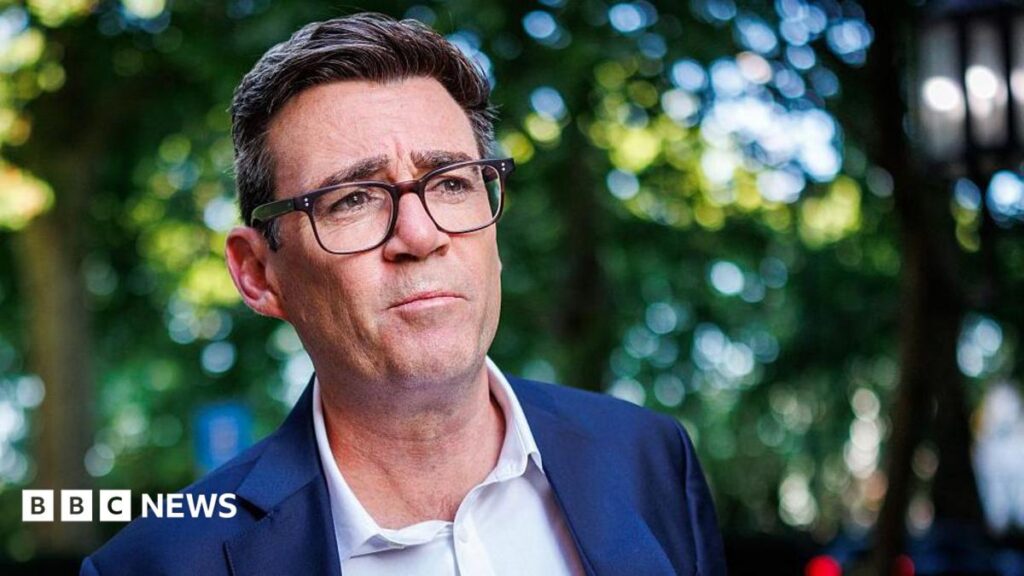
Andy Burnham is poised to become the UK’s next Labour leader and prime minister, promising a fresh approach to the country’s political and economic challenges. Confirmed at a special party conference in London, Burnham’s rapid rise follows a decisive by-election victory and widespread support within the party. His leadership signals a commitment to a distinctly Labour agenda that emphasizes economic growth across all regions, increased public control of key utilities, and a more collaborative, united government. This article explores Burnham’s vision, the context of his leadership transition, and the challenges ahead.
Andy Burnham’s confirmation as Labour leader comes swiftly after his by-election win in Makerfield last month, marking a rapid ascent to the highest political office. Backed by 379 Labour MPs and most affiliated trade unions, Burnham emerged as the sole candidate following the withdrawal of other potential contenders. His leadership was officially announced by Home Secretary Shabana Mahmood, chair of Labour’s national executive committee, at a special conference in central London.
Burnham takes over from Sir Keir Starmer, who resigned last month amid internal party pressures following poor local election results. Starmer acknowledged that he was not best placed to lead Labour into the next general election and pledged support for Burnham’s leadership and an orderly transition.
In his inaugural speech as Labour leader, Burnham outlined a government that would be “unashamedly Labour in our priorities,” focusing on addressing the “big things that politics has neglected.” Central to his vision is a new economic path diverging from the last 40 years, aiming to make the economy work for people across the UK.
Burnham emphasized the importance of driving growth in every postcode and returning power to local communities. His plans include increased public control over utilities such as water and a commitment to reindustrialization, signaling a shift towards more state involvement in key sectors.
He also pledged to lead a united Labour Party, open to collaboration with other political parties to tackle long-term national challenges. Burnham’s leadership aims to represent all parts of the UK — north and south, Scotland, Wales, Northern Ireland, and every town and city — reflecting a commitment to national cohesion.
Burnham’s policy blueprint, though still unfolding, includes establishing a new No 10 unit based in Manchester. This unit would focus on devolving greater control to local governments, particularly in housing and transport, aligning with his vision of empowering communities.
Addressing the cost of living is a stated priority, with Burnham signaling additional support for households facing economic pressures. However, he has stressed fiscal discipline, asserting that his government would not be “indisciplined” with public finances.
This cautious stance aligns with warnings from the International Monetary Fund (IMF), which has urged the incoming government to avoid increasing public spending despite rising household energy costs. The IMF recommends a selective approach to new fiscal demands, focusing on reallocating resources rather than expanding total expenditure.
While Burnham’s policy outline is emerging, key details about his cabinet appointments remain under wraps. Reports suggest that Shabana Mahmood could be appointed chancellor, though official announcements are expected only when Burnham takes office on Monday.
Sir Keir Starmer has expressed his intention to support Burnham privately and ensure a smooth handover. During a visit to Ukraine, Starmer highlighted the “sound foundation” laid during his tenure, including NHS improvements and public service investments, which Burnham can build upon.
Burnham plans a “listening tour” across the UK during the parliamentary recess, signaling his intent to engage directly with communities and stakeholders early in his premiership.
Despite broad support within Labour and from affiliated unions, Burnham faces significant challenges. The UK’s economic landscape remains complex, with inflation, energy costs, and regional disparities demanding urgent attention.
Balancing the promise of increased public control and investment with fiscal responsibility will require careful navigation, especially under IMF scrutiny. Additionally, Burnham must unify a party that has experienced recent electoral setbacks while reaching out to other political forces.
His commitment to representing all regions and nations of the UK will also be tested amid ongoing debates about devolution and national identity.
Editor’s note: The following is AI-generated commentary and context on this topic, not original reporting.
Incoming prime ministers typically face an early balancing act between signalling continuity with their party’s established platform and demonstrating enough distinctiveness to justify the change in leadership. Cabinet appointments in the opening days of a new premiership are often watched closely as an early indicator of policy direction, factional balance within the governing party, and the priorities likely to dominate the legislative agenda.
Economic conditions, international relations and the state of public services typically shape the practical constraints any new leader operates within, regardless of the rhetoric used during a leadership campaign. Political commentators generally caution that the first hundred days offer only a partial preview of a government’s overall direction, since early decisions are often more reactive than the long-term policy programme that follows.
Andy Burnham’s ascent to the Labour leadership and premiership marks a pivotal moment for the UK’s political landscape. His commitment to a new economic path, greater public control, and regional empowerment reflects a clear departure from recent decades’ policies. However, delivering on these promises will require balancing ambitious reforms with fiscal prudence and navigating a complex political environment. As Burnham prepares to take office, his early actions and policy decisions will be closely watched as indicators of how effectively he can lead Labour and the country forward.
Originally reported by bbc.co.uk. Adapted for our readers with AI assistance.
Keep reading
News
Recall that Poland’s Minister Sikorski’s core claim is partially supported by the numbers, but the framing “quite quickly” and “without the U.S.” does not…
News
Thousands of young protesters in Delhi continue to demand education reforms and the resignation of Education Minister Dharmendra Pradhan after a police crackdown. The…
News
Facing a looming financial collapse, Thames Water’s main lenders have offered the UK government a ‘golden share’ and increased local authority involvement to avoid…
TAMFIS NIG LTD
Electrical and instrumentation engineering, bid preparation and consulting, IT and software.