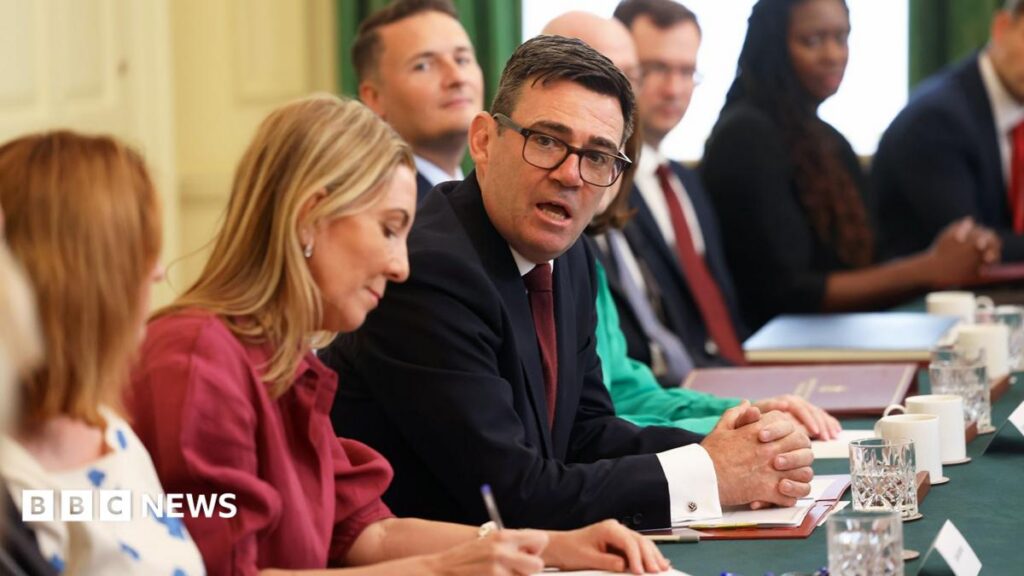
Andy Burnham Prioritizes Cost of Living in First Cabinet Meeting as UK Prime Minister
Andy Burnham, newly appointed Prime Minister of the United Kingdom, has set a clear agenda focused on addressing the escalating cost of living pressures facing households across the country. Chairing his first cabinet meeting, Burnham pledged to lead a government dedicated to easing financial burdens, starting with a VAT reduction on household energy bills. However, his early policy moves have sparked debate over funding sources and fiscal responsibility amid a significant cabinet reshuffle. This article examines Burnham’s initial steps, the political reactions, and what his approach means for the UK’s economic and political landscape.
Andy Burnham Prioritizes Cost of Living in First Cabinet Meeting as UK Prime Minister
A Cost of Living Government: Burnham’s Immediate Priorities
In his first cabinet meeting as Prime Minister, Andy Burnham declared his intention to lead a 'cost of living government,' highlighting the urgency of supporting households grappling with rising expenses. He emphasized the need to provide citizens with a tangible sense that assistance is forthcoming, signaling a shift in government focus toward everyday economic challenges.
Burnham’s first major policy announcement was a cut in VAT on household energy bills from 5% to zero, effective from October. This move is estimated to save the average household approximately £45 annually, providing modest but meaningful relief amid ongoing inflationary pressures. The VAT cut applies across England, Wales, and Scotland but excludes Northern Ireland due to post-Brexit regulatory arrangements, where additional Treasury funds have been allocated to local cost of living support instead.
Beyond this initial step, Burnham tasked his ministers with proposing further measures to reduce household costs, indicating that both significant and incremental actions would be explored. He stressed that all new policies would be accompanied by clear funding plans and fiscal discipline, reflecting a commitment to responsible governance even while addressing urgent social needs.
Funding Controversy: Scrapping the Digital ID Scheme
Burnham’s plan to finance the VAT cut by cancelling the digital ID scheme initiated under former Labour leader Sir Keir Starmer has sparked debate within the party and opposition ranks. The digital ID programme, estimated to cost £1.8 billion over three years, was seen as a flagship initiative for Starmer’s government.
Downing Street suggested that the £850 million cost of the VAT cut for the remainder of the financial year could be covered by reallocating funds originally earmarked for the digital ID rollout. However, critics including Darren Jones, a Starmer loyalist recently removed from the cabinet, challenged the claim, describing the digital ID scheme as 'unfunded' and calling for clearer explanations on budget reallocations.
Opposition parties also seized on the issue. Conservative shadow chancellor Sir Mel Stride accused Burnham’s government of being reckless with public finances, citing previous assessments by the government’s budget watchdog that funding for digital ID was expected to come from within existing departmental budgets rather than new savings.
In response, Burnham’s spokesman maintained that the government would identify departmental savings to cover the cost of the VAT cut, underscoring a commitment to fiscal discipline despite the political contention.
Cabinet Reshuffle: New Faces and Strategic Appointments
Burnham’s first day in office was marked by a wide-ranging cabinet reshuffle that saw the departure of several Starmer loyalists, including Rachel Reeves and David Lammy. In their place, Burnham promoted allies such as Ed Miliband, who was appointed foreign secretary, and Louise Haigh, who took on a senior role overseeing the Cabinet Office.
Miatta Fahnbulleh, another Burnham supporter, was elevated to energy secretary, a critical position given the government’s focus on energy costs. Fahnbulleh denied that the reshuffle was a purge of Starmer loyalists, emphasizing that cabinet membership is contingent on merit and a diversity of views rather than factional loyalty.
Scottish Labour leader Anas Sarwar is expected to join the government as a business minister after being granted a seat in the House of Lords. Sarwar’s appointment is notable given his previous public calls for Starmer’s resignation, signaling Burnham’s intent to unify different Labour factions under his leadership.
New Chancellor John Healey, speaking to Treasury staff, reaffirmed a commitment to maintaining tax and spending discipline in line with previous government rules. However, he also highlighted the government’s intent to maximize public investment and leverage private and international funding sources within this framework.
Balancing Fiscal Discipline with Urgent Social Needs
Burnham’s government faces the challenge of addressing immediate cost of living pressures while adhering to established fiscal rules. The Prime Minister acknowledged that funding new initiatives ahead of his first Budget would require ministers to reprioritize existing departmental budgets, reflecting a pragmatic approach to resource allocation.
An example of this approach is the announcement of an additional £340 million over five years to tackle rough sleeping, which is expected to be financed through uncommitted funds within the housing department. This demonstrates a willingness to redirect resources to urgent social issues without expanding overall spending.
Burnham also announced plans to establish a new Downing Street unit in Manchester, dubbed No 10 North, which will oversee local economic growth and devolution strategies. This initiative aligns with his broader vision of decentralizing government functions and promoting regional development.
To support this, civil servants in London have been offered relocation packages to encourage moves to the north, with Burnham himself expected to work from No 10 North at least one day a week. Additionally, a new Office for the Prime Minister and the Cabinet will be created to maintain focus on strategic priorities across departments.
Continuity and Foreign Policy Developments
In a notable foreign policy decision, Burnham agreed to continue allowing British military bases to be used for US defensive strikes against Iran, maintaining the policy stance of the previous government. Sources clarified that bases such as Diego Garcia and RAF Fairford would only be used for operations deemed defensive by the UK, signaling a cautious but consistent approach to international security commitments.
This decision reflects Burnham’s broader balancing act between pursuing new domestic priorities and maintaining established international relationships and responsibilities.
What this means
Andy Burnham’s first days as Prime Minister have been marked by a clear focus on addressing the cost of living crisis through targeted fiscal measures and a reshaped cabinet aimed at delivering his agenda. While his VAT cut on energy bills offers immediate, if modest, relief, the debate over funding sources underscores the challenges of balancing urgent social needs with fiscal responsibility. The government’s commitment to reprioritizing budgets and decentralizing operations reflects an ambition to reshape governance while maintaining continuity in critical areas such as foreign policy. As Burnham’s administration moves forward, its ability to navigate internal party dynamics, public expectations, and economic constraints will be crucial in defining its success.
Originally reported by bbc.co.uk. Adapted for our readers with AI assistance.
Thousands of young protesters in Delhi continue to demand education reforms and the resignation of Education Minister Dharmendra Pradhan after a police crackdown. The…
Facing a looming financial collapse, Thames Water’s main lenders have offered the UK government a ‘golden share’ and increased local authority involvement to avoid…
Facing record-breaking temperatures and severe drought, Thames Water has introduced a hosepipe ban impacting over 10 million customers across parts of southern England to…