Aftermath of Japan’s Kumamoto Earthquake: Rising Death Toll and Challenges Amid Sweltering Heat
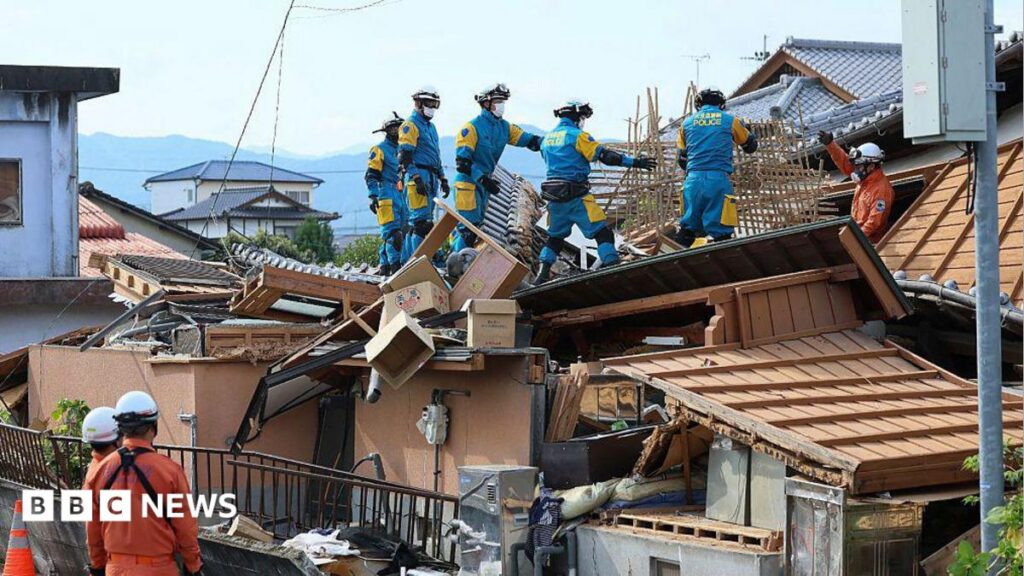
On Tuesday, a powerful earthquake with a magnitude of 6.8 struck Kumamoto prefecture on Japan’s Kyushu island, causing significant damage to infrastructure and homes. As rescue teams continue to search for survivors amid the rubble, the death toll has risen to 28. The disaster has displaced thousands, who now face the added hardship of extreme heat, with temperatures forecasted to reach as high as 39°C. This article examines the impact of the earthquake, ongoing rescue operations, and the challenges posed by the oppressive heat on evacuees and responders.
Aftermath of Japan’s Kumamoto Earthquake: Rising Death Toll and Challenges Amid Sweltering Heat
Widespread Damage and Rising Casualties
The earthquake struck at a shallow depth of approximately 10 kilometers, intensifying its impact on Kumamoto prefecture. The tremor caused extensive damage to houses, power lines, and key infrastructure across the region. Among the hardest hit was the Aeon shopping centre in Kashima, where part of the second floor collapsed, resulting in several fatalities.
An explosion followed about an hour after the quake, believed to be caused by a gas leak, further complicating rescue efforts. The president of Aeon indicated the explosion was “very likely” gas-related, though investigations are ongoing. Additionally, a Nippon Paper factory in Yatsushiro city partially collapsed, leading to at least five deaths and trapping eleven workers, seven of whom have been rescued.
The quake has caused widespread power outages, with over 30,000 households reported without electricity as of Wednesday. More than 100 aftershocks have been recorded since the initial event, prompting many residents to seek safety by sleeping in their cars.
Rescue Operations and Community Response
Thousands of personnel have been mobilized for search-and-rescue operations. Teams are meticulously digging through the rubble of the Aeon mall and other damaged structures, working against time to locate survivors. The urgency is heightened by the ongoing aftershocks, which pose additional risks to both victims and rescuers.
The community has also shown resilience amid the disaster. For instance, a cat café inside the Aeon mall successfully rescued all 25 cats left behind during the chaos, a small but poignant sign of hope amid widespread devastation.
The Aeon mall itself had only recently reopened after being damaged in the 2016 Kumamoto earthquakes, which claimed 278 lives. This recent quake has reopened wounds for the community, underscoring the region’s vulnerability to seismic activity.
Evacuation Centers Struggle Amid Sweltering Heat
Approximately 9,000 displaced residents have sought refuge in evacuation centers across Kumamoto. However, the challenge of providing adequate relief is compounded by an intense heatwave, with temperatures expected to soar to 39°C in the coming days.
Officials have expressed concern about the risk of heatstroke among evacuees and rescue workers. To mitigate this, Japan’s Defence Minister Shinjiro Koizumi announced the delivery of 300 air conditioners to the affected area, with 150 units allocated specifically for evacuation centers.
Maintaining hydration and cool environments is critical as survivors cope with the dual threats of displacement and extreme weather. The combination of aftershocks and heat has led many residents to adopt unconventional sleeping arrangements, such as resting in their vehicles, to feel safer.
Human Stories: The Impact on Residents
The earthquake’s sudden and violent shaking left a profound psychological impact on residents. Hiroko Ogata, a 75-year-old restaurant owner in Yatsushiro city, recounted hiding under a table as her restaurant swayed violently. Having lived in the area for 75 years, she described this quake as the most severe she had ever experienced, fearing for her life.
Such personal accounts highlight the trauma endured by the community. Beyond physical destruction, the earthquake has disrupted lives and livelihoods, creating a sense of uncertainty and vulnerability.
The ongoing aftershocks and the threat of further damage continue to weigh heavily on residents, many of whom face the challenge of rebuilding their homes and lives in the aftermath.
What this means
The Kumamoto earthquake has left a trail of destruction and loss, challenging both the resilience of the local community and the capabilities of emergency responders. As rescue teams work tirelessly to find survivors and provide relief, the added burden of extreme heat complicates efforts to safeguard displaced residents. This disaster underscores the ongoing vulnerability of seismic regions and the critical importance of preparedness, timely response, and community support in the face of natural calamities. Moving forward, sustained attention to recovery and rebuilding will be essential to help Kumamoto heal and strengthen its resilience against future earthquakes.
Editor’s note: The following is AI-generated commentary and context on this topic, not original reporting.
Broader Context and Outlook
Schools and hospitals are frequently prioritised in post-earthquake structural assessments, given their critical role in both immediate emergency response and long-term community recovery.
Historical seismic data for regions like the one described here often informs how authorities calibrate their response, since areas with a long history of tectonic activity tend to have more developed — if still imperfect — contingency plans.
International observers studying disasters comparable to this one often note that transparent, timely public communication is one of the clearest predictors of how well a community copes with the aftermath.
In the hours and days following a quake of this kind, aftershocks remain a serious operational concern, complicating rescue efforts and keeping residents on edge even after the initial danger appears to have passed.
Retrofitting older buildings to modern seismic standards remains one of the most persistent and expensive challenges facing earthquake-prone regions, even in countries with otherwise advanced building codes.
Insurance payouts and government reconstruction funds following major quakes are often the subject of long-running political debate, particularly over how quickly compensation reaches affected households versus larger infrastructure projects.
The financial cost of repairing infrastructure after an event like this, from roads and bridges to power grids and water systems, can run into the billions and take years to fully resolve.
Engineers reviewing damage patterns from quakes like this typically look closely at which structures failed and why, using the findings to update construction standards for future building projects in similar zones.
Seismic events on the scale referenced in “Aftermath of Japan’s Kumamoto Earthquake: Rising Death Toll and Challenges Amid Swelter…” test not only emergency infrastructure but also public confidence in building codes, early-warning systems, and evacuation planning built up over previous decades.
Trust in the reporting and institutions surrounding a story like this tends to be reinforced or eroded not by any single article, but by the cumulative pattern of accuracy and transparency over time.
Originally reported by bbc.co.uk. Adapted for our readers with AI assistance.
Thousands of young protesters in Delhi continue to demand education reforms and the resignation of Education Minister Dharmendra Pradhan after a police crackdown. The…
Facing a looming financial collapse, Thames Water’s main lenders have offered the UK government a ‘golden share’ and increased local authority involvement to avoid…
Facing record-breaking temperatures and severe drought, Thames Water has introduced a hosepipe ban impacting over 10 million customers across parts of southern England to…