
How England’s Hot Weather is Uncovering Hidden Historical Landscapes
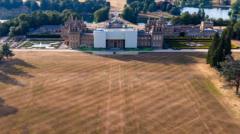
The recent spell of hot, dry weather across southern England has done more than just raise temperatures—it has exposed hidden layers of history beneath the region’s historic estates and castles. As drought conditions parch the grass, subtle variations in soil moisture reveal outlines of long-forgotten gardens, buildings, and walls. These ephemeral marks provide archaeologists, historians, and visitors with a unique opportunity to glimpse the past in a way that is rarely possible. This article explores several notable sites where these parch marks have appeared, the history they reveal, and what they tell us about England’s rich heritage.
The Magical Reappearance of Blenheim Palace’s 18th-Century Garden
Blenheim Palace, a UNESCO World Heritage Site in Oxfordshire, has recently unveiled an extraordinary sight: the outline of an 18th-century garden that once spanned the entire width of the palace grounds. This historic parterre, constructed in 1705, was a grand and costly installation designed to demonstrate wealth and status through elaborate landscaping.
Andy Mills, the head gardener at Blenheim, described the moment the garden’s footprint emerged on the lawn as “absolutely magical.” Although the parterre was dismantled in 1760, its underground remnants have remained intact, only becoming visible during exceptional hot spells when the grass dries unevenly.
The garden’s design, characterized by intricate geometric patterns typical of French formal gardens, was a major feature of the palace’s early landscape. Its construction would have required significant investment, reflecting the social and political ambitions of the palace’s owners. Seeing its outline reappear after more than 260 years offers a tangible connection to the past and highlights how climatic conditions can unexpectedly aid historical discovery.
Lost Buildings Revealed at Greys Court and Portchester Castle
In Oxfordshire, the National Trust’s Greys Court near Henley-on-Thames has also benefited from the dry weather, with parch marks revealing the footprints of 16th-century buildings. These structures, which once stood on the Oval Lawn, included a long, narrow building that linked two sides of a medieval courtyard. Archaeological investigations have confirmed the presence of these lost buildings, but the parch marks provide a striking visual confirmation that brings the history to life.
Similarly, at Portchester Castle in Hampshire, English Heritage has observed parch marks outlining a Tudor storehouse dating from between 1489 and 1540. This discovery offers insights into the castle’s functional buildings during the Tudor period, enhancing understanding of how the site was used beyond its defensive role. The storehouse’s footprint, revealed by the drought, adds a new dimension to the historical narrative of this medieval fortress.
Mottisfont Abbey’s Ancient Foundations Come to Light
Mottisfont Abbey, near Romsey, has experienced similar revelations this summer. The parch marks have exposed the remains of 13th and 16th-century wall foundations, which are believed to be part of the monastery’s cloister and other associated buildings, as well as Tudor-era modifications.
James Brown, an archaeologist involved with the site, noted that while geophysical surveys have been conducted, the buildings themselves have never been excavated. The parch marks thus provide rare and valuable glimpses into the oldest phases of the site’s history, moments when the hidden architecture briefly becomes visible on the surface. This fleeting visibility offers a unique chance to appreciate the scale and layout of the monastic complex without disturbing the ground.
Why Hot Weather Reveals Hidden Archaeology
The phenomenon of parch marks occurs because buried structures affect soil moisture retention differently than surrounding earth. Foundations, walls, and other archaeological features can cause grass above them to dry out faster or slower depending on the material and depth. For example, stone foundations may retain less moisture, causing the grass above to parch and turn brown more quickly, while buried ditches or pits may hold more moisture, resulting in greener patches.
During periods of drought or extended heat, these differences become pronounced, revealing outlines of buildings or gardens that have long since disappeared from view. These natural conditions act as a form of non-invasive archaeological survey, allowing researchers and the public to observe historical footprints without excavation.
While parch marks are temporary and depend on specific weather conditions, they provide valuable clues that can guide further archaeological investigation and conservation efforts. They also help heritage managers prioritize areas for study and preservation, making them a useful tool in the ongoing effort to protect England’s historical sites.
The Broader Significance of Revealed Historical Landscapes
The reappearance of these hidden features across southern England underscores the region’s layered history and the ways in which the landscape holds stories waiting to be rediscovered. Sites like Blenheim Palace, Greys Court, Portchester Castle, and Mottisfont Abbey each tell different chapters of England’s past, from medieval monastic life to Tudor architecture and 18th-century aristocratic grandeur.
These discoveries also highlight the importance of preserving historic sites and maintaining detailed records, as the parch marks often confirm or complement existing archaeological knowledge. Moreover, they offer educational opportunities and deepen public engagement with heritage, allowing visitors to connect visually and emotionally with history.
As climate patterns shift and extreme weather events become more common, such natural archaeological reveals may occur more frequently, presenting both opportunities and challenges for heritage management. Increased occurrences of parch marks could enable more discoveries but also demand careful monitoring to protect vulnerable sites from damage.
What this means
The recent hot weather in southern England has unintentionally acted as a natural archaeological lens, revealing the hidden footprints of centuries-old gardens, buildings, and walls. These parch marks provide a fleeting but powerful connection to the past, enriching our understanding of the region’s heritage. While temporary, such phenomena remind us of the deep history beneath our feet and the importance of preserving and studying these sites. As climate conditions continue to evolve, they may offer more opportunities to uncover lost chapters of history, inviting both experts and the public to engage with England’s enduring legacy in new and unexpected ways.
Originally reported by bbc.co.uk. Adapted for our readers with AI assistance.