
Health
How Millennials Are Turning to Gardening to Escape Digital Overload and Find Community
Amid the pressures of modern life and the constant presence of digital technology, many millennials are turning to gardening as a therapeutic escape and…
TAMFIS NIG LTDRC 8067447CAC ACTIVEFinima, Bonny Island, Rivers State

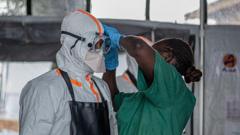
The Democratic Republic of Congo (DR Congo) is currently grappling with one of the deadliest Ebola outbreaks in its history. Since the official declaration of the outbreak on May 15, over 1,900 people have succumbed to the virus, making it the second-worst Ebola epidemic recorded globally. However, recent findings reveal the virus had been circulating undetected for at least three months before the outbreak was recognized, complicating efforts to contain it. This article explores the complexities of managing the Bundibugyo strain of Ebola in a region marked by insecurity, limited resources, and community mistrust, highlighting the ongoing struggle to stay ahead of the virus.
Research indicates that the current Ebola outbreak began as early as February, several months before health authorities officially declared it in mid-May. Early cases were misdiagnosed as malaria or typhoid, illnesses that are common in the region, which delayed the identification of Ebola and the implementation of appropriate response measures. This initial misdiagnosis allowed the virus to spread extensively and silently within communities before containment efforts could begin.
The delay in detection has had profound repercussions. By the time the outbreak was acknowledged, thousands had already been infected, overwhelming local health systems that were ill-prepared for such a surge. The World Health Organization (WHO) has warned that health workers are effectively "chasing the virus," emphasizing the difficulty of catching up once an outbreak has advanced unchecked. This lag has contributed to sustained high infection rates and increased mortality.
The epicenter of the outbreak lies in the eastern part of DR Congo, a region plagued by ongoing conflict and insecurity. Armed groups and persistent instability have severely hampered efforts to control the virus’s spread. Health workers face significant threats and logistical challenges that limit their access to affected communities, reducing their ability to diagnose, isolate, and treat patients promptly.
WHO Africa director Dr. Mohamed Janabi highlighted that due to these security challenges, health teams are only able to reach about 30% of Ebola cases. The remaining cases often go unreported, with many individuals dying at home without receiving medical care. This gap in coverage not only allows the virus to continue spreading unchecked but also complicates efforts to trace contacts and implement effective quarantine measures.
Traditional burial practices in the region have also contributed significantly to the virus’s spread. In many communities, mourners come into direct contact with the bodies of the deceased, which can transmit Ebola through bodily fluids. These customs have made it challenging to implement safe burial protocols that are essential to controlling the outbreak, as modifying deeply rooted cultural practices requires sensitive community engagement.
Moreover, some communities harbor suspicion toward health authorities and treatment centers. This mistrust leads to resistance against medical interventions, including vaccination efforts and isolation of suspected cases. Such resistance can stem from misinformation, past negative experiences with health services, or fear of stigmatization. Overcoming these social barriers is crucial for effective outbreak management and requires building trust through transparent communication and involvement of local leaders.
The current outbreak involves the Bundibugyo species of the Ebola virus, for which there is no approved vaccine or recognized therapeutic drugs. This contrasts with other Ebola strains, such as the Zaire species, where vaccines and treatments have been developed and deployed in recent years with some success.
The lack of approved medical countermeasures for Bundibugyo Ebola complicates treatment efforts. Health workers must rely primarily on supportive care, which focuses on managing symptoms and preventing complications but is less effective in reducing mortality and transmission compared to targeted therapies. This limitation underscores the urgent need for research and development focused on this particular strain to improve patient outcomes and outbreak control.
Despite the numerous challenges, several dedicated treatment centers have been established in the outbreak zone, improving diagnosis and care. These centers have enhanced the speed at which suspected cases are identified and isolated, helping to reduce further transmission. Health workers are now better equipped with protective gear and training to safely manage patients and limit the spread of the virus.
As of the latest reports, the DR Congo health ministry has confirmed 4,294 cases with 1,960 deaths. While these figures reflect the severity of the outbreak, they also demonstrate ongoing surveillance and reporting efforts. The scale of this outbreak is second only to the 2014-2016 West Africa epidemic, which resulted in over 11,000 deaths.
International support remains vital in bolstering local health infrastructure and response capabilities. Collaborative efforts include funding, provision of medical supplies, and deployment of expert teams to assist with contact tracing, community engagement, and logistical coordination. These combined efforts are essential to contain the outbreak and prevent further escalation.
The ongoing Ebola outbreak in the Democratic Republic of Congo highlights the complex interplay of medical, social, and security challenges in managing infectious diseases in fragile settings. The delayed recognition of the outbreak, compounded by regional instability and cultural factors, has allowed the virus to outpace containment efforts. While progress has been made through the establishment of treatment centers and enhanced surveillance, the absence of approved vaccines for the Bundibugyo strain and persistent community resistance continue to hinder control measures. Addressing these multifaceted challenges requires sustained international support, community engagement, and investment in research to develop targeted therapies. Only through a coordinated and comprehensive approach can the spread of Ebola be effectively contained and future outbreaks prevented.
Originally reported by bbc.co.uk. Adapted for our readers with AI assistance.
Keep reading
Health
Amid the pressures of modern life and the constant presence of digital technology, many millennials are turning to gardening as a therapeutic escape and…
Health
Despite swimming being a common childhood activity in the UK, a disproportionately high number of Black Britons remain unable to swim. This article explores…
Health
At 85, actor Peter Marinker is preparing to perform Samuel Beckett’s Krapp’s Last Tape on a London stage despite living with Alzheimer’s disease. His…
TAMFIS NIG LTD
Electrical and instrumentation engineering, bid preparation and consulting, IT and software.